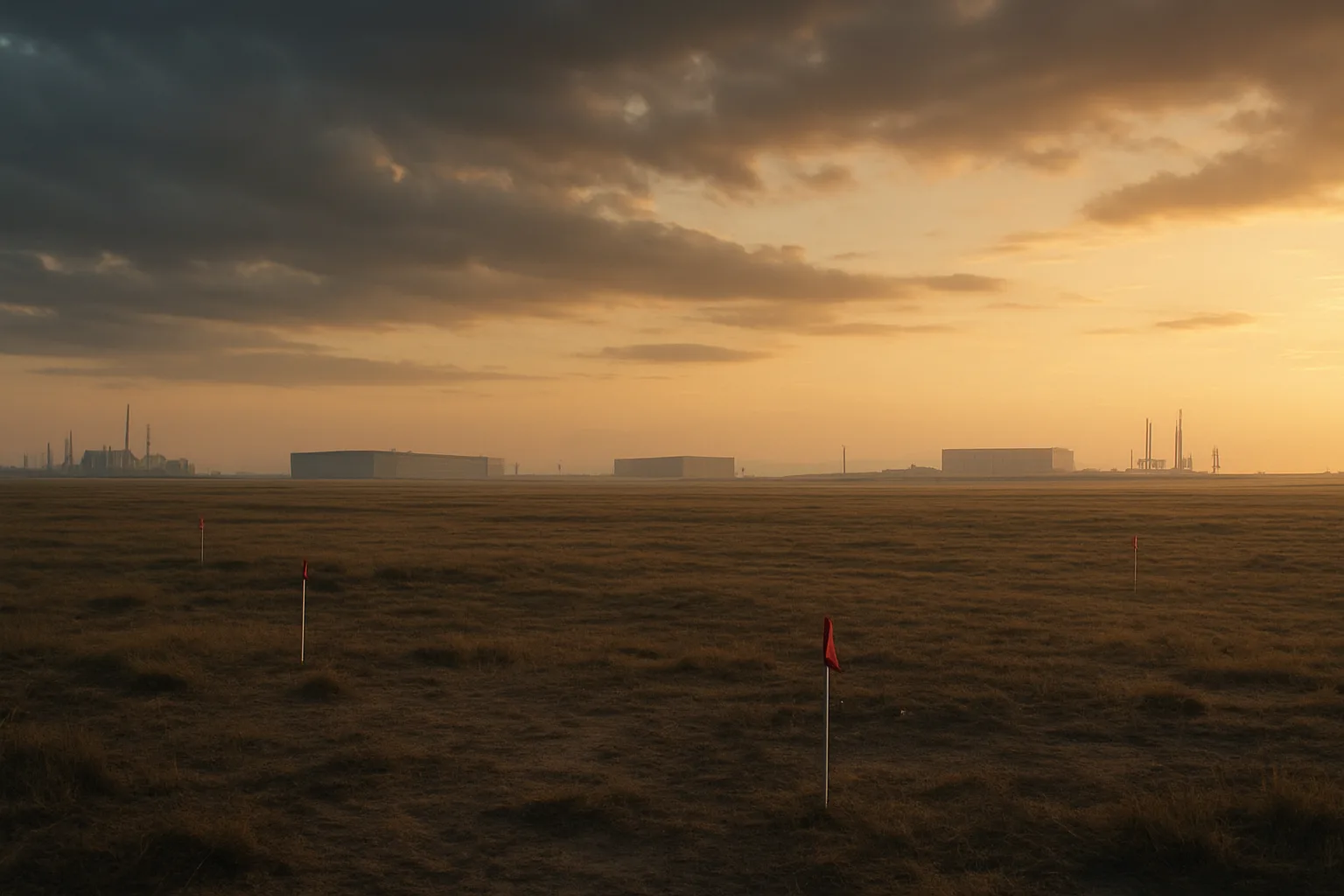
The Beetaloo data center plan took a major step forward this week when Australia’s Northern Territory government awarded 185 hectares of land for two “hyper-scale” AI campuses that backers say could draw A$40 billion (about $28 billion) in private investment.
Big land, bigger ambitions
The parcel — 185 hectares set aside for Beetaloo Digital Pty Ltd., a unit of natural gas company Beetaloo Energy Australia Ltd. — is intended to host two large-scale data center campuses. The developer says the sites would be powered by up to 2 gigawatts of on-site generation supplied by fuel from a nearby shale gas deposit that is slated to begin commercial production in 2026.
Backers position the project as a deep bet on both artificial intelligence workloads and local energy supply: the planned campuses are described as “hyper-scale,” signaling facilities meant to handle vast compute loads for AI training and inference rather than smaller enterprise or colocation deployments.
What the approval covers
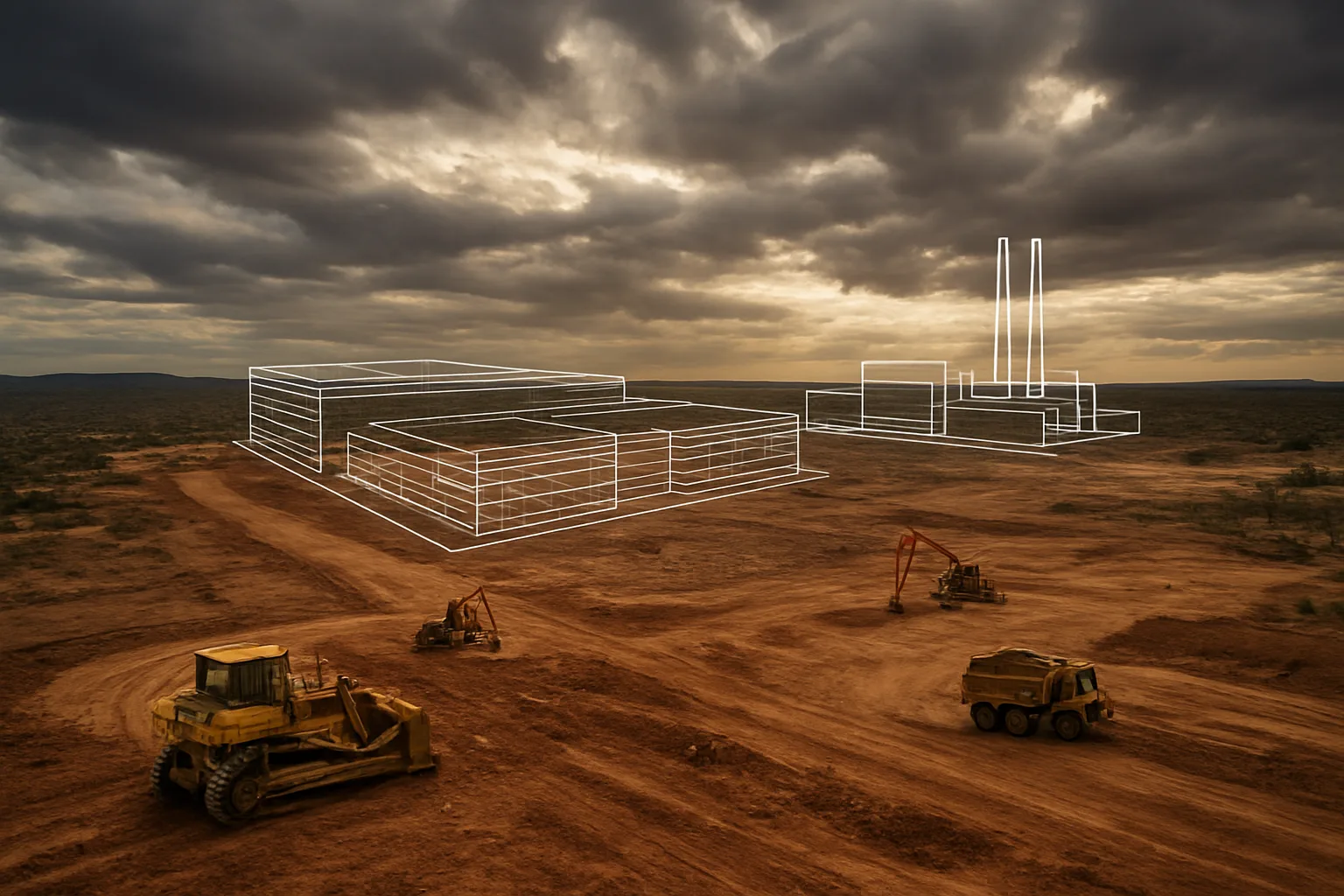
The land grant authorizes the footprint for two separate campuses and clears the way for the developer to begin more detailed planning and infrastructure work. The decision reflects a push to attract large private investment into a sparsely populated, gas-rich region of Australia that has large energy resources and available land for sprawling data infrastructure.
Power and production: 2 gigawatts and shale gas
Central to the proposal is the power plan: Beetaloo Digital says it intends to build up to 2 gigawatts of power generation for the campuses. That capacity would rely on gas from a massive shale deposit near the project area. The developer has linked the site selection and the power strategy directly to that local fuel source, which is expected to enter commercial production in 2026.
Using on-site generation tied to a local resource alters the usual model for hyperscale data centers, which often depend on regional grids and a mix of utility power and renewables. The proposal therefore raises questions about how the campuses will integrate with the Northern Territory’s broader energy system and what the implications will be for grid infrastructure and local energy markets.
Scale of investment and the pitch to private capital
Project backers claim the twin campuses could attract up to A$40 billion in private investment — a headline number that translates to roughly $28 billion. That sort of capital would cover land development, power plants, data halls, cooling systems, networking, and the usual site infrastructure required for large-scale AI operations. The figure underscores how much money backers believe can flow into regions that combine land, energy supply and proximity to international network connectivity.
For the developer and local authorities alike, the economics hinge on delivering reliable power at scale alongside the necessary broadband and transport links to make the sites attractive to major cloud and AI operators. The land award is the early, but visible, stage of that broader infrastructure race.
Local context: a gas-rich region aims to pivot to data infrastructure
The Northern Territory’s decision highlights an emerging strategy in resource-heavy regions: leverage existing fuel or energy assets to host data infrastructure that demands both land and power. The company behind the development, Beetaloo Energy’s Beetaloo Digital unit, is positioning the project as a way to turn local hydrocarbon resources into a supply chain for compute-heavy industries.
That framing is likely to appeal to investors looking for large, controllable energy sources for AI workloads, especially where on-site generation can reduce reliance on distant grids. It also ties the trajectory of the facilities to the timing and delivery of the shale gas production the project plans to use.
The land allocation does not, on its own, mean construction will begin immediately. Developers will still need to secure financing, finalize designs, and work through planning and environmental approvals for both the campuses and associated power plants.
At the same time, proponents argue that the potential private investment could spur secondary spending on local services, infrastructure upgrades and connectivity improvements that would be needed to support data center operations at hyperscale.
Questions ahead
Several practical and policy questions remain open. How the new generation capacity will be permitted and built, the timeline for gas production and the pace of investment commitments are all variables that will determine whether the Beetaloo data center vision is realized.
There are also broader considerations about where and how large AI infrastructure should be located, and what trade-offs governments and communities are prepared to accept in return for major private investment. In this case, a gas-rich region is positioning fossil fuel resources as a foundation for digital infrastructure, a strategy that blends traditional energy extraction with next-generation computing demand.
Final Verdict
The Northern Territory’s land award for the Beetaloo data center project is a decisive early move in what backers frame as a multibillion-dollar buildout. The core facts are simple: 185 hectares granted to Beetaloo Digital, plans for two hyper-scale AI campuses, and an intention to use up to 2 gigawatts of gas-fired generation sourced from a shale deposit starting commercial production in 2026. Whether the A$40 billion investment figure materializes will depend on financing, approvals and the market appetite of cloud and AI operators for sites linked to local gas generation. For now, the approval marks a clear signal that the region is pursuing a future where energy and data infrastructure are built together at scale.