If you live in the UK or mainland Europe, the upcoming solar eclipse isn’t just another sky-watching curiosity — it’s being billed as the region’s best eclipse in 27 years. But that promise hides a crucial question: who will actually get to see it, and what will it look like where you are?
Europe’s best eclipse in a generation
Calling this Europe’s best eclipse in 27 years isn’t hype. For millions across the continent, this solar eclipse will be the most dramatic bite the Moon has taken out of the Sun since the late 1990s. For a whole swathe of the UK and Europe, it will be the standout celestial event of the decade.
Exactly what you see, though, depends entirely on where you’re standing. Eclipses are deeply unfair that way: a narrow corridor on Earth — the path of totality or deepest coverage — gets the headline act, while everyone else sees a more modest show.
Who will see the solar eclipse — and how much of it?
The focus keyword here is simple: solar eclipse visibility. The eclipse isn’t a one-size-fits-all event. Instead, different parts of Europe will see different depths of coverage as the Moon’s shadow sweeps across the region.
Broadly, you can think of visibility in three tiers:
- Prime eclipse zone: A relatively narrow band across Europe where the Sun will be most heavily obscured, creating the most dramatic daytime darkness and temperature drop.
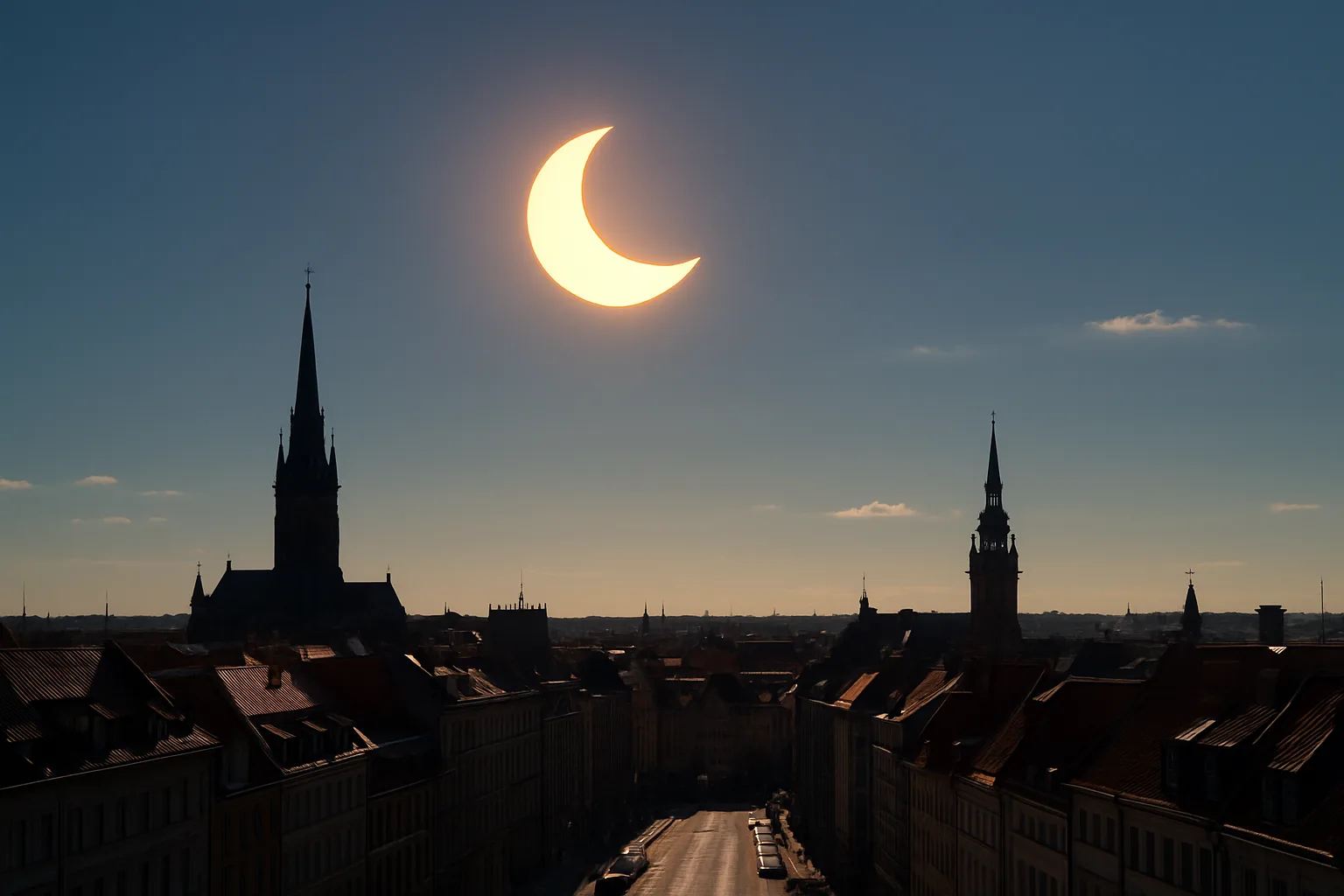
- Partial eclipse sweet spot: A much wider area where a huge chunk of the Sun will be covered, turning the Sun into a sharp crescent in the middle of the day.
- Edge-of-the-action regions: Areas on the fringes that still see a noticeable bite taken out of the Sun, but without the same dramatic dimming.
The UK sits in an unusually favourable position compared with most eclipses of the past few decades. Large parts of the country are expected to see one of the deepest solar obscurations since the 1990s, making it a major moment for sky-watchers from Cornwall to the north of Scotland.
What UK observers can expect
While the exact percentages of Sun coverage depend on your latitude and longitude, the pattern across the UK is familiar to eclipse chasers: the further north and west you go, the more dramatic the show tends to be.
Southern England will see a pronounced partial eclipse, with the Sun turning into a sharply bitten disk at maximum coverage. Moving north into the Midlands, northern England, and Scotland, the Sun will be obscured even more, giving viewers what many will experience as a once-in-a-generation event from their own back gardens.
Even in less favoured spots, the daytime light will take on that unmistakable surreal quality: shadows sharpen, colours flatten slightly, and the world feels briefly uncanny, as if someone turned down the dimmer switch on the sky.
How the rest of Europe fits in
Across mainland Europe, the story is similar but plays out on a larger scale. Countries closer to the eclipse’s central track will see the deepest coverage and the most dramatic darkening. Regions further from that track will still experience a substantial partial eclipse, with a clean, unmistakable chunk lifted from the Sun for a short window.
From western Europe across to central and parts of eastern Europe, tens of millions of people will be under skies that noticeably dim. That combination — a densely populated region and a high-coverage eclipse — is exactly why this event is being hyped as the best in nearly three decades.
Timing: when to look up
With any solar eclipse, timing is everything. The event only lasts a couple of hours from first contact (when the Moon’s disk first nicks the Sun) to last contact (when the final sliver of the Sun is revealed again), and the period of maximum obscuration is shorter still.
Across the UK and Europe, the eclipse will unfold as a daytime event, with the precise timing of maximum coverage shifting slightly depending on how far west or east you are. Western locations see the peak a little earlier in local time; eastern locations, a little later.
The practical takeaway: know your local timing in advance, and plan to be outside and set up at least 20–30 minutes before the peak. The build-up — watching the Sun shrink from a full disk to a crescent — is half the fun.
Safety isn’t optional: how to watch the eclipse
A solar eclipse is one of the few natural spectacles that can permanently damage your eyesight if you get careless. Even when most of the Sun is covered, the remaining exposed sliver is still blindingly bright. That means:
- No unprotected viewing: Never look directly at the Sun with the naked eye, sunglasses, camera viewfinder, binoculars, or a telescope without proper solar filters.
- Use certified eclipse glasses: Only glasses that meet recognised solar viewing safety standards are safe for direct viewing of the Sun.
- Try projection methods: A simple pinhole projector or solar projection through a small telescope or binoculars (with the optics themselves pointed safely and monitored by an experienced user) lets you watch the Moon’s shadow crawl across the solar disk indirectly.
Your eyes don’t have pain sensors on the retina. By the time something feels wrong, damage can already be done. Treat this like welding — you wouldn’t stare at an arc without protection, and you shouldn’t treat the Sun any differently.
Weather: the wildcard that can ruin everything
You can calculate the path of the Moon’s shadow years in advance. You can’t force the clouds to move. For observers across the UK and Europe, local weather will make the difference between a life-long memory and a “was that it?” moment.
Coastal regions and higher ground are often more vulnerable to cloud cover, mist, or haze, while some inland areas may stand a better chance of clear skies. But there are never guarantees. If seeing the eclipse matters to you, keep an eye on detailed forecasts in the 48 hours beforehand, and be ready to travel if conditions a short drive away look significantly better.
Even if clouds spoil the view of the Sun itself, many people still feel the daylight dim and notice the eerie shift in ambient light and temperature. It’s not as good as seeing the crescent Sun, but it’s still a reminder that something huge is happening above the clouds.
Why this eclipse matters so much for Europe
Solar eclipses happen somewhere on Earth roughly every year and a half, but most of them pass over oceans or sparsely populated regions. What makes this one stand out is where it falls: directly across one of the most densely populated and well-observed parts of the world.
For schools, science centres, and amateur astronomy groups across the UK and Europe, this is a golden opportunity. You don’t need a remote desert or a two-day trek into the path of totality to experience it — for many people, all it will take is a safe viewing method and a clear patch of sky above a local park or backyard.
Expect a wave of pop-up events, from organised public viewings to impromptu neighbourhood watch parties. For a few hours, weather permitting, the Sun, Moon and Earth will line up in exactly the right way to give millions of people a shared, tangible sense of how dynamic our solar system really is.
That’s why scientists, educators and eclipse chasers are calling this the best eclipse in 27 years for the region. It’s not just about celestial geometry; it’s about access. This time, the show comes to Europe.
How to get the most out of the eclipse
Assuming the weather cooperates, a little planning goes a long way toward turning a quick sky glance into a memorable experience. Here are a few simple ways to level up your viewing:
- Scout your spot early: Find a location with a clear view of the Sun at the time of maximum coverage — no tall buildings, trees, or hills in the way.
- Bring proper gear: Certified eclipse glasses, a simple solar filter for binoculars, or even just materials for a pinhole projector can make all the difference.
- Record the moment: You don’t need a fancy telescope. Smartphones can capture the changing light and crowd reactions, while properly filtered cameras can safely record the Sun itself.
- Share it with others: Kids, neighbours, and friends who have never seen a major eclipse before will remember it for years. It’s one of the few astronomical events that truly feels communal.
For seasoned observers, this is also a chance to gather data — from simple temperature readings and light-level measurements to photographs that capture the changing shape of the Sun throughout the event.
What this means
For the UK and Europe, this isn’t just another item on an astronomy calendar — it’s the most accessible, dramatic solar eclipse in nearly three decades for a huge slice of the population. Who will be able to see the solar eclipse? In practical terms, anyone in the UK and much of Europe with clear skies, a safe way to look at the Sun, and a bit of curiosity.
If you remember the big eclipses of the 1990s, this will feel like that era’s long-awaited sequel. If you don’t, this may well be your first real taste of just how strange and beautiful daytime can look when the Sun suddenly isn’t the unblinking constant we take for granted.
Wherever you are in the UK or Europe, if the forecast looks promising, treat this eclipse like an appointment you don’t want to miss. Step outside, look up safely, and join millions of others watching the same fleeting shadow race across the face of the Sun.
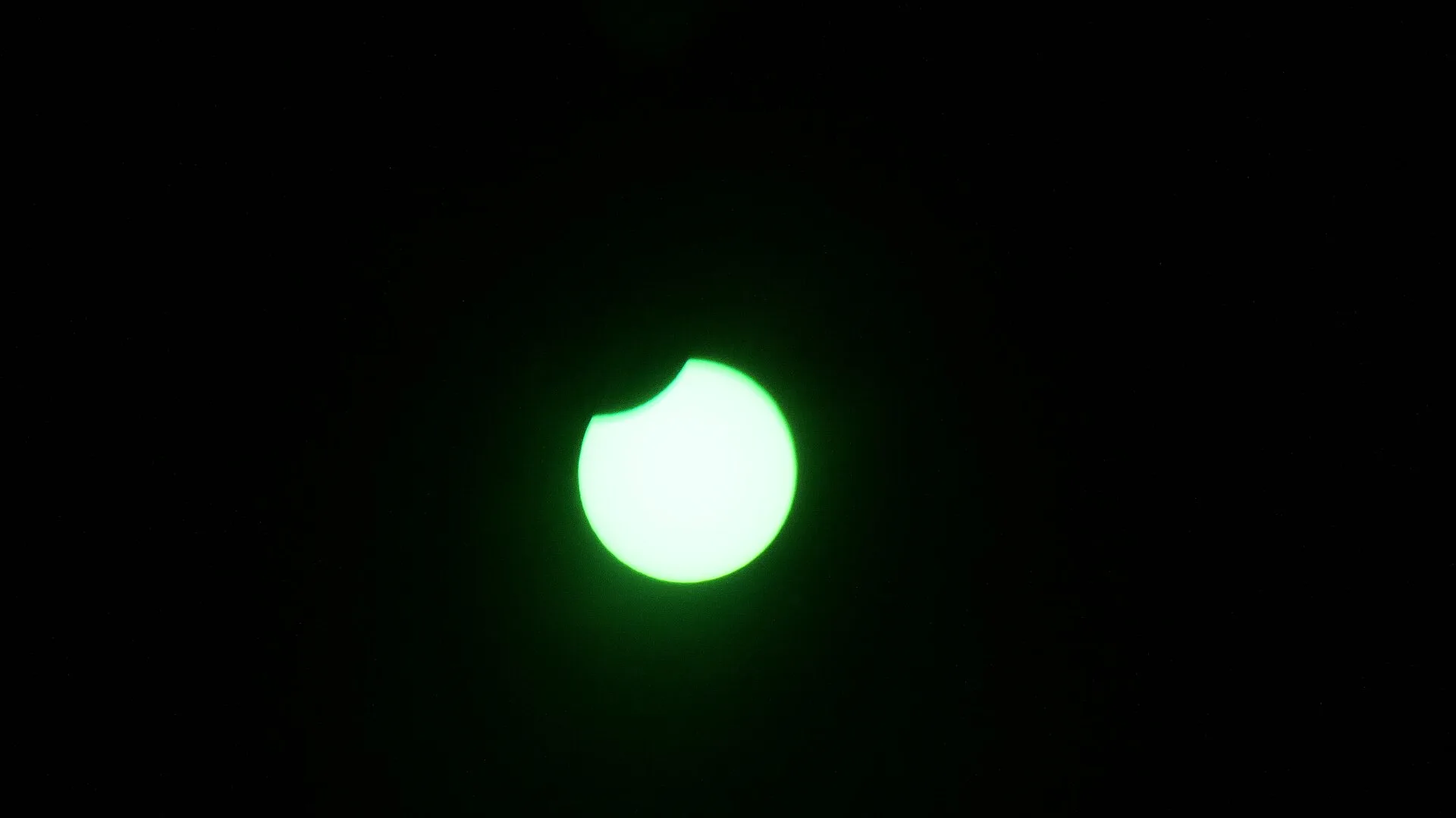
Photo: Artistosteles / CC BY-SA 4.0 via Wikimedia Commons