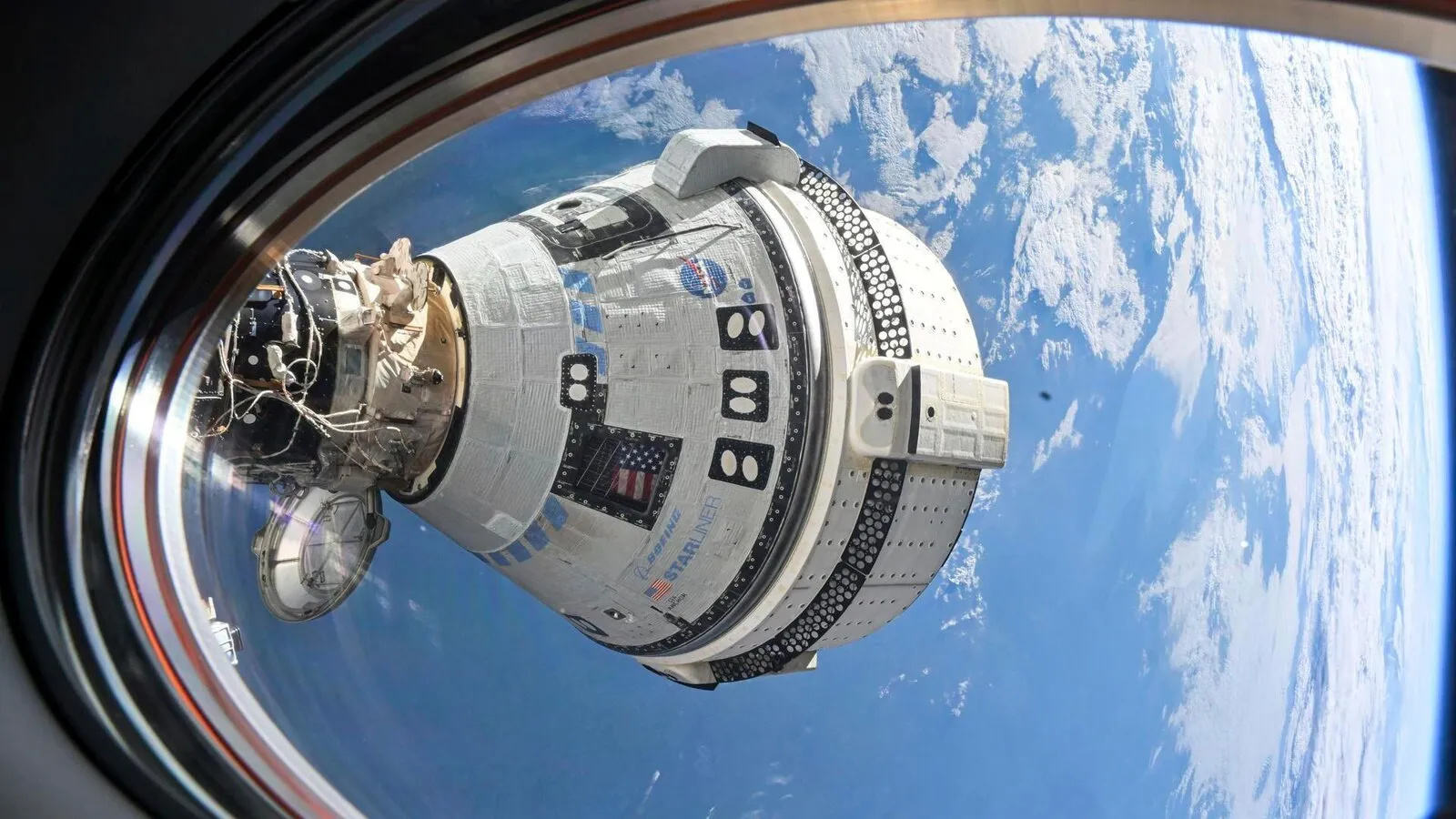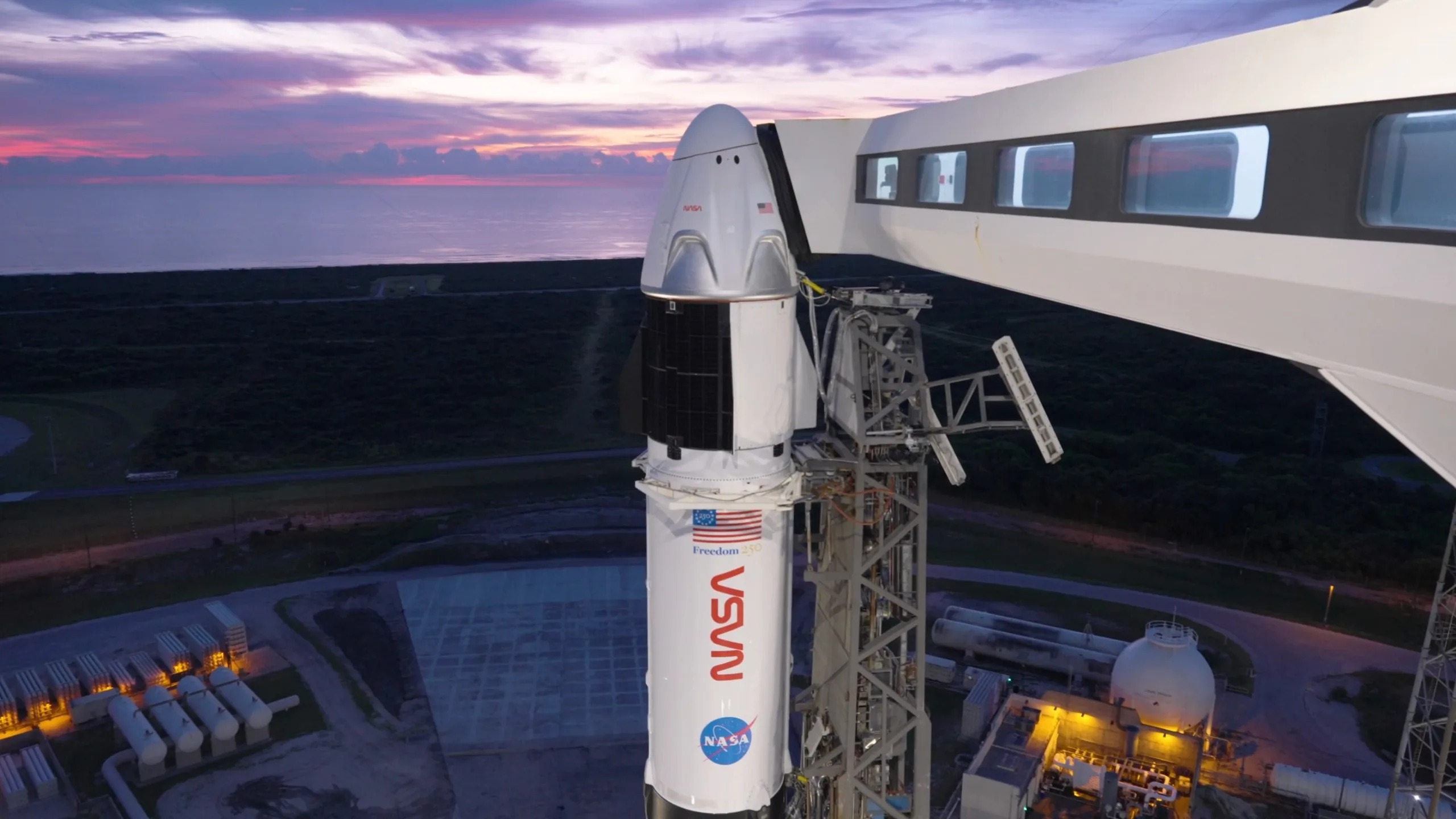
Four people just left the planet for half a year, and one of them is making history by doing something that’s never been routine until very recently: going back up. NASA’s Crew-13 mission lifted off from Florida on a Falcon 9 rocket, carrying a crew bound for a six-month stay aboard the International Space Station, after weeks of delays that tested everyone’s patience on the ground before the capsule ever left the pad.
Who’s On Board
Commanding the mission is NASA astronaut Jessica Watkins, who becomes the first NASA astronaut to fly aboard a Crew Dragon capsule for a second time. That distinction matters more than it might sound. Most astronauts who’ve flown a SpaceX capsule once have either moved into other roles, flown on a different vehicle, or are still waiting their turn to go back up, so Watkins returning to the same spacecraft type is a quiet marker of how mature SpaceX’s crew program has become.
She’s joined by NASA pilot Luke Delaney, along with mission specialists Joshua Kutryk of the Canadian Space Agency and Sergey Teteryatnikov representing Roscosmos. The mixed-agency crew continues the pattern that’s defined ISS operations for years: even with geopolitical tension simmering on the ground, the station itself has remained one of the few places where American, Canadian, and Russian space programs keep working side by side without interruption.
The Hardware
The crew is flying aboard a Crew Dragon capsule named Grace, launched on a Falcon 9 rocket from Launch Complex-40 at Cape Canaveral Space Force Station. Naming capsules has become something of a tradition for SpaceX crews, who get to choose the name together, and it’s a small ritual that’s stuck around even as these launches have become routine enough that they barely make the evening news anymore.
Here’s a quick snapshot of the mission’s vital stats:
| Detail | Information |
|---|---|
| Launch Vehicle | Falcon 9 |
| Spacecraft | Crew Dragon “Grace” |
| Launch Site | Launch Complex-40, Cape Canaveral Space Force Station |
| Crew Size | 4 (2 NASA, 1 Canadian Space Agency, 1 Roscosmos) |
| Docking Time | Approximately 8 hours after launch |
| Mission Duration | Roughly 6 months, as part of Expedition 75 |
The instantaneous launch window, meaning there was exactly one moment to get off the ground rather than a flexible range of minutes, carried roughly a coin-flip’s chance of acceptable weather. A backup opportunity was held the following day in case conditions didn’t cooperate, which has become standard practice for crewed launches where scrubbing and waiting is always preferable to pushing through marginal weather.
Why This Flight Took So Long to Happen
Crew-13 was originally supposed to fly in mid-September, and the slip wasn’t cosmetic. Engineers discovered a leak in the capsule’s propulsion system during pre-flight checks, the kind of issue that, left unresolved, could compromise the spacecraft’s ability to maneuver once it’s in orbit or, worse, during the docking sequence with the station. Fixing a propulsion leak on a vehicle that’s about to carry four human beings isn’t something anyone rushes, and the multi-week delay reflects just how little margin for error there is when the alternative to getting it right is catastrophic.
It’s worth remembering that this kind of caution is exactly what the post-Shuttle era of commercial crew spaceflight was built to deliver. SpaceX’s crew program has flown enough missions now that delays caused by a legitimate technical find, rather than a scheduling conflict or a funding fight, read as the system working as intended rather than a crisis.
What the Crew Will Actually Do Up There
Six months is a long time to be anywhere, let alone 250 miles above the Earth’s surface, and the mission isn’t just about maintaining the station’s systems, though that remains a core responsibility. The crew’s research slate includes some genuinely significant medical science:
- Stem-cell and tissue studies aimed at better understanding heart disease, using microgravity’s unique effects on cell growth to see things that are harder to observe under normal gravity.
- Parkinson’s-related research, continuing a growing body of orbital work that’s found microgravity useful for studying certain neurological processes.
- Crop production experiments, part of the long-running effort to figure out how astronauts on future Mars-length missions might grow at least some of their own food.
- Blood flow studies specifically targeted at the physiological challenges of long-duration spaceflight, research that becomes more urgent the longer NASA and its partners talk seriously about multi-year missions beyond low Earth orbit.
That last category is really the throughline connecting almost everything the ISS does these days. Every mission that studies how human bodies hold up over six months in orbit is, implicitly, a dry run for the much longer journeys NASA keeps saying it wants to attempt.
A Milestone That’s Become Almost Routine, and That’s the Point
There’s something worth noticing in how unremarkable a crewed orbital launch has become to the broader public, even as the individual achievements packed into each mission remain genuinely impressive. Jessica Watkins flying the same spacecraft type twice would have been a major talking point a decade ago, when reusable crew capsules were still a novel concept. Now it’s a one-line fact buried in a routine six-month rotation, which is exactly the outcome the commercial crew program was designed to produce: human spaceflight that’s reliable enough to stop being extraordinary news every single time.
What This Means
Crew-13’s successful launch, delays and all, is a reminder that the unglamorous parts of spaceflight, propulsion leak checks, weather windows, crew rotations, are what actually make long-duration missions possible. The flashy milestones get the headlines, but it’s the boring discipline of catching a propulsion leak before launch rather than after that keeps crews coming home safely. As NASA and its partners keep eyeing destinations well beyond the space station, missions like this one are quietly building the medical and operational knowledge that any trip further out will depend on.