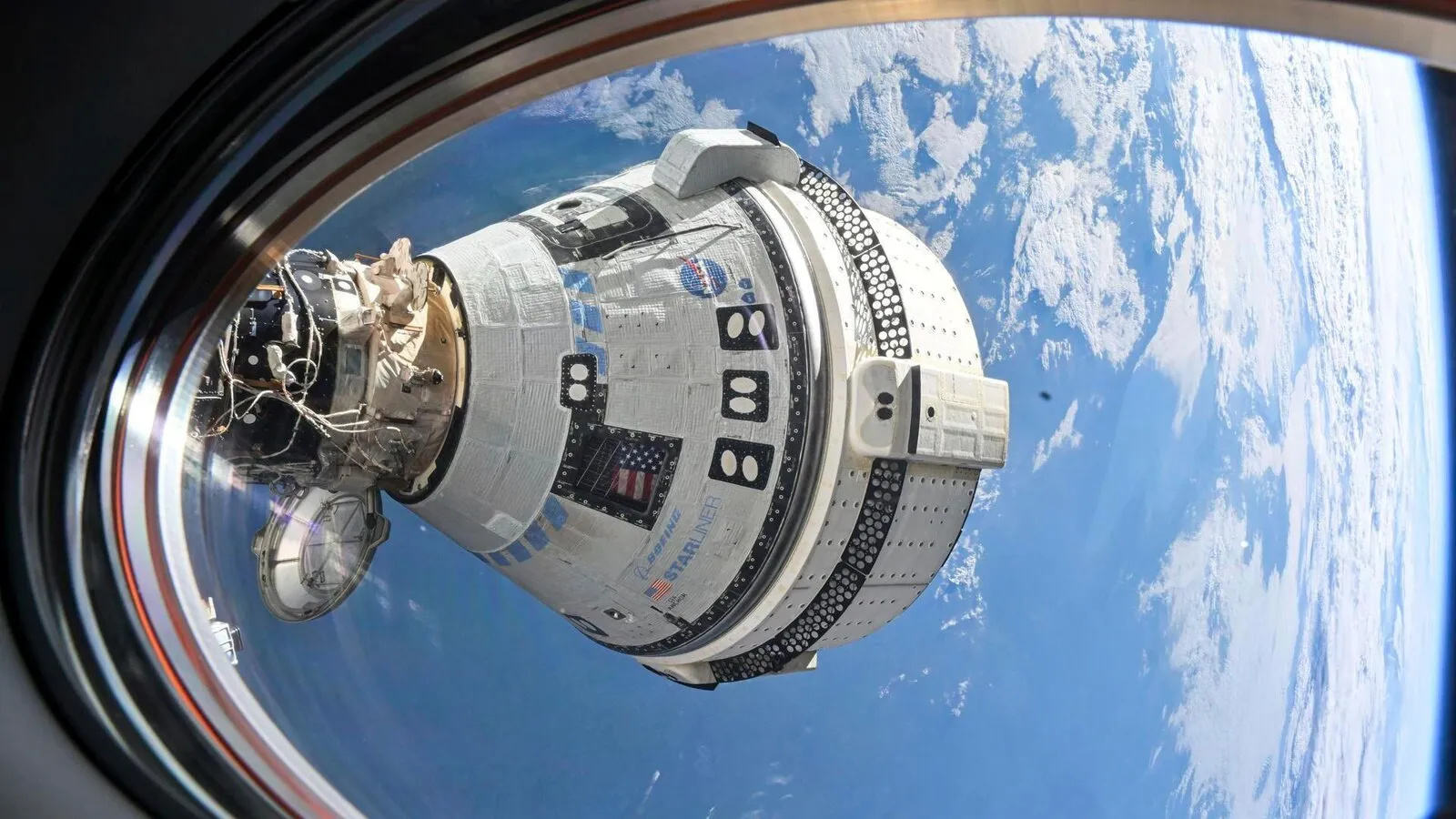
Boeing’s Starliner has spent more time generating headlines about what went wrong than headlines about where it went. Now NASA has finally put a real date on the capsule’s redemption attempt: an uncrewed test flight targeted for December, with nobody’s life riding on whether this time the thrusters behave.
How We Got Here
The backstory is by now painfully familiar to anyone who follows spaceflight. Astronauts Barry “Butch” Wilmore and Sunita “Suni” Williams launched aboard Starliner on June 5, 2024, for what was supposed to be a routine ten-day test flight to the International Space Station. It did not go according to plan. Multiple thrusters failed en route, helium began leaking from the propulsion system, and NASA ultimately made the call that flying the astronauts home on a spacecraft with compromised maneuvering systems was too risky.
Starliner undocked and returned to Earth empty. Wilmore and Williams stayed behind, their planned week-and-a-half mission stretching into a nine-month stay aboard the station. They finally came home in March 2025, hitching a ride on a SpaceX Crew Dragon instead, after a mission that ended up totaling 286 days.
What Actually Broke
An independent review board spent months picking apart exactly what failed, and the findings weren’t pretty. Investigators traced the thruster failures to Teflon seals in propellant valves that degraded and restricted fuel flow, five separate thrusters affected in that way. One thruster in the crew module failed specifically during the descent phase, which eliminated a layer of redundancy NASA typically insists on for anything carrying humans. On top of that, engineers found helium leaks compromising the pressurization system, and a deorbit burn design that didn’t meet the space agency’s own redundancy standards.
In plain terms: this wasn’t one bad part. It was a stack of separate problems that all happened to surface on the same mission.
The Fix, and the Long Road Back to Flying Humans
Boeing’s engineering response has been a near-total overhaul of the propulsion hardware. The company is redesigning the propellant valves that caused the original Teflon seal problem, replacing all twelve thrusters in the crew module rather than patching the ones that failed, upgrading the batteries, swapping in improved parachutes, and adding monitoring systems that should give ground controllers earlier warning if something starts to go wrong in flight.
Why Send It Up Empty First
NASA’s logic here is straightforward, if cautious: after a mission that stranded two astronauts for nine months, nobody at the agency is willing to put crew back on Starliner without proof, in orbit, that the fixes actually work. The uncrewed flight, informally referred to inside the program as Starliner 1, will be a full dress rehearsal, launch, rendezvous and docking with the station, an extended stay to validate the new hardware under real spaceflight conditions, and a return to Earth using the redesigned systems.
Only if that mission goes cleanly does NASA plan to greenlight a crewed flight, and even then the timeline stretches further out than most people probably assume. Commander Warren Hoburg has been named to lead that eventual piloted mission, but it isn’t targeted until roughly mid-2028, nearly four years after Wilmore and Williams first strapped in.
NASA’s stated position hasn’t wavered through any of this: “We are committed to Starliner certification and ensuring commercial crew access to low Earth orbit.” That phrase, commercial crew access, is doing real work. The entire reason NASA funded two separate companies, Boeing and SpaceX, to build crew capsules in the first place was to avoid depending on a single provider for astronaut transport. Right now, SpaceX’s Crew Dragon is the only American vehicle actually flying astronauts, which means every Starliner delay leaves NASA more exposed than the agency wants to be.
What’s Riding on This
Boeing’s satellite and defense businesses have had a rough few years, and Starliner has become something of a symbol for the company’s broader engineering struggles. A clean uncrewed test flight wouldn’t erase that history, but it would at least demonstrate that Boeing can still deliver on a fix when given enough time and enough scrutiny. A failure, on the other hand, would raise serious questions about whether the commercial crew program’s two-provider model is sustainable, or whether NASA needs to start planning for a world where Starliner never flies astronauts at all.
There’s a broader industry angle here too. Every month Starliner spends grounded is a month SpaceX effectively has a monopoly on American human spaceflight to the ISS, at a time when the station itself is aging toward eventual retirement later this decade. Whatever happens with Starliner over the next few years will shape how NASA thinks about redundancy and competition for whatever comes after the ISS, including the various commercial space station concepts currently in development.
What to Watch For
- A firm launch date for the December or January uncrewed test flight, once Boeing and NASA finish final reviews
- Performance data on the redesigned thrusters and propellant valves during the actual mission, not just ground testing
- Whether the deorbit and landing sequence performs cleanly, given that a deorbit burn redundancy issue was part of the original failure
- Any updates to the mid-2028 crewed flight timeline, which could slip further depending on what the uncrewed test reveals
What This Means
This is the most concrete step Starliner has taken toward redemption since the program’s low point in 2024, but concrete isn’t the same as certain. NASA is treating this uncrewed flight as the real test, not a formality, which tells you the agency still has genuine doubts about the hardware. If it goes well, expect a wave of coverage about Boeing’s comeback. If it doesn’t, the conversation shifts quickly to whether America’s only backup human spacecraft is worth the money and time it’s consumed. Either way, Wilmore and Williams’s unplanned nine months in orbit will remain the reason this next flight is happening without anyone aboard.