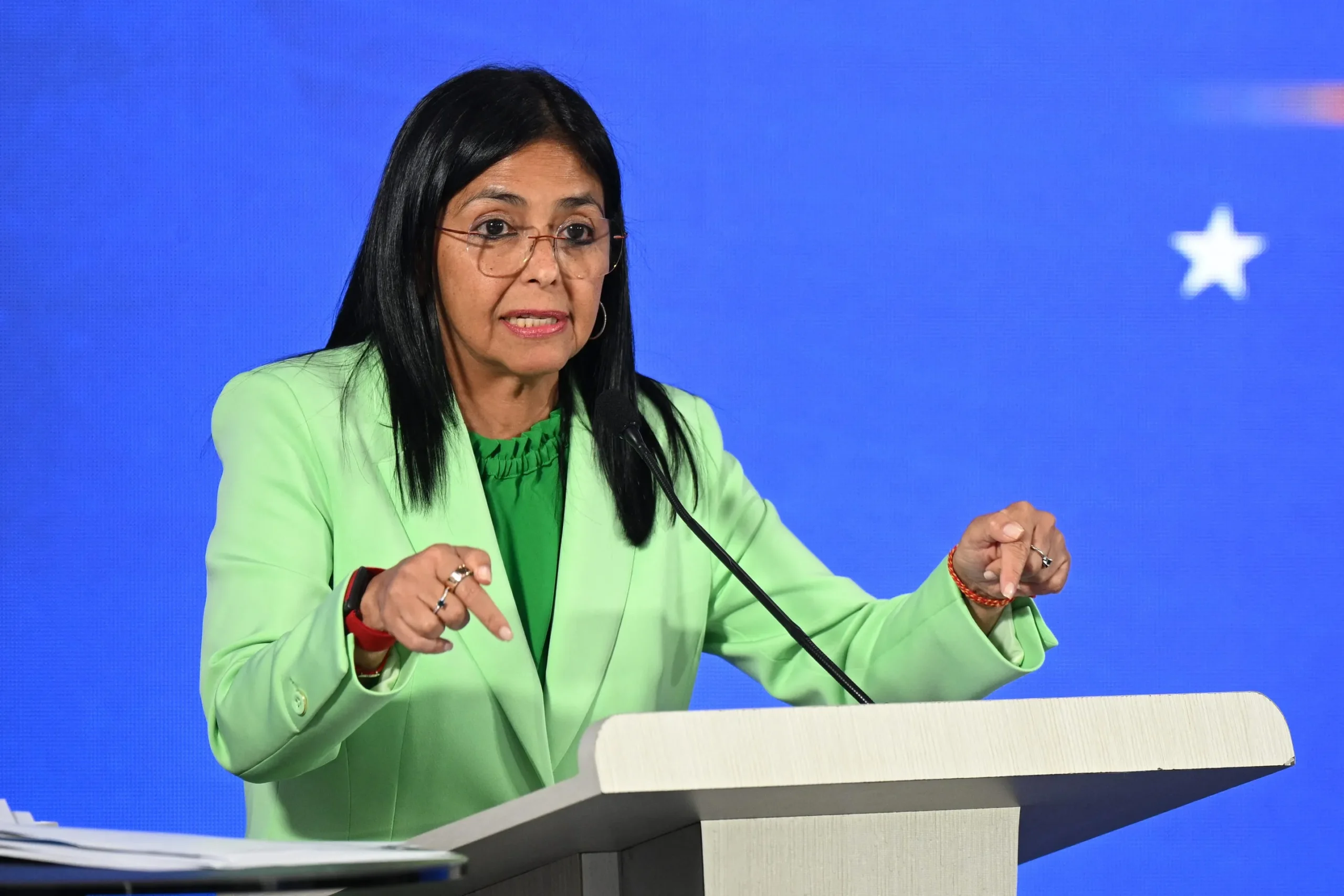
Standing before the United Nations General Assembly, Venezuela’s Delcy Rodríguez made the kind of promise that sounds reassuring in a speech and immediately raises more questions than it answers: elections are coming, as part of a transition to what she called “full democracy.” What she didn’t offer was a date, a timeline, or any concrete mechanism for how that transition is actually supposed to unfold.
What Was Actually Said
Rodríguez’s address framed Venezuela as a country in motion, moving away from the political arrangement that defined it under Nicolás Maduro and toward something more open. The rhetoric leaned heavily on the language of democratic restoration, positioning the current leadership as stewards of a transition rather than a permanent replacement.
Vague as it was, the promise still matters simply because of who made it and where. A UN General Assembly speech is not the venue for offhand remarks. Every word gets parsed by foreign ministries, human rights organizations, and opposition figures inside Venezuela who have spent years asking exactly this question: when, if ever, does an actual vote happen?
Why No Date Is Itself the Story
Promising elections without committing to a timeline is a well-worn political move, and it buys time without committing to anything measurable. Observers who track Venezuela closely have noted that the country’s transition since Maduro’s departure has been described as uneven at best, with power dynamics still shifting in ways that make near-term elections logistically and politically complicated.
That ambiguity puts international partners in an awkward position. Do you take the promise of “full democracy” at face value and ease pressure accordingly, or do you treat an undated commitment as essentially no commitment at all and maintain the current posture? Different governments are likely to land in different places on that question, which is exactly the kind of ambiguity a speech like this one can create, intentionally or not.
The Domestic Picture
Inside Venezuela, reaction to the speech is filtered through years of accumulated skepticism. Promises of democratic transition are not new in Venezuelan politics, and previous commitments have a track record of slipping, stalling, or getting redefined entirely. Opposition voices and independent analysts are likely to treat this latest promise as a starting point for pressure rather than a settled outcome, pushing for specifics rather than accepting the general framing at face value.
At the same time, the fact that a senior Venezuelan official is using this language at all, on this stage, signals at least an acknowledgment that the old approach to legitimacy, one that leaned less on the language of democratic transition, is no longer sufficient. Whether that reflects genuine internal change or simply a more sophisticated approach to international messaging is exactly the debate this speech has reopened.
What International Observers Will Watch For
The next concrete signal to watch isn’t another speech, it’s whether Venezuela takes any of the procedural steps that typically precede a real election: naming an electoral timeline, inviting international observers, or making commitments about opposition participation. Those are the markers analysts typically use to distinguish a genuine transition from a rhetorical one, and none of them were part of this particular address.
Regional governments across Latin America are likely to respond in a similarly cautious, wait-and-see fashion. Several neighboring countries have their own complicated histories with Venezuelan migration, economic spillover, and diplomatic recognition disputes, and none of them have much appetite to either fully embrace or fully dismiss a promise this vague. Expect measured statements of encouragement paired with careful language reserving judgment until something more concrete materializes.
The Economic Backdrop
None of this is happening in a vacuum separate from Venezuela’s economic situation. Years of instability, sanctions, and currency turmoil have left the country’s institutions weakened in ways that make any transition, genuine or rhetorical, considerably harder to execute cleanly. Even a government fully committed to holding real elections would have to contend with degraded electoral infrastructure, a fractured media environment, and a population that has grown deeply skeptical of official promises after watching similar assurances fail to materialize in the past.
That context matters for how much weight this particular speech should actually carry. A promise of elections is only as credible as the institutional capacity behind it, and Venezuela’s institutional capacity remains one of the most contested and closely watched variables in the entire story.
What This Means
Rodríguez’s UN speech gives Venezuela’s government a rhetorical foothold on the world stage without locking it into anything specific, which is precisely the kind of statement that tends to satisfy almost nobody fully. It offers the international community language to point to if they want to justify a more patient posture, while giving domestic critics exactly the kind of vagueness they’ve learned to distrust.
The real test of this promise won’t be found in the speech itself but in what happens, or doesn’t, over the following months. Until an actual date and process materialize, “elections are coming” remains a statement of intent rather than a commitment, and Venezuela’s political future stays exactly as uncertain as it was before anyone stepped up to that podium.