The United States says it has launched a “heavy wave of strikes” on Iran, a major escalation in a confrontation that began with an Iranian attack on a U.S. base in Jordan and now risks pulling the region into a far wider conflict. For Washington, these U.S. strikes on Iran are being framed as direct retaliation and a warning shot rolled into one.
What We Know About the Strikes
Details are still emerging, but U.S. military officials describe a large, coordinated assault targeting Iranian interests following the attack on the American base in Jordan. The phrase “heavy wave of strikes” signals more than a token response — this is the kind of operation that typically involves multiple targets, sustained air power, and a clear intention to send a political message as much as a military one.
The trigger was an Iranian attack on a U.S. base inside Jordan, a country long considered one of Washington’s most stable security partners in the region. Striking a base there crosses a line that U.S. planners have generally treated as sacrosanct: American forces operating from what is supposed to be relatively secure territory, not an active front line.
By framing their response explicitly as retaliation, U.S. officials are trying to draw a straight line between the Iranian action and Washington’s answer — and to make clear that any further attacks on U.S. troops will invite more of the same.
Why a Base in Jordan Matters So Much
On a map, Jordan can look like a quiet buffer state squeezed between crises. In reality, it’s one of the keystones of the American security architecture in the Middle East. U.S. bases there support operations across the region, from surveillance and logistics to counterterrorism missions.
An attack on a U.S. base in Jordan is therefore more than a tactical strike. It’s a direct challenge to the idea that U.S. deployments in “friendly” territory are off-limits to Iranian retaliation or pressure. That is why the U.S. response has come swiftly and with what officials describe as heavy firepower.
U.S. leaders also know Jordan’s internal stability is not guaranteed. If Jordanian territory starts to feel like part of an expanding battlefield between the U.S. and Iran, the political fallout could be severe — not just for Amman, but for Washington’s broader foothold in the region.
How Far Is Washington Willing to Go?
The language around these U.S. strikes on Iran is doing a lot of work. Calling them a “heavy wave” is meant to show resolve without explicitly promising a campaign that could spiral into full-scale war. This is the familiar tightrope: hit hard enough to restore deterrence, but not so hard that Iran feels it has no choice but to answer with an even bigger attack.
In practice, that tends to mean carefully picked targets — assets that matter to Iran’s military reach, especially anything tied to its ability to threaten U.S. troops and partners, but short of the kind of strikes that would signal an all-out bid to overthrow the government in Tehran.
Still, once missiles and aircraft are in motion, control is more theory than guarantee. Miscalculation, faulty intelligence, or simply a political leader deciding they cannot afford to look weak can turn a limited clash into something far worse.
Iran’s Likely Calculus
Iran’s leadership now faces a familiar but newly sharpened question: absorb the hit and look for a quieter way to respond later, or strike back quickly and risk escalation. Tehran has long favored a shadowy mix of deniable attacks, militia proxies, and carefully calibrated retaliation precisely to avoid a direct, head-on war with the United States.
But a U.S. strike explicitly branded as retaliation on Iran itself — not just on allied groups or assets in third countries — raises the stakes. Domestic politics in Tehran matter here, too. Hardliners who have built their reputations on resisting Washington will be under pressure not to appear cowed. That pressure can be just as dangerous as any missile.
For now, both sides are sending messages as much as they are sending munitions. The question is whether either can still find an off-ramp once the dust settles.
Regional Allies Are Watching Nervously
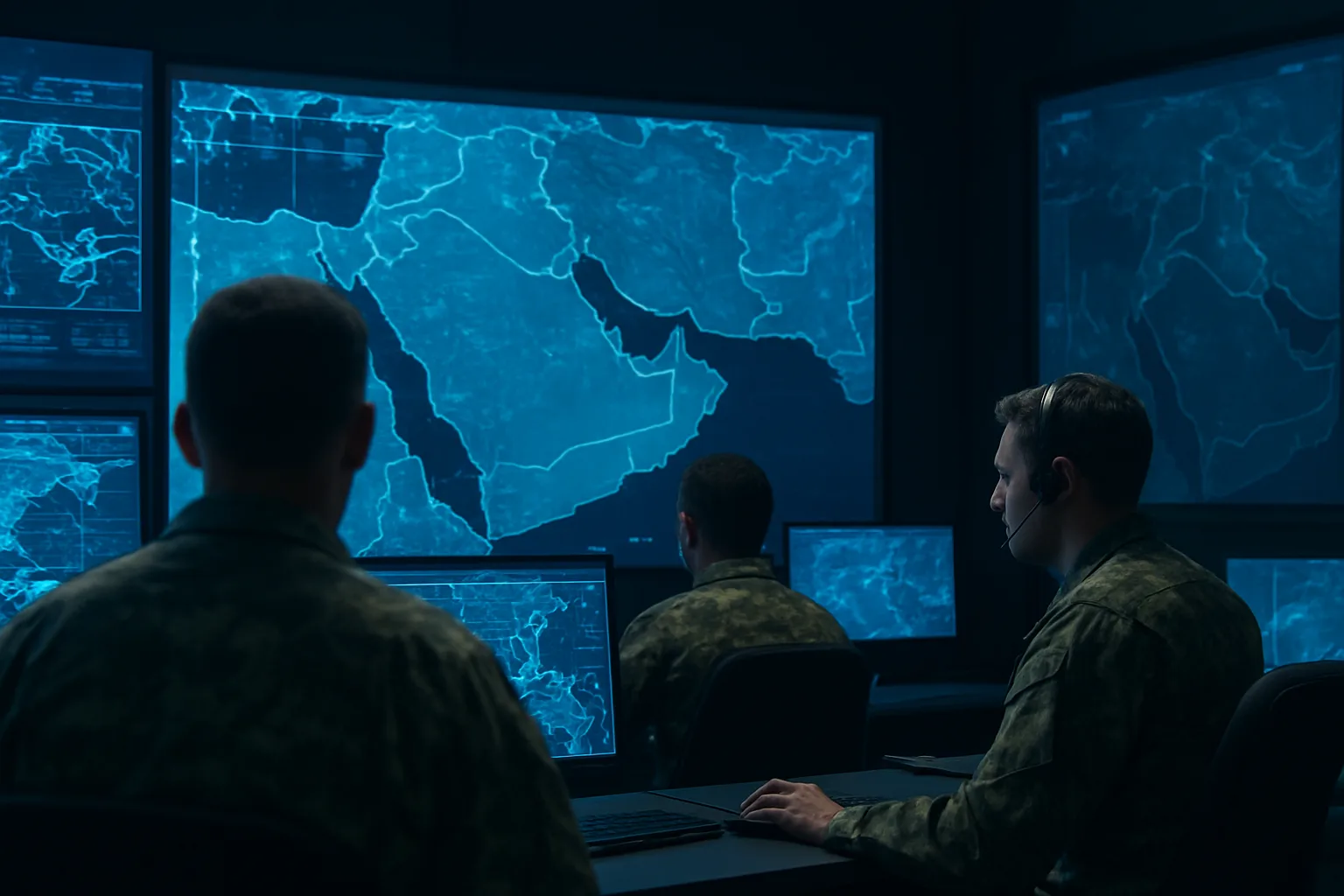
For U.S. partners across the Middle East, these U.S. strikes on Iran cut both ways. On the one hand, many have long wanted Washington to respond forcefully when its troops or bases are attacked, arguing that anything less invites more aggression. On the other, they all live within missile and drone range of Iran and its allies. They know that every escalation, even one framed as retaliation, raises the risk that their own cities and infrastructure could end up in the crosshairs.
Jordan, uniquely, is now both a partner and a battleground. Hosting U.S. forces has brought security guarantees and billions in aid over the years. But it also increasingly means that Iranian-linked attacks, and U.S. responses to them, are no longer something that only happens across a border.
Elsewhere in the region, governments will be recalculating the risks of allowing U.S. forces to operate on their soil, even as they quietly rely on those very forces to deter Iran and extremist groups. That’s the uncomfortable paradox of this moment: the same American presence that many leaders see as a shield also paints a target.
What Could Come Next
The immediate concern is whether Iran responds quickly and openly to the latest U.S. strikes. A rapid counter-attack on American forces, embassies, or Gulf infrastructure would almost certainly trigger another American wave of strikes, increasing the chance of a broader war.
A slower, more covert response — cyber operations, proxy strikes with muddy attribution, or long-delayed action in another theater — is no less dangerous. It simply spreads the risk over a longer period and wider geography.
For Washington, the next steps will likely revolve around three overlapping goals: preventing another direct hit on U.S. troops, reassuring anxious partners like Jordan, and trying to keep the confrontation from boiling over into a regional war that nobody can fully control.
What This Means
The U.S. decision to answer the attack on its base in Jordan with a heavy wave of strikes on Iran marks a turning point. It shows Washington is willing to escalate directly, not just through quiet pressure or limited responses on the margins. It also shows how thin the line has become between deterrence and open confrontation.
If both sides treat this exchange as a brutal form of messaging and then step back, the region will still be left more fragile, with U.S. troops, Iranian forces, and local allies on constant edge. If either side misreads the other’s intentions, the Middle East could be looking at a new, more dangerous phase in a conflict that has already dragged on for decades.
For now, the only certainty is that this latest round of U.S. strikes on Iran will not be the last word. The next move — whether escalation, de-escalation, or a tense pause — will shape not just the U.S.-Iran rivalry, but the security of every country caught between them.
Photo: United Nations Photo / BY-NC-ND via Openverse