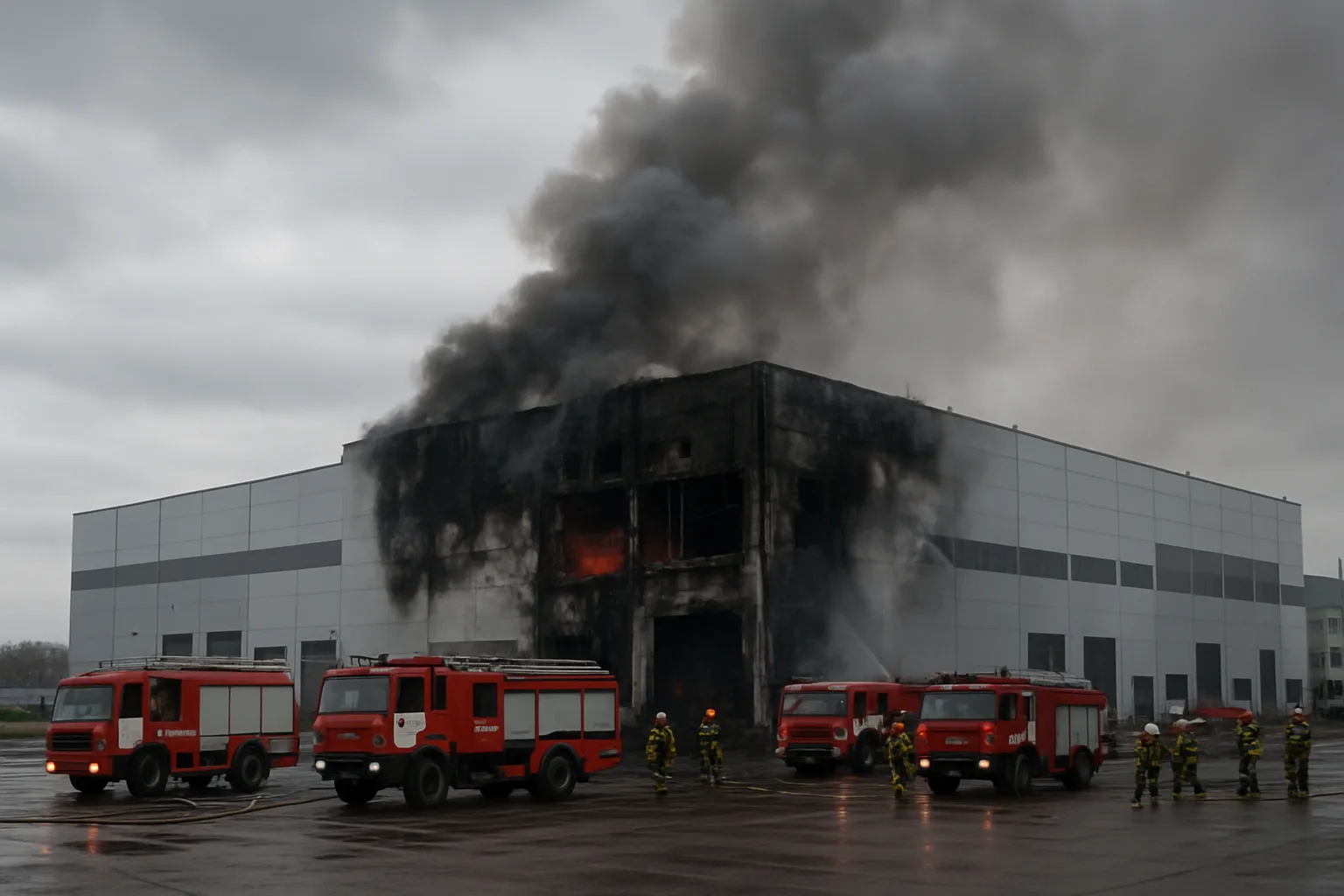
Ukraine’s latest drone strikes on Russian soil didn’t just torch more warehouses — they hit the heart of Russia’s online shopping machine. Overnight attacks on three separate sites killed five people and wounded 10, while piling even more pressure on Wildberries, the e‑commerce heavyweight often described as Russia’s answer to Amazon.
For Kyiv, these strikes are part of a clear strategy: bring the war home to ordinary Russians by disrupting the services they rely on every day. For Moscow, they expose how vulnerable a highly centralized, warehouse-driven economy can be when the front line effectively jumps hundreds of miles overnight.
What Ukraine Hit — and Where
Russian regional officials said Ukrainian drones struck three warehouse sites overnight into Tuesday:
- Near St. Petersburg: A Wildberries warehouse was set on fire. The company said emergency crews had contained the blaze.
- Tver region, northwest of Moscow: Drones damaged another Wildberries facility. Local authorities reported no casualties.
- Chekhov, in the Moscow region: A separate warehouse complex was hit, igniting a fire, damaging an electrical substation and another building, and killing five people while injuring 10 more, according to regional governor Andrei Vorobyov.
Officials did not specify which company owned the Chekhov facility or where exactly the casualties occurred within the site. But taken together, the three attacks underline how Ukraine’s long-range drone program is evolving from symbolic strikes into a systematic campaign against Russia’s logistics backbone.
Wildberries in the Crosshairs
Wildberries is not a marginal player. It is a central pillar of Russia’s retail sector, processing millions of orders a day through sprawling warehouses spread across the country. Those distribution hubs — designed for speed and scale in peacetime — have now become large, lucrative, and highly exposed targets in wartime.
Since July 18, Ukraine has targeted close to 20 Wildberries sites across Russia with long-range drones. The goal is twofold: sap Russia’s ability to move goods efficiently, and send a message that the economic comfort many Russians still enjoy is directly connected to the war their government is waging.
The material damage has been severe. On Sunday, a strike on a massive Wildberries warehouse in the Samara region sparked a fire that effectively destroyed the site. A regional official said the blaze consumed 160,000 of the facility’s 180,000 square meters — an area roughly the size of 22 soccer pitches. Nothing in its stock survived.
Just a day later, on Monday, another inferno broke out at a Wildberries hub in the Vladimir region after a separate attack. That fire tore through about 100,000 square meters. The company said only part of the inventory could be saved, without giving specifics on what was lost.
Against that backdrop, Tuesday’s fresh wave of attacks shows Ukraine is not treating these earlier strikes as one-offs. Wildberries has become a repeated, almost routine target.
A Campaign Aimed at Ordinary Russians
Ukrainian officials have been explicit about their wider objective: extending the war’s consequences far beyond the front lines and into the daily lives of Russian citizens. Hitting oil depots, energy infrastructure and, increasingly, retail logistics networks is meant to raise the perceived cost of the invasion at home.
Wildberries sits at the center of that strategy. Millions of Russian shoppers use the platform for everything from household essentials to electronics and clothing. Interrupting that flow doesn’t just hurt a company’s balance sheet; it risks delays, shortages, and price shocks that customers feel directly.
The message is blunt: Russia’s ability to fight in Ukraine is intertwined with the stability and comfort people enjoy at home. By attacking those links, Kyiv is signaling that there is no clean separation between the battlefield and the Russian consumer economy.
How Much Damage Can Wildberries Absorb?
Wildberries has not put a number on its losses from the recent attacks, but the scale of the fires alone suggests a serious hit. Two huge facilities — one nearly entirely gutted, another scorched across 100,000 square meters — plus fresh damage near St. Petersburg and in Tver represent a major blow to the company’s fulfillment network.
The company’s founder and CEO, Tatyana Kim, has publicly branded the strikes “acts of terrorism.” That rhetoric underscores how Wildberries is casting itself as a civilian victim in a conflict that is no longer neatly confined to national borders.
Yet Wildberries is clearly planning for a more turbulent future. Officials in neighboring Kazakhstan say the company is building 260,000 square meters of new warehouse capacity there, a sign it is looking to diversify operations and hedge against continued attacks inside Russia itself.
For Russia’s retail sector, this is a stress test in real time. A logistics chain optimized for speed and cost is now being pulled apart by security threats it was never designed to handle.
Russia’s Own Strategy Comes Back Around
Since launching its full-scale invasion in 2022, Russia has repeatedly attacked Ukrainian logistics hubs, power facilities, and other critical infrastructure. Those strikes have aimed to slow Ukraine’s war effort and sap civilian morale by targeting the systems that keep the country running.
Ukraine’s drone offensive against Wildberries and other sites is, in many ways, the mirror image of that approach. Instead of briefly symbolic hits, Kyiv appears to be pursuing sustained pressure on large economic nodes inside Russia — the warehouse complexes, power infrastructure, and industrial facilities that keep the consumer machine humming.
The overnight attack in Chekhov highlights the risks embedded in that strategy. This time, the drones didn’t just damage a warehouse; they also hit an electrical substation and another building, with deadly consequences. Five people were killed and 10 injured, officials said, though they didn’t specify whether the victims were warehouse workers, emergency responders, or residents nearby.
As both sides race to expand their long-range capabilities, these kinds of lethal spillovers are likely to become more common, pushing the war further into the civilian and commercial spheres on both sides of the border.
Why Wildberries Matters So Much
To understand why Wildberries keeps showing up in Ukraine’s crosshairs, it helps to look at what the company represents inside Russia.
- Scale: With millions of orders processed daily, any disruption ripples quickly through regional economies and local businesses that rely on the platform.
- Symbolism: As a homegrown tech success story often likened to Western e‑commerce giants, Wildberries embodies the promise of a modern, connected Russia.
- Centralization: Its business depends on mammoth, centralized facilities that, while efficient in peacetime, become highly visible and vulnerable targets during war.
By hitting Wildberries again and again, Ukraine is not only damaging a logistics network; it is also puncturing a symbol of Russian economic normalcy and digital convenience. Images of vast warehouses reduced to blackened shells are a stark contrast to the frictionless shopping experience the brand sells.

What’s Next for Ukraine’s Drone War?
The latest attacks suggest Ukraine has little intention of easing up. With close to 20 Wildberries locations reportedly targeted since mid-July, this looks more like the opening phase of a campaign than a brief burst of activity.
The focus on warehouses, energy nodes, and other critical infrastructure points to a strategy designed to:
- Stretch Russian air defenses across a much wider area.
- Impose ongoing costs on key companies and regional economies.
- Force Moscow to devote more resources to shielding the home front instead of the battlefront.
Every time a facility like the Samara or Vladimir warehouses goes offline, Wildberries has to reroute orders, find alternative capacity, and reassure customers. That may be manageable in the short term, but as losses mount, the strain on both the company and the broader supply chain will grow.
Russia can reinforce some critical sites with additional air defenses and hardening measures. But the sheer number and spread of large, soft targets — from retail hubs to depots and industrial parks — makes it almost impossible to fully seal off, especially against relatively cheap, long-range drones.
What This Means
The overnight attacks that killed five people and struck three more warehouse sites mark another turn in a war that is steadily erasing the line between military and civilian targets. Ukraine’s campaign against Wildberries is about far more than a single company: it’s a test of whether striking the consumer economy can reshape how ordinary Russians experience this conflict.
For Ukrainians, these drone strikes are framed as a way to answer years of attacks on their own cities, power grids, and logistics hubs. For Russians, they are a warning that the comforts of online shopping and rapid delivery are now bound up with the decisions made in the Kremlin.
Wildberries can rebuild warehouses, reroute orders, and expand abroad. What’s harder to patch is the sense that the war is now unavoidably close — not just on the news, but in the warehouses that power daily life.
Photo: Юрий Д.К. / CC BY 4.0 via Wikimedia Commons