Scaffolding doesn’t just peel off a Hong Kong high-rise unless something has gone very wrong. As Typhoon Noul swept past the city and into southern China, powerful winds ripped multi-storey scaffolding from a building along busy Cheung Sha Wan Road, sending metal and plastic crashing to the street and offering a stark visual of just how intense this storm has become.
The incident, linked to Typhoon Noul — the strongest storm to make landfall in China so far this year — triggered a flurry of emergency calls to police. Miraculously, authorities said no injuries were reported.
Typhoon Noul: The strongest China landfall of 2026 so far
Typhoon Noul made landfall in southern China on Sunday morning, lashing coastal areas with strong winds and heavy rain. By the time it moved onshore, it had already disrupted one of Asia’s major aviation hubs and battered Hong Kong’s dense urban corridors.
State media have described Noul as the most powerful storm to hit China in 2026 to date. While that designation can shift as the season wears on, it underscores how early and how forcefully this typhoon has arrived.
Hong Kong, sitting directly in the storm’s path, felt the impact quickly. Wind gusts strong enough to rip down multi-storey scaffolding are a serious benchmark even in a city drilled for typhoon season, where bamboo and metal frames are a common sight on construction sites and building facades.
Scaffolding collapse on Cheung Sha Wan Road
The most dramatic moment captured so far came on Cheung Sha Wan Road, a dense artery lined with older high-rises, new developments, and tightly packed storefronts. Police said they received numerous calls after multi-storey scaffolding collapsed in the powerful winds on Saturday as Typhoon Noul neared.
Videos circulating from the scene show what witnesses described: towering sections of temporary structure being torn away, pieces tumbling towards the street as the storm raged. Given Hong Kong’s tightly packed sidewalks and traffic-heavy roads, the lack of reported injuries is remarkable.
That good fortune doesn’t make the episode any less serious. Scaffolding failures during major storms are a recurring fear in Hong Kong, where construction often climbs many stories up in close quarters with pedestrians and passing vehicles. Noul’s ability to tear down an entire multi-level setup is a warning about what stronger, more frequent storms can do to even familiar urban infrastructure.
360 flights canceled as Hong Kong airport shuts down operations
Beyond the dramatic scenes at street level, Typhoon Noul also reshaped the skies over the region. Hong Kong’s airport — one of the world’s busiest international hubs — canceled around 360 passenger flights as the storm closed in.
Hundreds of departures and arrivals wiped from the boards in a single day is disruptive in any city, but in Hong Kong it’s particularly acute. The airport is a key transit point for passengers connecting across Asia and between the region and the rest of the world. Cancellations ripple out, stranding travelers, delaying cargo, and snarling schedules far beyond the Pearl River Delta.
By shutting down so many flights, authorities effectively treated Noul as a full-scale safety event, not just a bad weather delay. That decision aligns with Hong Kong’s long-standing approach to typhoons: move early, minimize risk, and accept the economic hit rather than gamble with lives in marginal flying conditions.
Hong Kong’s uneasy familiarity with extreme storms
For residents, the scenes of swaying trees, shuttered shops, and empty highways are grimly familiar. Hong Kong has spent decades preparing for typhoons, developing warning systems, evacuation protocols, and building standards designed to withstand fierce winds and torrential rain.
Yet the scaffolding collapse during Typhoon Noul is a reminder that even a city that lives with storm season can’t entirely tame it. Construction sites remain vulnerable. Older buildings face different stresses than modern towers. And increasingly, each major storm is scrutinized for what it might signal about a warming climate’s role in amplifying extreme weather.
Noul’s status as the strongest storm to make landfall in China so far this year will feed that discussion. A single typhoon doesn’t prove a trend, but a string of intense systems every season is forcing coastal cities to revisit everything from drainage and slope stability to building maintenance and construction safety.
How Typhoon Noul tested urban infrastructure
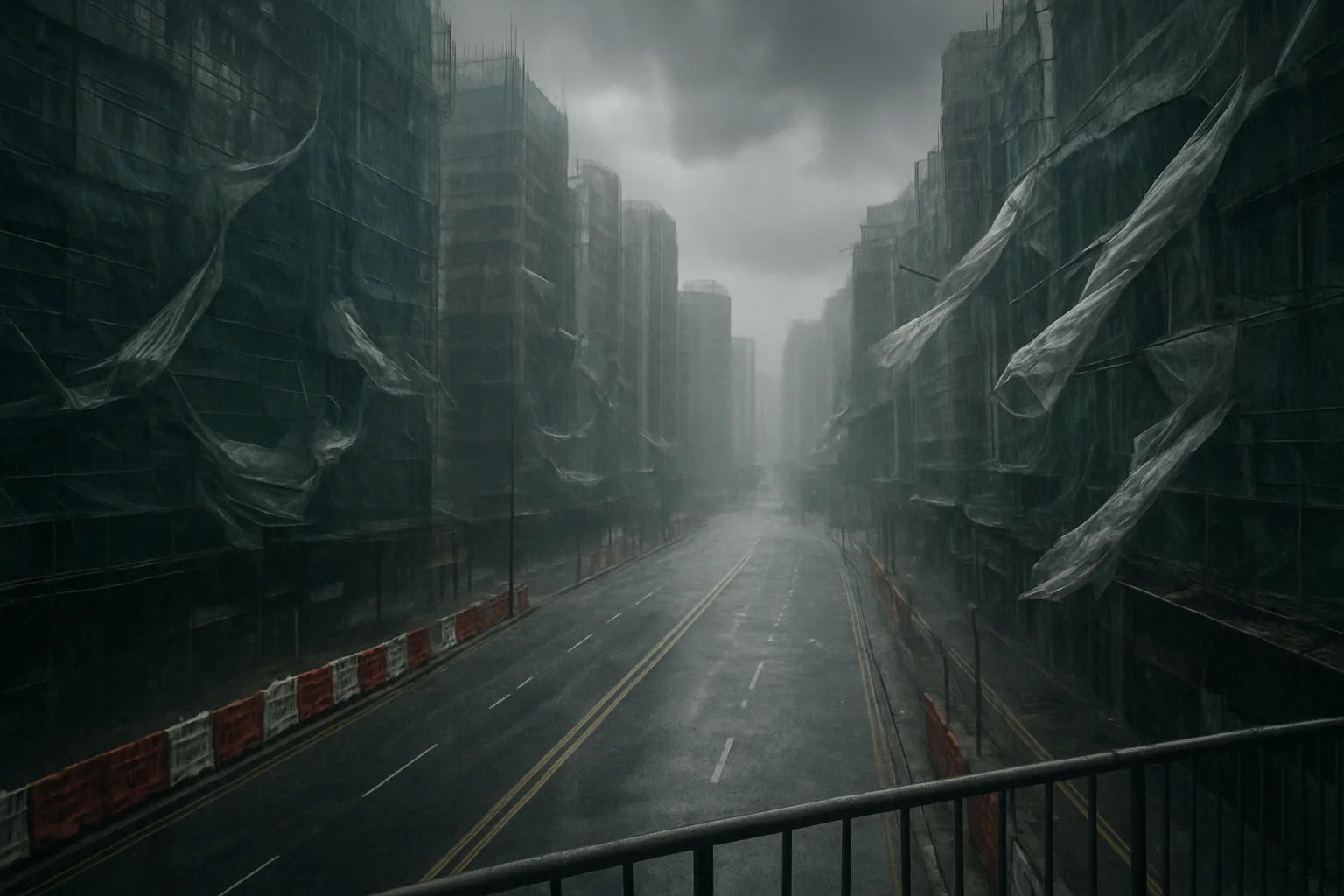
What happened on Cheung Sha Wan Road is about more than one construction site. It is a stress test — and a relatively lucky one — for how Hong Kong’s dense urban environment copes when a major typhoon pushes right up against its limits.
Multi-storey scaffolding is an almost permanent feature of the city’s skyline, wrapping around towers during renovation projects and new builds. When a structure like that fails in high winds, it raises pointed questions:
- Are current scaffolding standards and inspections strong enough for stronger typhoons like Noul?
- Do contractors and building owners consistently follow best practices when storms are forecast?
- Should certain exposed projects be required to temporarily modify or secure external platforms ahead of landfall?
Authorities will almost certainly dig into those questions as storm season continues. While no injuries were reported this time, the same kind of failure in a busier moment of the day or at a more crowded intersection could have had a very different outcome.
Southern China braces as Noul moves inland
After brushing past Hong Kong, Typhoon Noul moved into southern China, bringing with it the same combination of punishing winds and sheets of rain. Coastal communities across the region face a familiar checklist: flooding risk, power cuts, landslides in vulnerable areas, and transportation shutdowns.
The storm’s classification as the strongest to hit China this year so far will put extra pressure on local authorities to show they are prepared. Harbor operations, rail connections, and regional airports are all subject to disruption when a typhoon of this strength hits, and Noul is no exception.
Even after the wind speeds start to drop, the rain can linger, driving up the risk of flash floods and swollen rivers. For residents in low-lying districts or near hillsides, that phase of the storm can be just as dangerous as the headline-grabbing landfall itself.
Why the visuals of Noul matter
Images of scaffolding torn from a building in Hong Kong may become some of the defining visuals of Typhoon Noul. They are visceral in a way that satellite wind maps and rainfall totals aren’t, and they cut through the fatigue that can set in when yet another storm warning appears.
Those visuals also serve a purpose. They remind people across the region that typhoon alerts are not an abstraction. They show what 100-plus kilometer-per-hour gusts can do to steel and concrete, and by extension, what they can do to buses, street markets, and anyone caught outside when a storm hits.
For a city that has experienced countless typhoons, the fact that Noul could still provide such a shocking moment is telling. Preparedness can reduce casualties and damage, but it doesn’t make the danger any less real.
What This Means
Typhoon Noul’s sweep through Hong Kong and into southern China is a preview of what the rest of the season might hold: stronger storms, heavier rain, and more frequent tests of the systems that keep dense coastal cities functioning.
In Hong Kong, the collapse of multi-storey scaffolding on Cheung Sha Wan Road will likely become a case study in how to better secure construction sites when a major typhoon is bearing down. The mass cancellation of around 360 flights at Hong Kong airport underscores how quickly authorities are willing to shut down core infrastructure to keep people out of harm’s way.
For residents and travelers alike, the takeaway is blunt. When a storm like Typhoon Noul is moving in, heed the warnings, clear the streets, and assume that anything not firmly fixed in place — from scaffolding to signboards — can become a hazard. This time, Hong Kong escaped serious injury from a dramatic collapse. The next storm may not be so forgiving.
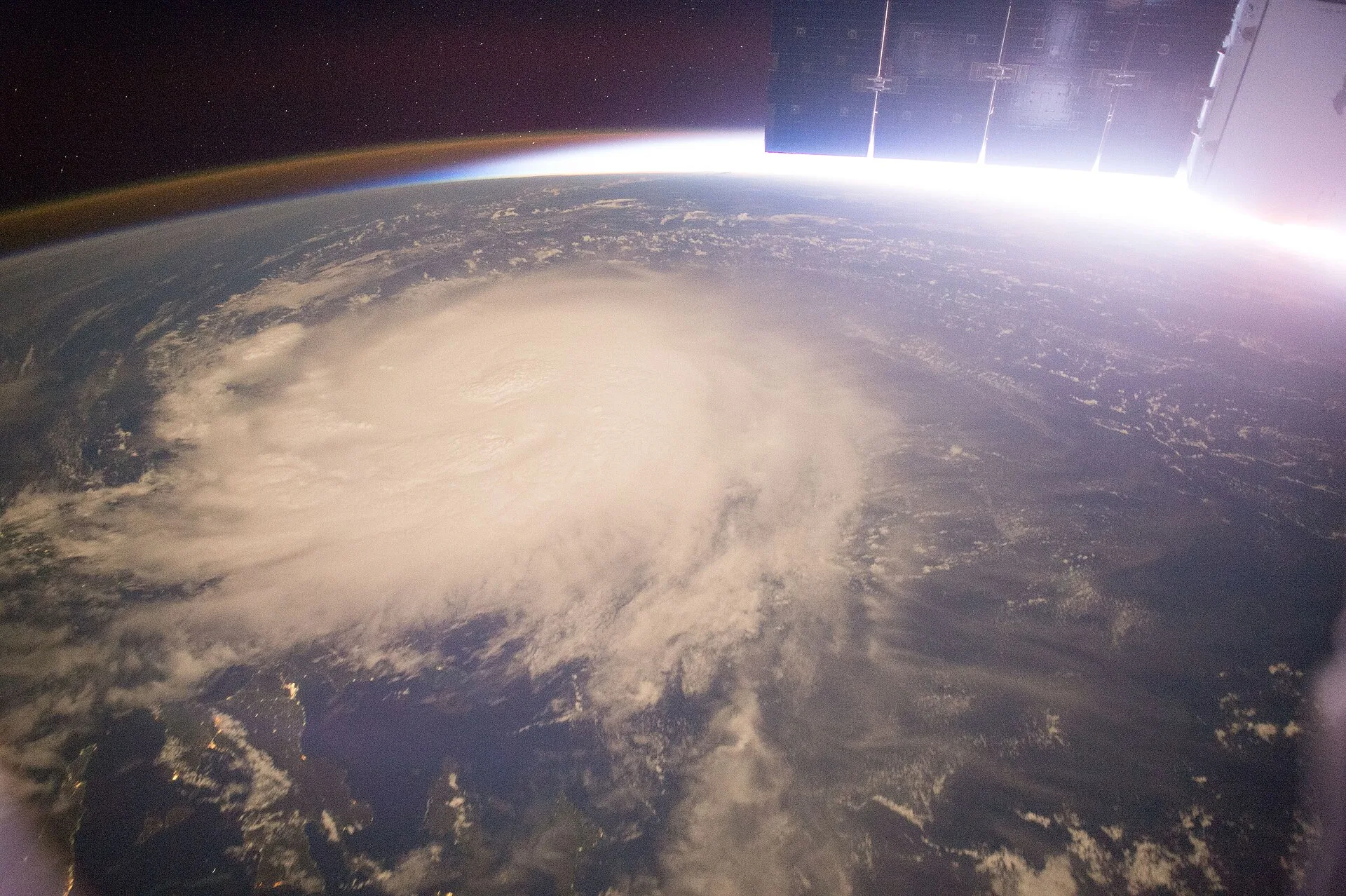
Photo: NASA / Public domain via Wikimedia Commons