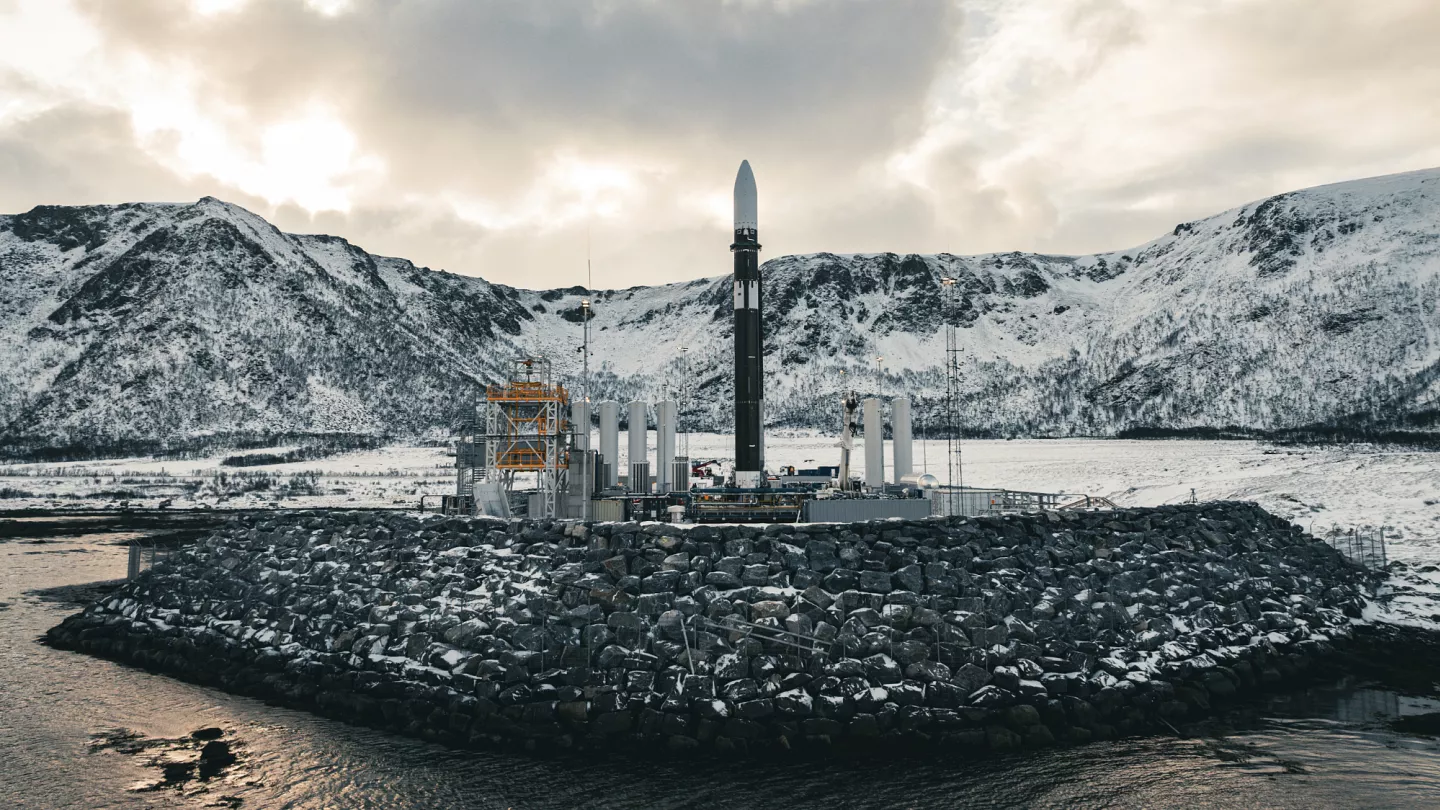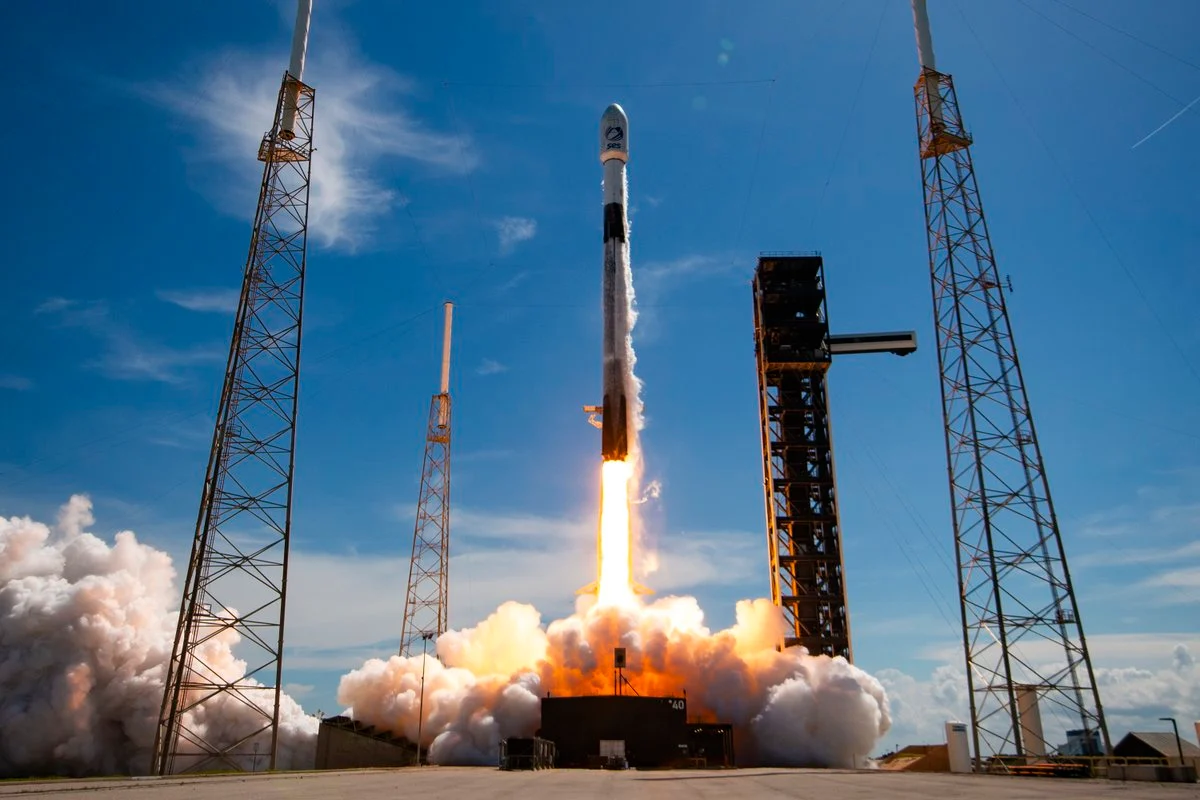
Twenty years after a small rocket named Falcon 1 failed on its first attempt to reach orbit, the vehicle family that grew out of it flew for the 700th time. A Falcon 9 lifted off from Space Launch Complex 40 at Cape Canaveral on September 13 at 2:49 p.m. EDT, carrying the last three satellites of a constellation that has taken SES four years and several unwelcome surprises to complete.
Two milestones, one launch, and neither of them the kind of thing that gets a parade anymore. That is arguably the most remarkable part.
The Mission
The payload was O3b mPOWER F11, F12 and F13, the final three spacecraft in SES’s medium Earth orbit broadband constellation. Each is Boeing-built with a dry mass of about 1,900 kilograms. Deployment began roughly 34 minutes after liftoff, with the satellites released in sequence about seven minutes apart.
The booster was B1080, flying for the 29th time, with a landing targeted on the droneship A Shortfall of Gravitas in the Atlantic. That recovery would be the 166th on that vessel alone and the 661st Falcon booster landing overall.
Weather was the main open question going into the window, running around 60% favorable at the opening and deteriorating to 40% by the close. The 87-minute window held.
Why Medium Earth Orbit
O3b mPOWER occupies an unusual slot in the satellite broadband landscape. It flies at medium Earth orbit, well above the low-orbit shells used by Starlink and OneWeb and well below the geostationary belt where traditional telecom satellites park.
The tradeoff is deliberate:
- Geostationary satellites cover enormous areas from one spacecraft but impose a latency penalty of roughly half a second round trip, which is fatal for anything interactive.
- Low Earth orbit gives very low latency but requires hundreds or thousands of satellites for continuous coverage.
- Medium Earth orbit lands in between: latency low enough for real-time applications, with full coverage achievable from a constellation you can almost count on your fingers.
Thirteen satellites now constitute the complete system. That is a very small number for a global broadband network, and it is the entire point of the architecture.
The Constellation’s Rough Road
Getting here took longer than SES planned. The satellites launched in pairs starting in December 2022, followed by batches in April 2023, November 2023, December 2024 and July 2025. Along the way an electrical issue was identified in the spacecraft design, which forced modifications to later units and prompted SES to expand the constellation beyond its original size to compensate.
SES leadership framed the final delivery as ramping up the constellation’s capabilities to meet growing demand from commercial and government customers. The government and military side of that sentence has become considerably more important to satellite operators over the past two years.
What 700 Missions Actually Represents
The number is worth unpacking, because it is not 700 launches of the same thing. The Falcon family spans Falcon 1, which flew five times and reached orbit twice; Falcon 9, which has gone through several substantial redesigns; and Falcon Heavy, which is three Falcon 9 first stages bolted together.
Falcon 1’s debut in March 2006 ended in failure less than a minute into flight. The company that flew it was small enough that another few failures would have ended it. The line from that vehicle to a launch cadence measured in launches per week is the most consequential thing that has happened in the launch industry in fifty years.
Elon Musk publicly congratulated the Falcon team on the milestone, noting the twenty-year gap since Falcon 1’s first flight.
Reuse Is the Whole Story
B1080 flying for the 29th time is the statistic that explains everything else. When SpaceX started landing boosters, the open question was whether refurbishment would cost enough to erase the savings. It did not. Boosters now routinely fly twenty or more times, and the marginal cost of a Falcon 9 launch has fallen to a level no expendable vehicle can approach.
The 661 booster landings figure is in some ways more impressive than the 700 missions figure. It represents a capability that, for the entire history of spaceflight before 2015, did not exist.
The Competitive Picture
Falcon’s dominance has produced an obvious problem for everyone else. European operators, including SES, have spent years managing the awkward reality that the most reliable and affordable ride to orbit is American, at a moment when European launch independence has become a political priority.
New vehicles are arriving. Ariane 6 is flying, Vulcan is operational, and a cohort of smaller European and Japanese launchers is coming online. None of them yet offer reusability at Falcon’s maturity, and none can match its cadence. That gap is narrowing, but slowly.
What This Means
For SES, this launch closes a chapter. The mPOWER constellation is complete, the design issues that dogged it are behind it, and the company can finally sell the full capability it has been promising customers since 2022.
For SpaceX, 700 missions is a number that mostly demonstrates how thoroughly routine orbital launch has become. The company flew a two-decade milestone on a Sunday afternoon, landed a booster on its 29th flight, and moved on to the next one on the manifest.
That is the real measure of what has changed. A 700th flight used to be the kind of thing that would be unimaginable for a single rocket family. Now it competes for attention with the weather forecast.