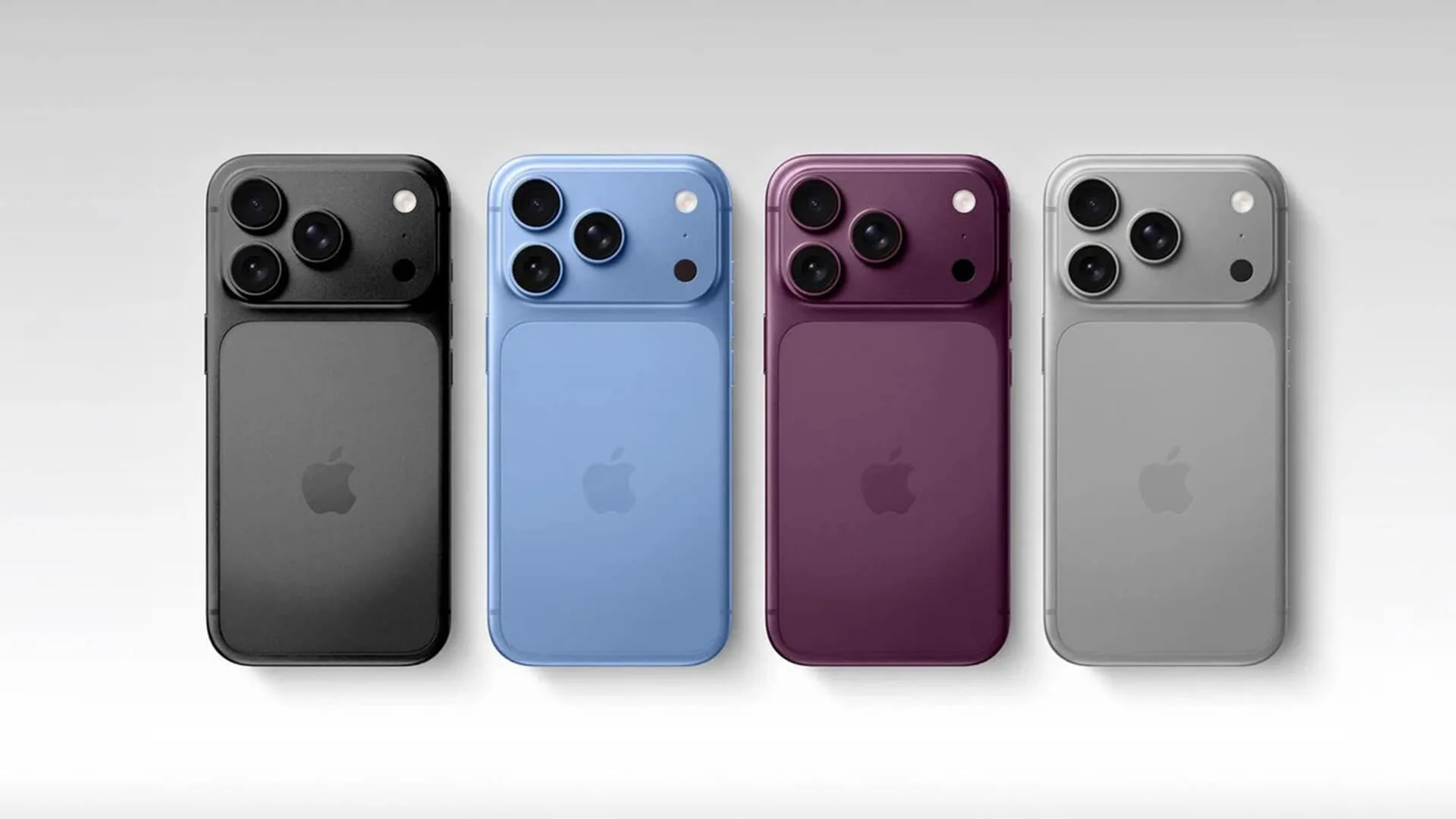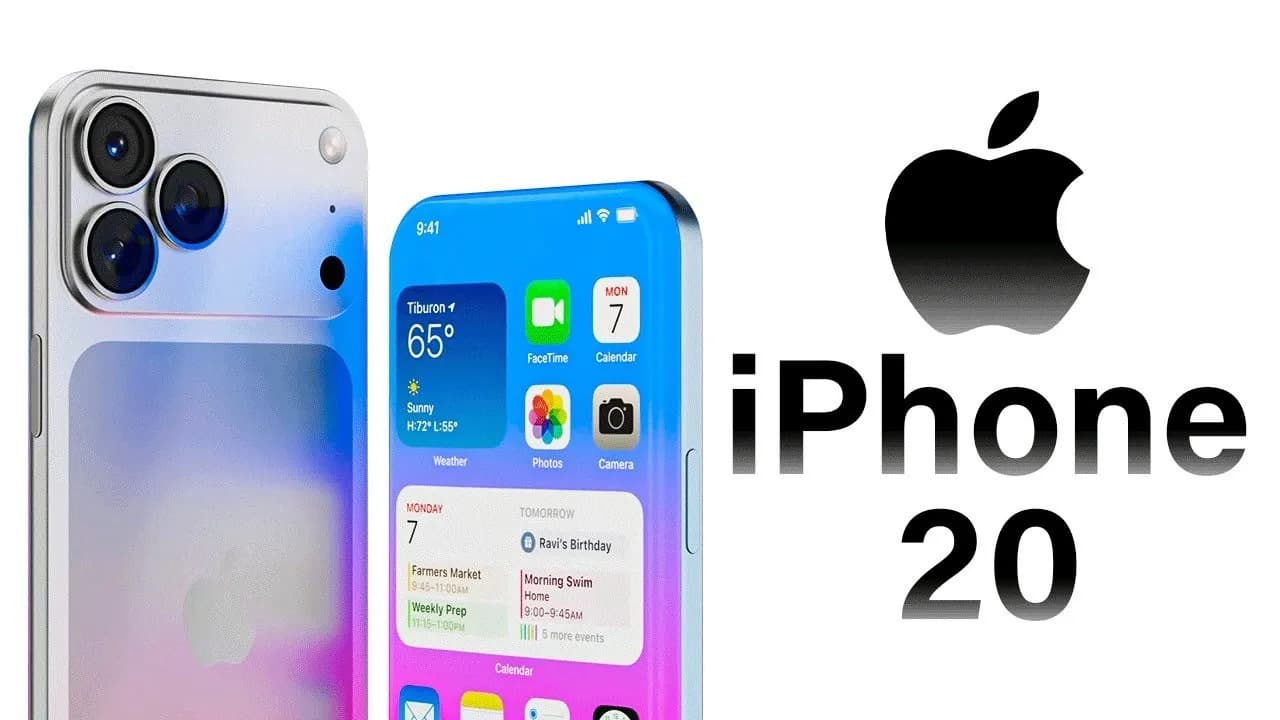
For nearly two decades, Apple has been chasing a phone that looks like nothing at all — a slab of glass that disappears into whatever it’s showing you. Jony Ive talked about it. Patent filings hinted at it. Concept renders beat the idea to death on YouTube. Now, with the iPhone’s 20th anniversary approaching in 2027, the rumor mill says Apple isn’t just chasing that vision anymore. It’s tooling up factories for it.
The latest signal came this week, and it’s the kind of unglamorous supply-chain detail that tends to matter more than a flashy render.
What the Newest Report Actually Says
According to a Weibo leaker known as “Fixed Focus Digital,” facilities in Apple’s supply chain have finished renovations ahead of “iPhone 20” production, with the “preferred approach” for the device being a return to glass — and manufacturing quality expected to land somewhere in the neighborhood of the first-generation iPhone Air. The leaker said the relevant manufacturing facility has already been renovated and is now awaiting the start of machining, though no supplier was named.
That’s an important nuance. Apple’s iPhone production typically doesn’t hit full-scale manufacturing until weeks before launch — for the iPhone 17, trial production began in June with full-volume output targeted for August. So this isn’t a production ramp; it’s early retooling of a line, groundwork that lines up with what Bloomberg has described as Apple already gearing up for the anniversary redesign.
The same leaker has been notably conservative elsewhere. Fixed Focus Digital previously pushed back on claims that Apple was moving to liquid metal or titanium for its Pro models, arguing that aluminum remains the only practical choice given the heat generated by on-device AI processing — and has said aluminum mid-frames are “going to be used in straight-edge phones for a long time to come.” That last phrase is the tell: straight-edge phones. The iPhone 20 isn’t expected to be one.
“Glasswing”: The Codename That Explains Everything
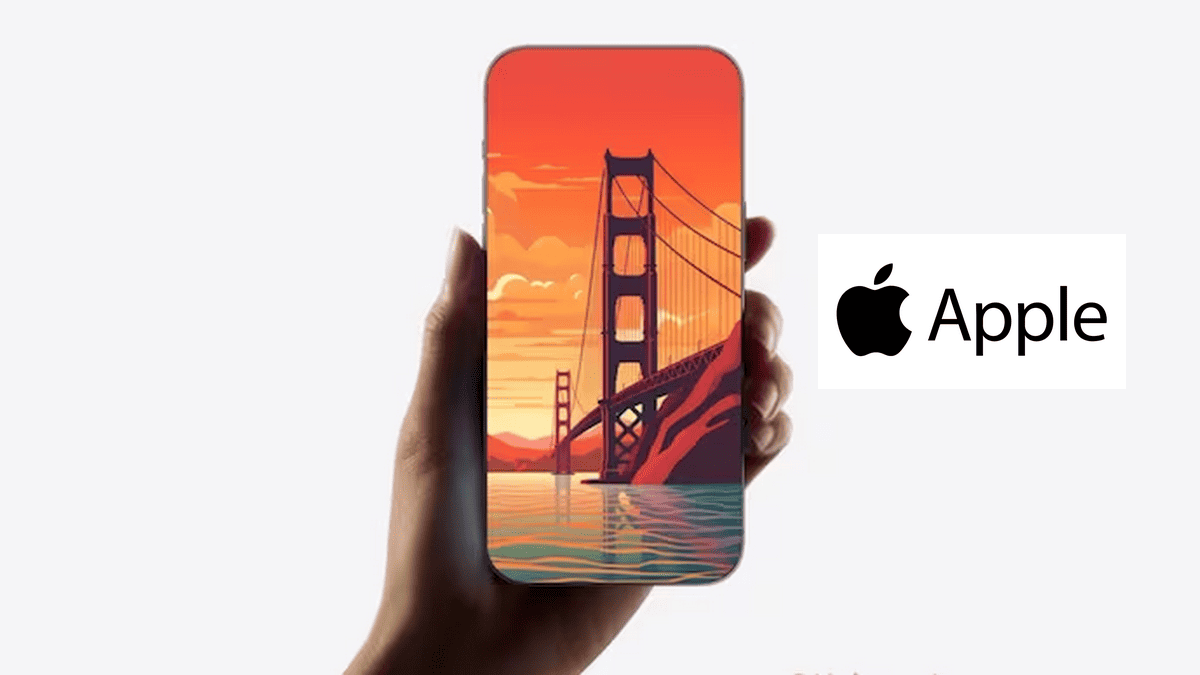
Bloomberg’s Mark Gurman has reported that the 20th-anniversary overhaul is internally dubbed “Glasswing” — a nod to the glasswing butterfly, whose transparent wings inspired a design with glass edges that curve seamlessly into the display on all four sides. Gurman has described curved glass sides wrapping the entire phone, extraordinarily slim bezels, and no cutout in the screen.
The Software Was Always Part of the Plan
Here’s the part that reframes the last year of iOS discourse. Gurman says the hardware shift is driving the software changes — Apple’s Liquid Glass interface was designed to blend visually with this hardware, creating a more unified look between the device and its operating system. Every complaint about Liquid Glass looking oddly floaty on a flat, sharp-edged iPhone 17 may have a simple answer: it wasn’t designed for a flat, sharp-edged iPhone.
Not a Standalone Model
Analyst Jeff Pu has reported that the anniversary design won’t arrive as a separate model but will instead appear on the 2027 iPhone Pro and Pro Max. Other reporting suggests the flat-slab design would be reserved for a high-end model sold alongside iPhones with more traditional designs. Translation: this is a Pro-tier experiment first, a design language second.
What’s Rumored Inside the Glass
| Feature | What’s reported |
|---|---|
| Design | Quad-curved glass wrapping all four edges; “Glasswing” codename |
| Bezels | Extraordinarily slim; one leak cites roughly 1.1mm |
| Display tech | Thinner, brighter OLED using Color Filter on Encapsulation (COE) |
| Front camera / Face ID | Under-display ambitions; timeline disputed |
| Buttons | Solid-state haptic controls replacing mechanical buttons |
| Chip | A21 on a second-gen 2nm process |
| Launch window | September 2027 |
A few of these deserve unpacking:
- The display stack. Apple is rumored to adopt Samsung OLED panels with COE technology, which removes the polarizing film and applies the color filter directly to the encapsulation layer — thinning the stack, letting more light through, and cutting power draw. To handle deep curves, Apple reportedly plans to use a crater-shaped light-diffusion layer to ensure uniform brightness across the screen.
- The buttons. Solid-state buttons with haptic feedback are rumored for the Side button, volume buttons, Action button, and Camera Control — cutting mechanical wear and distinguishing light presses from firm ones. One leaker claims Apple cracked the hardest part with an ultra-low-power chip that keeps the controls responsive even when the phone is off.
- The cutout problem. This is the wobbliest pillar. Leaker Digital Chat Station describes an incremental roadmap: a smaller Dynamic Island on iPhone 18 Pro, then a reduced hole-punch with under-display Face ID by 2027. Display analyst Ross Young, meanwhile, has said the smaller Dynamic Island expected on the iPhone 18 Pro is likely to persist through 2027 and doesn’t expect a truly notch-free, all-screen iPhone before 2030.
The Durability Question Nobody Has Answered
The obvious objection writes itself, and MacRumors’ own comment section wrote it within minutes of the report going live. Glass breaks. Curved glass breaks in more places. Cases get harder to design, screen protectors get nearly impossible, and repair costs climb.
Apple has been quietly building toward an answer — this year’s models use Ceramic Shield 2, which is more resistant to scratching and breakage — but a wraparound panel with curvature on all four edges is a different engineering problem from a flat front and back. The technical hurdles are real: display circuitry that bends around four edges needs ultra-thin film encapsulation to survive moisture and air, and Apple’s foldable program has already run into durability walls of its own.
There’s also a thermal wrinkle. If aluminum is genuinely the material of choice because AI workloads run hot, a glass-heavy body has to solve heat dissipation some other way — a tension the leaks have so far waved at rather than resolved.
Why 2027 Is the Right Stage for This

Apple has a habit of turning anniversaries into inflection points. In 2017, the iPhone X arrived for the 10th anniversary with an all-screen front, a notch, and no home button — and every Android flagship spent the next three years copying it. Tim Cook said at the time that the design would set the direction of smartphone technology for the next decade. That decade ends in 2027.
Expect the price to reflect the occasion. Gurman has suggested that the curved-glass design could command a higher price at launch, with the iPhone X’s $1,000 barrier as the obvious precedent. The anniversary models are expected in fall 2027, following the iPhone 18, iPhone 18e, and iPhone Air 2.
Final Verdict
Treat this week’s factory report as a data point, not a promise. Retooling a line in mid-2026 for a fall 2027 device is exactly the kind of quiet groundwork Apple does years before it ships anything — and it’s also exactly the kind of groundwork Apple has abandoned before.
But the picture is getting harder to dismiss. Multiple independent threads — Gurman’s “Glasswing” reporting, Jeff Pu’s Pro-tier prediction, Chinese supply-chain leakers, and Apple’s own Liquid Glass software pivot — are all pointing at the same object: a curved, mostly-glass, mostly-buttonless iPhone in September 2027.
What’s genuinely uncertain isn’t whether Apple ships a dramatic redesign for the 20th anniversary. It’s how much of the fantasy survives contact with manufacturing. A quad-curved glass body with slim bezels? Plausible. Solid-state buttons? Increasingly plausible. A completely uninterrupted display with no cutout whatsoever? That’s the one to bet against — and the one Apple most wants to win.
If you’re currently deciding between an iPhone 18 this fall and holding out, be honest with yourself about what you’re waiting for. Anniversary iPhones are milestone hardware, and milestone hardware is thrilling, expensive, and first-generation. Sometimes all three at once.