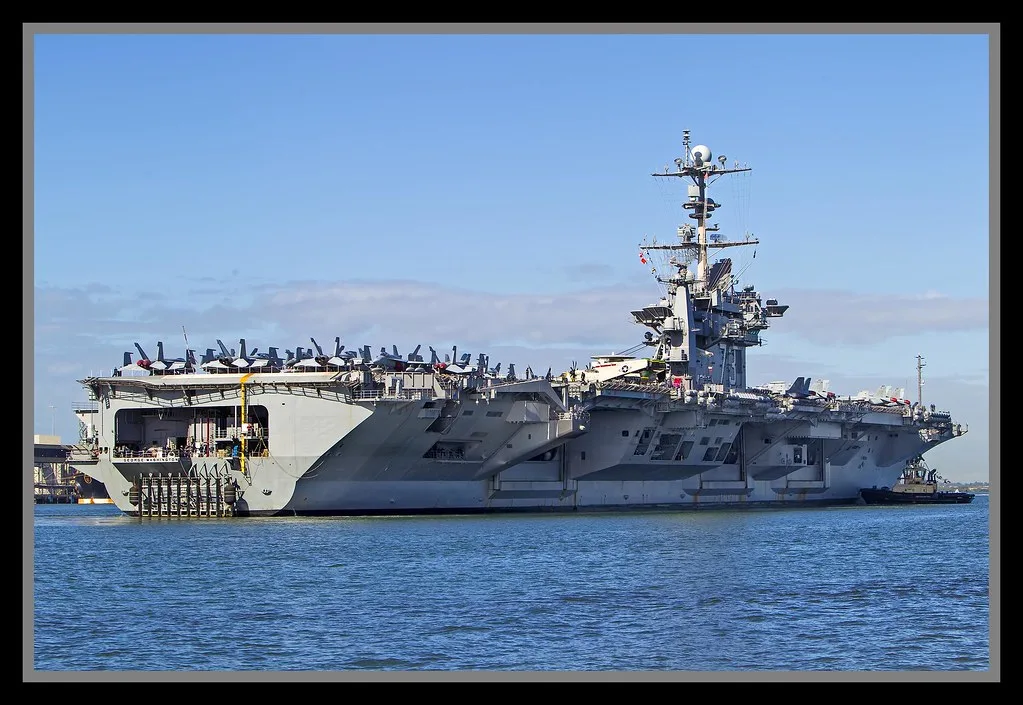
The decision to send the USS George Washington toward the Middle East to potentially relieve the USS Abraham Lincoln isn’t just another routine carrier swap. It’s a warning flare about how hard the US military is leaning on a shrinking fleet at a moment when it’s fighting a grinding war with Iran and trying to convince Asian allies it can still keep China in check. This is US power projection under visible strain.
USS George Washington steps into the Iran war shadow
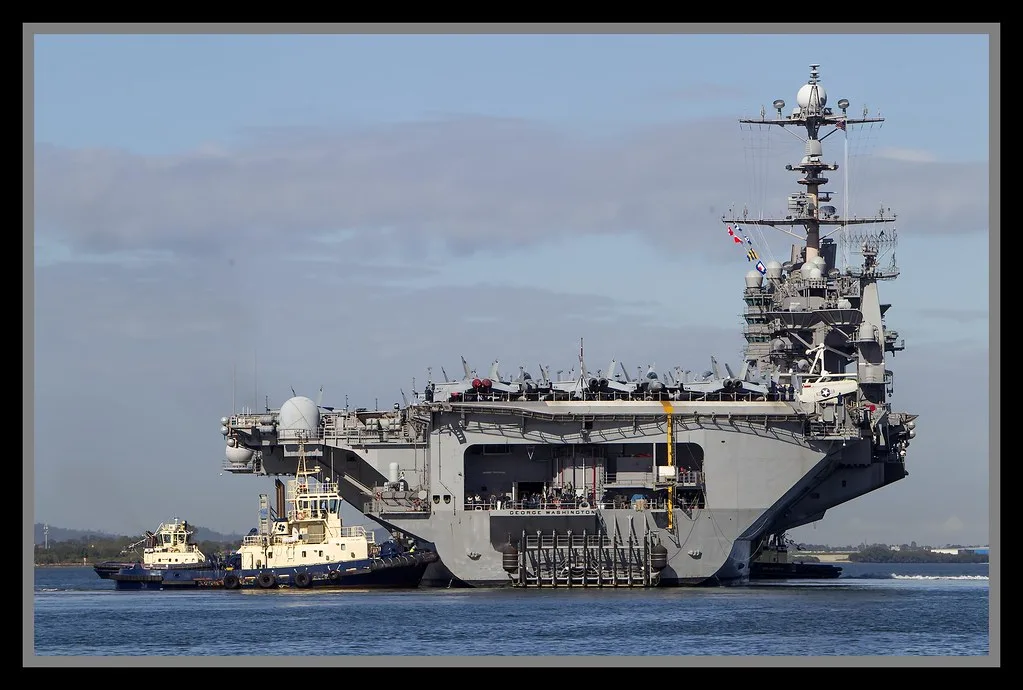
The USS George Washington, a Nimitz-class nuclear-powered aircraft carrier, has departed the western Pacific after leaving port in Da Nang, Vietnam, for what US officials expect will be a deployment to the Middle East. The carrier is widely anticipated to replace the USS Abraham Lincoln, which has been at the center of the US-Israeli war against Iran since February.
On paper, the move is simple: one carrier out, another carrier in. In practice, it’s a reshuffling forced by a war that refuses to end and a deployment that’s stretched past the breaking point.
The USS Lincoln has been at sea without a port call for more than 266 days, an unprecedented run for the Navy. Roughly 5,000 sailors and Marines have been living and working aboard the ship through multiple mission shifts — from operations linked to Venezuela to combat deployments tied to the Iran conflict — long past the deployment’s original May end date.
That kind of tempo is exactly what carrier groups are designed for. But there are clear signs this one has gone too far.
Dire conditions on the USS Lincoln come into focus
Reports from the USS Lincoln have triggered a wave of concern in Washington and beyond. Sailors have allegedly tried to leap overboard, a stark indicator of mental health stress on a ship that has not seen land for nearly nine months. Coverage from the region has described a breakdown in basic quality-of-life conditions: dwindling hygiene supplies, thin and repetitive meals, and problems with plumbing and waste disposal.
Senators have demanded answers about how a modern US carrier, a flagship symbol of military reach, ended up in these circumstances — and why its deployment was allowed to run this long.
The administration has pushed back hard. President Donald Trump brushed off the duration of the mission, saying the deployment was “not nearly enough.” Pentagon chief Pete Hegseth insisted that stories about deteriorating conditions were “completely misrepresented.”
Acting Navy Secretary Hung Cao has tried to split the difference. In a statement, he acknowledged that “a small number of mental health cases were treated with no loss of life” and conceded that meal plans had been reshaped when “fresh resupply was unavailable,” while stressing that no sailor had missed a meal. His message was clear: the situation is serious, but not catastrophic.
Still, the fact that top civilian leaders are fielding detailed questions about toilets and food stocks on a frontline warship shows how visible the strain on the USS Lincoln has become.
Logistics under fire in the Iran war
Behind the personnel crisis is a more technical, but just as critical, problem: logistics. The war with Iran has hit US infrastructure across the region, particularly a major Navy base in Bahrain. Those attacks, analysts say, have disrupted the normal rhythm of resupply, repairs, and crew relief for carriers like the Lincoln.
The conflict with Iran — now months old and still without a clear path to a ceasefire — has also chewed through US munitions and defensive systems. Officials and experts have warned of depleted stockpiles on both the offensive and defensive side, raising broader questions about whether the US can sustain this level of combat while remaining ready for other crises.
Talks aimed at easing the war have stalled, including over the status of the Strait of Hormuz, the narrow but essential chokepoint for global oil and shipping. For now, the fighting has calmed somewhat, but there is no sign of a durable political solution. That means carrier groups stay on station, planes keep flying, and crews like the Lincoln’s remain under relentless pressure.
Sending the Washington east leaves Asia exposed
Every time the US shifts a carrier, it is making a bet about risk. Moving the USS George Washington from the Pacific to the Middle East is a clear statement that, for now, Washington views the Iran war as the more immediate pressure point — even if that means leaving a glaring gap in its presence in Asia.
With the Washington departing, there will be no US aircraft carrier in the western Pacific, a region where these ships have long functioned as floating embassies and blunt instruments of deterrence. The absence is already raising alarms among regional security analysts and US allies who count on visible American hardware as proof that defense commitments are more than words.
China is almost certain to notice the gap. Analysts expect Beijing to use the moment to sharpen its own narrative: that the US is overstretched, distracted by the Iran conflict, and no longer the “big dog” in the region. That message is aimed squarely at countries such as the Philippines, Japan, and Indonesia, which sit close to China’s expanding military footprint and have to make daily decisions about how far to lean on US backing.
So far, experts do not believe this single carrier move will, on its own, prompt China to launch a direct attack on Taiwan, the self-governed island it claims as its territory. But it does contribute to a longer trend line: a US military pulled in multiple directions, with aging platforms and limited slack in its global posture.
Carrier math in an age of two-front pressure
Both the USS Abraham Lincoln and the USS George Washington are Nimitz-class carriers, nuclear-powered giants capable of hosting more than 6,000 personnel and around 90 aircraft. In principle, swapping one for the other should be straightforward. In reality, the move highlights how little margin the US has built into its force structure.
With fewer active carriers than in previous decades and a global map dotted with commitments — from Europe to the Gulf to the Indo-Pacific — every decision to surge a carrier into a conflict zone comes with an opportunity cost somewhere else. The Iran war has already forced the US to surge air and missile defenses, redeploy naval assets, and lean heavily on allies. Now it is also reshaping the Navy’s signature presence in Asia.
The longer the war with Iran drags on, the more visible these trade-offs will become. Rotating the Lincoln out for the Washington may relieve the immediate human strain on one crew, but it does not solve the core problem: a conflict with no clear off-ramp and a fleet already stretched thin.
Morale, politics, and the limits of spin
The public tug-of-war over conditions on the USS Lincoln is about more than damage control; it’s a test of trust. Sailors and their families are hearing one thing from reporting and lawmakers — accounts of attempted suicides, supply problems, and almost nine months at sea — and another from top leaders who insist the situation is under control and sometimes even minimize the duration of the deployment.
That disconnect risks corroding morale not just on the Lincoln, but across a Navy that has already weathered tragedies, collisions, and recruiting struggles in recent years. When leaders frame a record-setting 266-plus day deployment as “not nearly enough,” it sends a message that rhetoric is outpacing reality on the deckplates.
Politically, the episode also sharpens a recurring fault line: how much pressure the US can and should place on its volunteer force to sustain open-ended conflicts. The Iran war may be limited in scope compared with past invasions, but for the crews tasked with enforcing blockades, flying combat air patrols, and standing watch around the clock, it feels anything but limited.
What This Means
The USS George Washington’s expected relief of the USS Abraham Lincoln in the Middle East is more than a personnel swap in a distant theater. It is a snapshot of US power under stress: a Navy forced to keep a war-footing tempo in the Gulf while leaving the western Pacific without a carrier, and sailors pushed to the edge on deployments that keep slipping further from their original end dates.
If the Lincoln’s ordeal has made anything clear, it is that the human and strategic costs of an open-ended Iran war are landing squarely on a handful of ships and crews. Rotating in the Washington may lower the temperature on one vessel, but the broader questions remain: how long the US intends to sustain this fight, how it will rebuild the stockpiles and infrastructure it has burned through, and whether it can reassure allies from Bahrain to Tokyo that it still has enough carrier power to go around.
Until those questions are answered, every new movement order — every departure from Da Nang, every extended deployment in the Gulf — will be read less as routine and more as a measure of how far American military bandwidth can actually stretch.
Photo: Sheba Also 18 Million Views / BY-SA via Openverse