Mike Lindell is trying to turn his Trump loyalty into a ticket to the governor’s office in Minnesota — a state where Donald Trump himself has never managed to win.
Days before Tuesday’s Republican primary for governor, the MyPillow founder and long-time Trump ally is leaning hard on his relationship with the former president, pitching himself as the one candidate who can pick up the phone and call the Oval Office. It’s a bold sell in a blue-leaning state that has repeatedly rejected Trump at the ballot box and bristled at his administration’s policies.
Mike Lindell’s Trump-first pitch
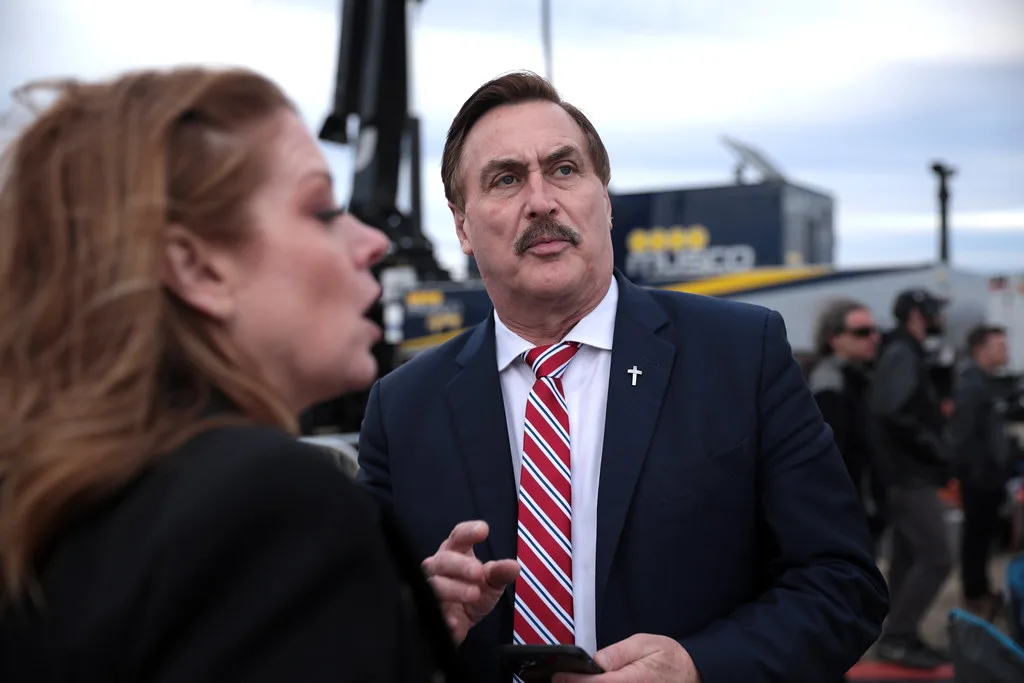
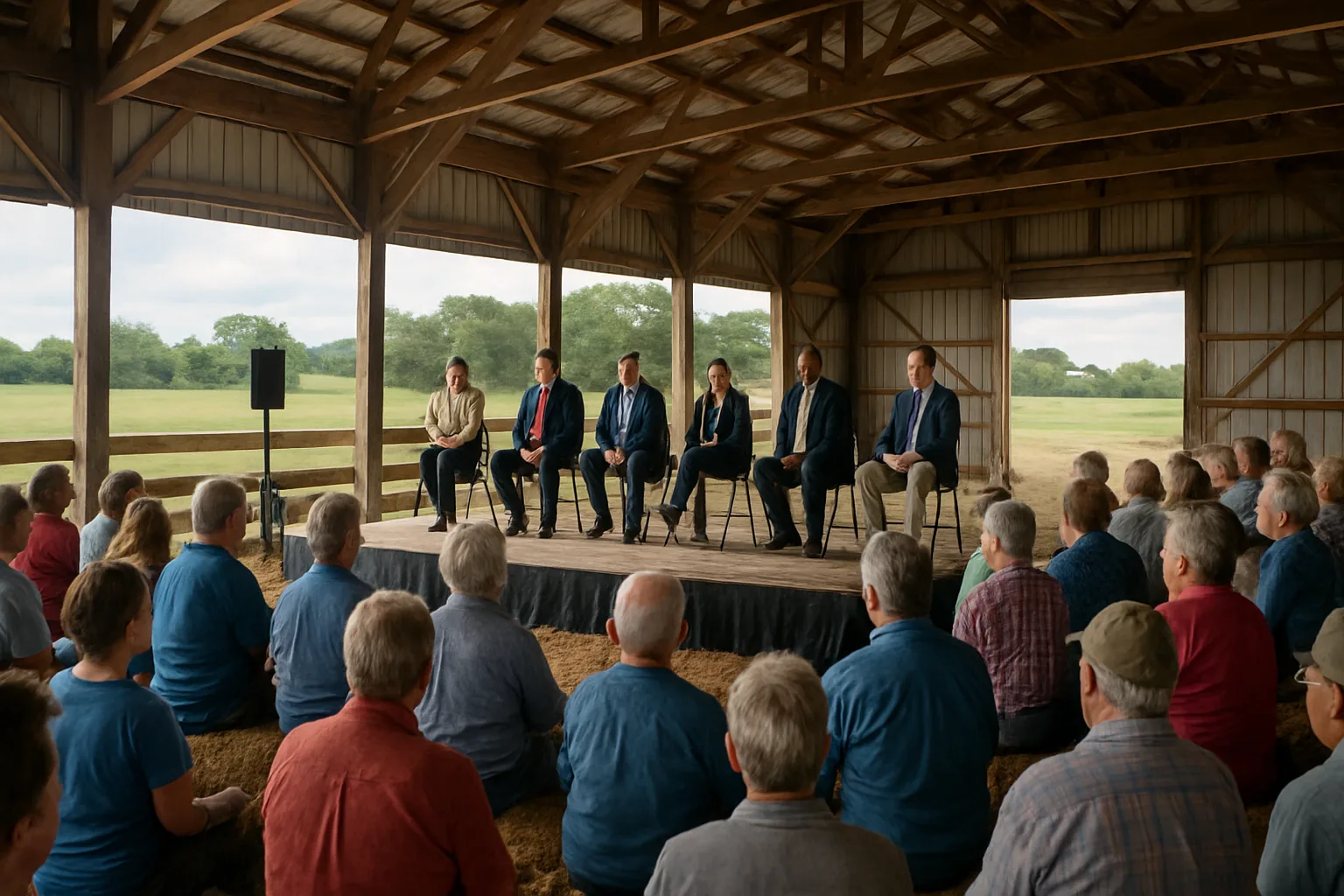
Campaigning at Minnesota Farmfest, a must-stop event for statewide hopefuls, Lindell literally dressed the part. While most politicians onstage wore T-shirts and jeans, he stood out in a dark suit and a bright red tie — the classic Trump-era uniform.
From the stage, Lindell told the crowd he had something his rivals lacked: direct access to the former president. He argued that ability to “work with the president of the United States” gave him a unique edge in the governor’s race, drawing applause from at least part of the audience.
Lindell is running in the Republican primary to replace Democratic Gov. Tim Walz, who is not seeking a third term. At 65, the Minnesota native has built his entire political profile on his transformation from local businessman to one of Trump’s most fervent public defenders, especially around the 2020 election.
That posture is central to his campaign. Trump has endorsed Lindell, and Lindell is campaigning as the unapologetic Trump candidate in a contest where the GOP base still reveres the former president even as statewide voters remain skeptical.
Trump’s mixed record in Minnesota
The gamble is obvious: Lindell is closely tying his fate to a politician who has never carried Minnesota in three presidential runs. Trump narrowed the margin in 2016 but still lost. He came up short again in 2020. And even as he keeps a hold on many Republican voters, his broader standing in the state remains bruised.
The Trump administration’s record in Minnesota is part of the backdrop. Federal moves to cut Medicaid funding and a stepped-up immigration enforcement surge — one that coincided with incidents leaving two observers dead — stained Trump’s reputation among key blocs of Minnesota voters, including in suburban and rural communities that Republicans need to win statewide.
That history raises the central question of Lindell’s campaign: can a Trump-forward platform succeed where Trump has failed, or is he locking himself into the same ceiling that has kept Republicans out of the governor’s office?
Party insiders versus the Trump wing
Even inside the Minnesota Republican Party, there are real doubts. While Trump has thrown his weight behind Lindell, party delegates went a different direction at their May convention, endorsing Kendall Qualls instead. It’s a rare split-screen moment: the former president backing one candidate, the state party infrastructure rallying behind another.
Republican strategist Preya Samsundar framed Trump’s decision as personal rather than strategic, arguing that he chose a close ally rather than the contender best positioned to win statewide. That tension — loyalty to Trump versus electability in November — is quietly defining the race.
Polls suggest Lindell may nonetheless be leading in the primary, a sign of how strong Trump’s brand still is with core Republican voters. But the party’s nervousness is showing.
In recent days, state GOP leaders have raised questions about whether Lindell actually meets Minnesota’s residency requirements, while a former party chair resurfaced accusations that he physically abused a former girlfriend. Lindell has long denied the allegation and insists his residency is in order. He claims the criticism is a coordinated effort by party insiders who want him to lose, and he points to the timing — coming after Trump’s endorsement — as proof.
A base that still wants Trump’s warrior
For many of Lindell’s supporters, the clash with party elites is a feature, not a bug. At Farmfest, visitors filtered past his booth to pick up campaign signs and copies of his autobiography. Some see him as exactly the kind of outsider the GOP needs in St. Paul.
Mary Jo Kukacka, one of those voters, described Lindell as honest and refreshingly unscripted. She likes that he isn’t a “polished” politician and says she’s praying for his victory in the primary. That mix of religious language, outsider admiration, and disdain for typical political messaging mirrors the same populist energy that powered Trump’s rise — and that Lindell is now trying to harness for himself.
If Lindell wins on Tuesday, it will be another reminder that for many Republican primary voters, Trump’s endorsement and a willingness to fight the establishment still outweigh fears about general-election baggage.
The rivals pitching a different Republican future
Lindell’s path to the nomination is far from clear, though. Onstage with him at Farmfest were two other Republicans offering a sharply different pitch: more traditional résumés, less Trump-centric rhetoric.
Kendall Qualls, the party’s endorsed candidate, leaned on his biography as an Army artillery officer. He framed himself as the “special forces” answer when conventional politics hasn’t delivered, arguing that Minnesota needs a different kind of leadership to shake up state government. It’s a message aimed at voters hungry for change but wary of chaos.
Then there’s Lisa Demuth, the speaker of the Minnesota House of Representatives. She’s outpaced the field in fundraising and is selling competence and coalition-building rather than grievance. Demuth highlighted her experience running a tied House, pointing out that every bill passed over the last two years had to win bipartisan support. Her pitch: she’s already shown she can navigate divided government and could do the same as governor.
Those contrasts give Republican voters a clear choice: a Trump-aligned firebrand in Lindell, a military veteran with the party’s formal blessing in Qualls, and a legislative leader promising pragmatic, bipartisan governance in Demuth.
A general election that starts now
Hovering over the primary stage was another presence: Democrat Amy Klobuchar, the U.S. senator widely expected to be the Republican nominee’s opponent this fall. Sharing a stage with her potential challengers, Klobuchar signaled what’s coming next — a general-election campaign that will test whether Minnesota Republicans want to re-run the Trump playbook or present a softer contrast.
Democrats are already eager to tie Lindell to Trump if he emerges from the primary. The former president’s record in the state, the Medicaid cuts, and the immigration enforcement controversies offer a ready-made narrative about what a Trump-aligned governor could mean in practice.
If Qualls or Demuth wins instead, the fall campaign could look very different, focused less on national grievance politics and more on questions of competence and bipartisanship. But either way, the Republican nominee will have to explain where they stand on Trump — how close is too close in a state that has never quite embraced him.
What Minnesota Republicans are really deciding
Beyond the personalities, the governor’s primary is an early test of what the post-Trump era looks like for the GOP in a purple-blue state. The party’s base remains energized by Trump’s style and convinced that combative outsiders like Lindell are the answer. Party strategists, donors, and many elected officials are more cautious, worried that a Trump-centric message keeps handing statewide offices to Democrats.
Lindell’s decision to step down as CEO of MyPillow to focus fully on the campaign underlines how all-in he is on this bet. He’s sacrificed his day job, absorbed legal and reputational hits over his efforts to overturn the 2020 election, and is now staking his political future on the idea that Trumpism can finally crack Minnesota’s blue wall.
If he wins the primary, it will validate Trump’s enduring sway over Republican voters and set up a high-voltage general election framed as a referendum on importing Trump-style governance to St. Paul. If he loses, it will be a rare rebuke for a Trump endorsement — and a sign that even Republican voters in Minnesota may be looking for something beyond constant warfare with the establishment.
What This Means
The Minnesota governor’s race isn’t just about Mike Lindell, or even about Donald Trump. It’s about whether a deep-blue-leaning Midwestern state that has resisted Trump at every turn is finally ready to elect his most devoted ally as governor — or whether Republicans decide that the surest way to win is by moving a step away from Trump, not closer.
On Tuesday, GOP voters will decide which version of their party they want to put on the ballot: the Trump loyalist who promises direct access to the former president, the convention favorite who pledges a different kind of leadership, or the legislative dealmaker who argues that bipartisan muscle is what really moves Minnesota. However it breaks, the result will echo far beyond Farmfest’s barn-style pavilion and into the broader fight over the future of the Republican Party.
Photo: Gage Skidmore / BY-SA via Openverse