Universal Music and Sony Music just told a federal court that Suno’s brand-new, supposedly clean AI model is built on a foundation the company itself admitted was dirty. The labels aren’t calling it a fresh start. They’re calling it laundering.
The Lawsuit, in Plain Terms
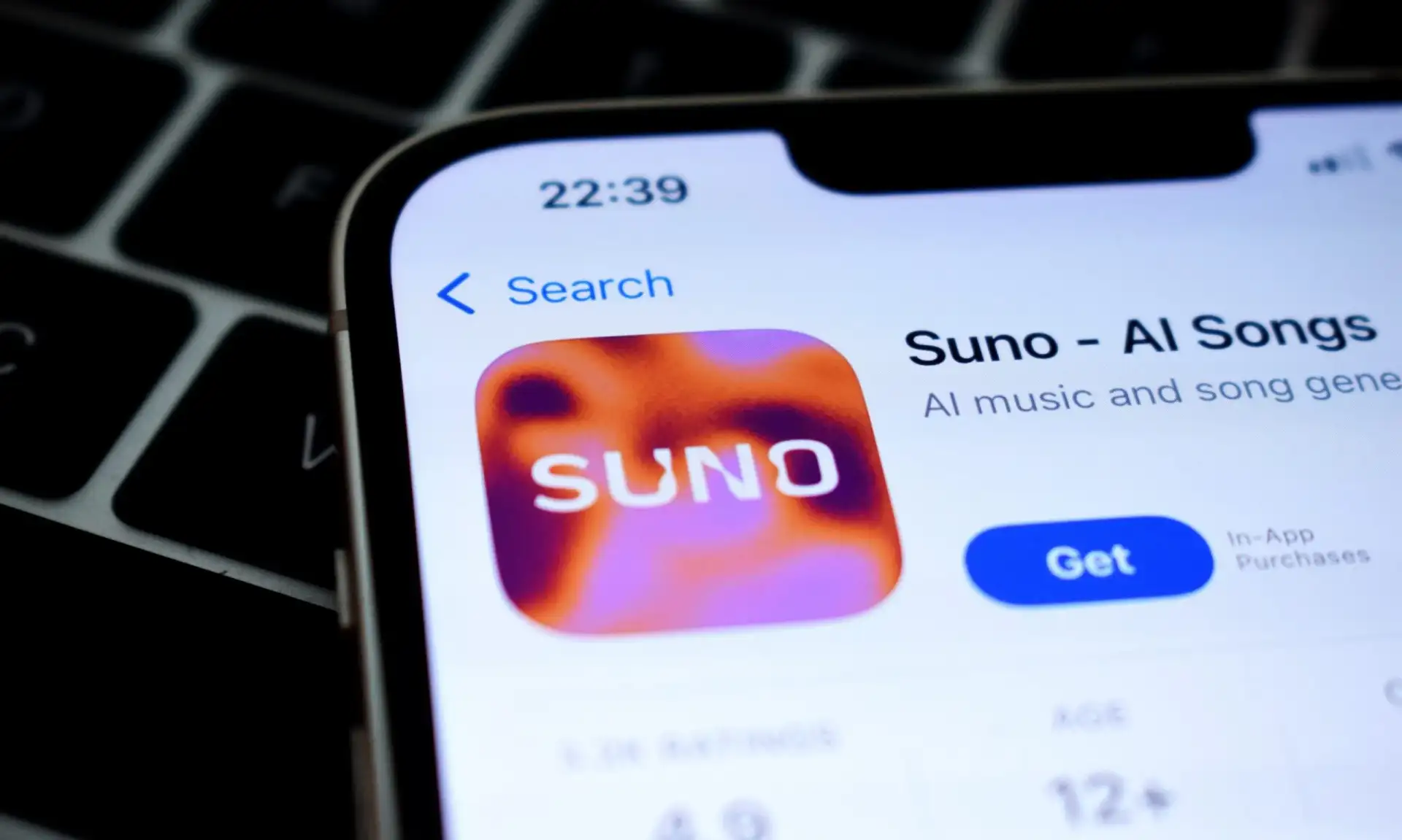
Filed in Boston federal court, the new complaint targets Suno’s v6 model, which launched September 9. Suno has described v6 as trained “from scratch,” implying a clean break from the unlicensed recordings at the center of the labels’ original case. Universal and Sony aren’t buying it. Their argument centers on a technical process called knowledge distillation, where a new model learns by studying the outputs and preferences of an older one. If the older model absorbed copyrighted songs without a license, the labels argue, those capabilities don’t disappear just because a newer model was technically trained on different raw data. They get passed down.
The complaint puts it bluntly: “Training a ‘new’ model on the outputs of an infringing model does not eliminate the infringement; it launders it.”
The Number at the Center of It: 60,202
That’s how many sound recordings the labels say Suno copied without a license. The figure comes from audio fingerprinting technology called Audible Magic, which the labels used during discovery in their original case to identify matches between Suno’s training data and their catalogs. Run the math on statutory damages — up to $150,000 per infringed work — and the theoretical maximum liability tops $9.1 billion, before adding roughly $150 million more tied to alleged circumvention of YouTube’s download protections.
How We Got Here
This is round two. The labels first sued Suno in June 2024 over a narrower set of 560 works. During discovery, they identified tens of thousands more — the 61,026 additional recordings that became the seed of this new filing. When they tried to simply add those works to the existing case, Judge F. Dennis Saylor IV said no in August 2026 and told them to file separately instead. This complaint is that separate filing.
One detail from the original case gives the labels’ argument real teeth: Suno has already admitted it obtained YouTube audio using a tool called YT-DLP to help train its earlier models. That’s not circumstantial — it’s the company’s own account of how it built its training data.
Suno’s Defense
Suno’s chief product officer, Jack Brody, pushed back directly, stating that v6 training “doesn’t include data from Universal or Sony.” The labels’ response, in effect, is that this misses the point entirely — the infringement they’re alleging isn’t about whether v6 touched their catalog directly during its own training run, but whether the model it learned from already had those recordings baked into its behavior.
Why the Other Deals Matter Here
Suno hasn’t been fighting every label at once. It settled with Warner Music Group in November 2025, signed BMG in August 2026, and struck a partnership with Believe on September 8 — literally the day before v6 launched. Universal and Sony are using those deals as evidence against Suno’s own legal position: if licensing markets for AI music training clearly exist and other major players are willing to sign them, that undercuts any argument that Suno needed to train on unlicensed material because no licensed path was available.
The Market Harm Argument
Beyond the copyright mechanics, the filing leans into a broader economic threat. It cites more than 90,000 AI-generated tracks landing on platforms like Deezer every single day, flooding the same discovery and streaming ecosystems where licensed, human-made recordings compete for attention and royalties. The labels describe this as “dilution at this scale and velocity” that is “not just a future harm; it is a present, measured, and accelerating one” — language clearly aimed at convincing a judge that waiting for a slow-moving trial isn’t a neutral option.
What Happens Next
- Fact discovery in the original 2024 case closes September 30
- The new Boston complaint will proceed on its own track, covering the 60,202-work claim
- Suno’s existing licensing deals with Warner, BMG, and Believe remain unaffected and will likely be cited repeatedly as reference points for what a “clean” AI music deal looks like
What This Means
This case is shaping up to be the one that actually tests the “we retrained from scratch” defense that AI companies have leaned on whenever they update a model after a copyright dispute. If courts accept the labels’ knowledge-distillation argument, it closes off a workaround that plenty of AI companies — not just Suno — have been quietly counting on: ship an infringing model, get sued, then simply train a new one and claim the slate is wiped clean. If Suno wins instead, it hands every generative AI company a clear playbook for surviving a copyright suit without ever signing a licensing deal. Either outcome will ripple well past the music industry.