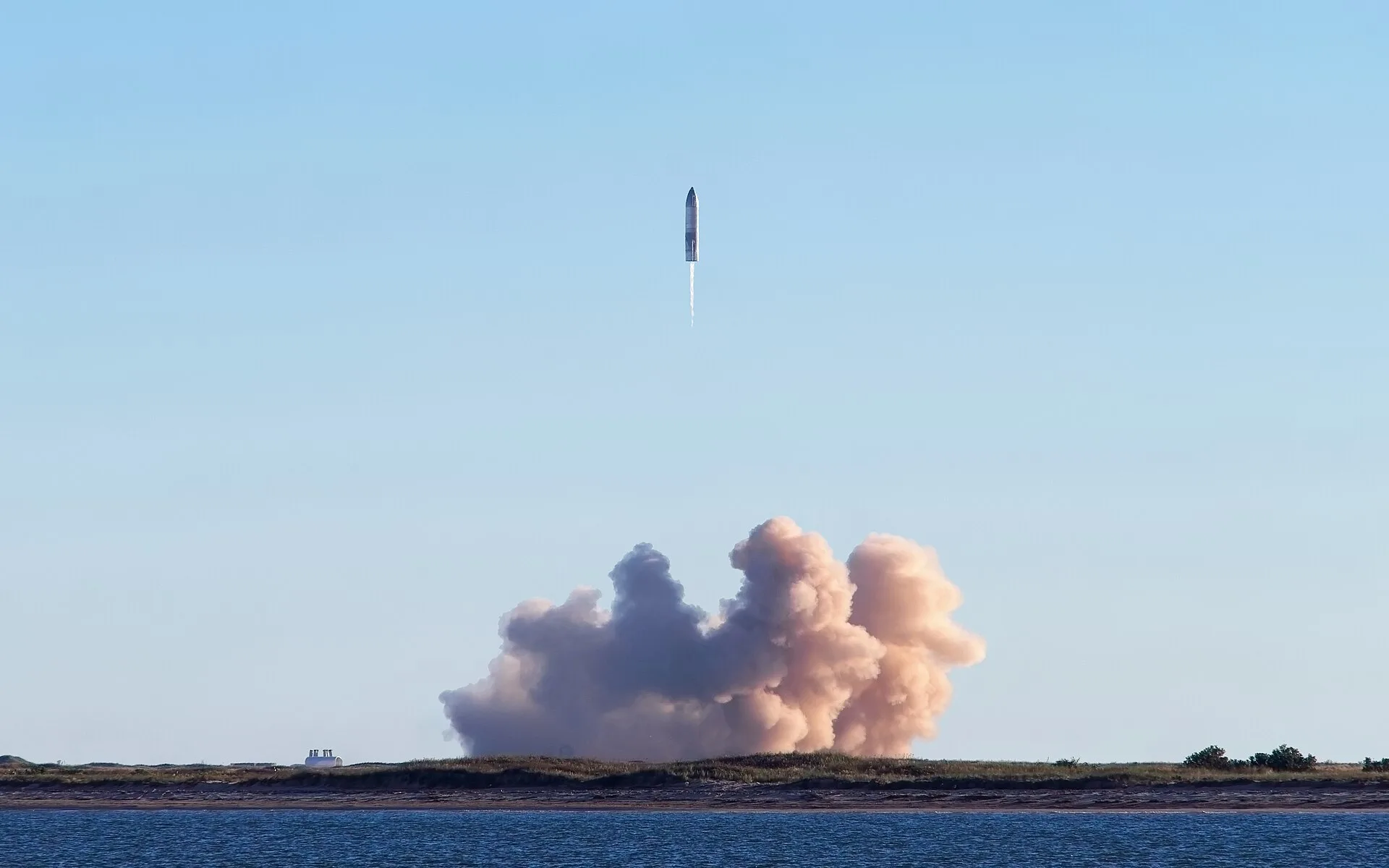
SpaceX’s Starship Flight 13 finally got off the pad — and this time, the world’s most powerful rocket not only reached space, it delivered a new batch of Starlink satellites and survived a controlled plunge back through Earth’s atmosphere for what the company called its “softest splashdown” yet. For a program built on rapid iteration, Flight 13 may be the clearest sign so far that SpaceX’s giant has started to behave more like a vehicle than a science experiment.
Starship Flight 13: what actually happened
After a scrubbed attempt on July 16 and a weather delay on July 23, SpaceX lit all 33 engines on its Super Heavy booster and launched Starship Flight 13 from its Starbase site in South Texas on Friday, July 24 at 6:51 p.m. EDT (2251 GMT). The nearly 407-foot-tall rocket flew a suborbital trajectory from the Gulf of Mexico across the globe toward the Indian Ocean.
This was the 13th test launch for the Starship program since 2023 and the first to carry a set of Starlink Version 3 satellites as a primary payload. Unlike an orbital mission, neither the Super Heavy booster nor the Starship upper stage was intended to be recovered on land; both were targeted for controlled splashdowns.
Roughly three minutes into flight, the Super Heavy executed a key maneuver that had eluded the previous test. Starship’s upper stage, known as Ship 40 for this mission, separated from the booster in a hot-staging sequence, then both vehicles performed their own engine burns: Super Heavy flipped and fired five engines to head back toward the Gulf of Mexico, while Ship 40 lit all six of its Raptor engines and continued toward space.
Focus on data, not hardware
Flight 13 was designed less as a hardware recovery attempt and more as an information-gathering run for future Starship missions, particularly around the rocket’s complex heat shield and in-space maneuvers. That shaped almost every major objective on the checklist.
On ascent, SpaceX wanted to push the system to higher dynamic pressure — essentially, the stress the vehicle feels as it claws through the atmosphere. The clearer weather on July 24 was important for that, because engineers were aiming for sharp ground-based imagery of the heat shield as it worked at more punishing conditions.
Once in space, Ship 40 began a coast phase and the attention shifted to the Starlink payload riding in its payload bay, which deploys in a “PEZ dispenser”-style mechanism. The mission carried 20 Starlink V3 satellites, all built to talk to the broader constellation but ultimately destined to deorbit along Starship’s own flight path rather than join the operational fleet.
Starlink V3’s first ride on Starship
The debut of Starlink Version 3 on a Starship rocket was quietly one of the most important business milestones of Flight 13. Starlink is the company’s revenue engine, and Starship is ultimately the heavy-lift workhorse SpaceX wants to use to put large numbers of next-generation satellites into orbit at lower cost.
During the mission, Starship successfully deployed all 20 Starlink V3 satellites. Six of them carried cameras and flashlights to capture live imagery of Starship’s exterior and heat shield from close range while they drifted nearby in orbital darkness. Those satellites streamed views back to Earth, giving engineers a new angle on how the vehicle behaves in space and during the early phases of reentry.
In addition to the satellite deployment, SpaceX tested a single-engine relight on the Starship upper stage — a maneuver that will be crucial for future missions that need to enter and leave orbit, perform orbital adjustments, or head to destinations beyond low Earth orbit. The company reported that the in-space Raptor relight was successful, checking off another step on the roadmap toward a fully reusable deep-space transport.
Booster splashdown was harder than planned
The Super Heavy booster’s return wasn’t as clean as the rest of the mission, underlining how much work remains before SpaceX is routinely catching these gigantic rockets.
After separation, the booster executed its flip and a backburn, a major improvement over the previous flight, where this sequence failed. This time, the booster made it through that choreography but appeared to suffer issues during its final landing burn over the Gulf of Mexico. Not all 13 engines required for the final burn seemed to ignite, and the vehicle came in with more velocity than intended before hitting the water.
SpaceX had been targeting a relatively gentle booster splashdown, both to preserve hardware and to gather higher-quality data about the landing profile. Instead, the booster appears to have impacted the Gulf harder than planned. Even so, the improved flip and burn sequence suggests incremental progress toward future controlled landings and, eventually, propulsive returns to a launch tower.
Starship Flight 13 aces reentry and “softest splashdown”
Most of the drama — and most of the engineering payoff — came during Starship’s fiery return to Earth. After its coast phase and engine test, Ship 40 began reentry on a path that would take it to the Indian Ocean, west of Australia, where a SpaceX recovery team was waiting with camera-equipped buoys to capture the final act.
Typically, spacecraft endure a communications blackout during peak heating because the plasma building up around them blocks radio signals. Starship Flight 13 showed off a different approach. Throughout reentry, the vehicle used SpaceX’s own Starlink satellites to relay data and video, pushing back the traditional “loss of signal” window and delivering live views of the plasma glow and heat shield performance.
As Starship passed through maximum heating and maximum dynamic pressure on the way down, the heat shield held up and the vehicle maintained contact. Finally, Ship 40 executed its planned water landing in the Indian Ocean, tipping gently over to float after impact in what SpaceX described during its broadcast as its “softest splashdown” to date.
It was also the first time a Starship vehicle has been placed into the water at the end of a test mission, giving the company a new opportunity to study how the structure and thermal protection system look after a full flight and reentry cycle.
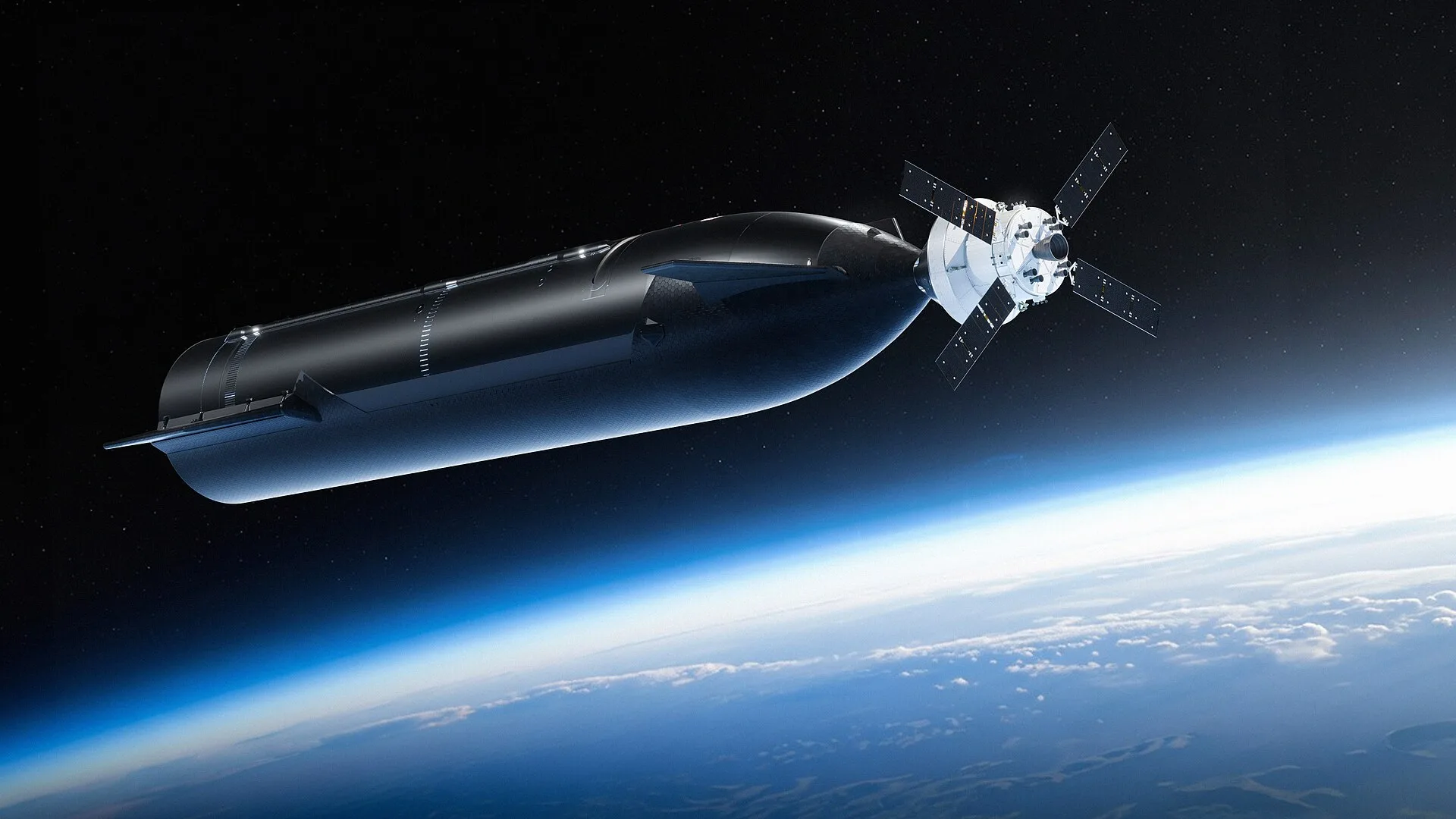
Why Flight 13 matters for SpaceX’s business
Beyond the spectacle, Starship Flight 13 was a business story. SpaceX is under pressure to prove that Starship can launch often, handle complicated mission profiles, and eventually land precisely enough to be reused quickly. All of that underpins the company’s long-term economics — from its Starlink broadband network to future contracts for government and commercial deep-space missions.
The Starship program still has to sharply ramp its launch cadence. To meet NASA’s target of landing Artemis IV astronauts on the moon by 2028 using a lunar-optimized Starship, SpaceX needs not just one successful test, but a series of increasingly routine flights that include orbital missions, on-orbit refueling, and reliable landings for both booster and ship.
Flight 13 didn’t attempt an orbital insertion or a dry land recovery, but it did showcase several building blocks of that future: hot-staging that worked, satellite deployment from the large payload bay, an in-space engine restart, high-fidelity heat shield data at higher dynamic pressures, and a controlled splashdown that left the ship intact enough to float.
The debut of Starlink V3 on Starship also hints at how SpaceX intends to tie its biggest rocket directly to its most important cash-generating product. Even though these 20 satellites are expected to follow Starship’s reentry trajectory and deorbit, their onboard cameras and connectivity helped validate how future operational batches could ride Starship into orbit in far larger numbers.
From scrubbed launch to “lucky” Flight 13
The path to Friday’s launch underscored how quickly SpaceX tries to iterate. On July 16, Starship Flight 13 counted all the way down before the rocket’s onboard computers halted the attempt when several of the Super Heavy’s 33 Raptor engines failed to ignite. Engineers spent the following week replacing at least two engines on the booster.
The company then aimed for a July 23 window, only to delay again for at least 24 hours because of weather around the South Texas site. Clear skies may sound like a small concern for a vehicle this large, but for this test, visibility was a formal objective: SpaceX wanted unobstructed views of the rocket’s heat shield as it flew through higher dynamic pressure on ascent.
By the time Flight 13 finally lifted off on July 24, the mission had already accumulated a small stack of scheduling frustration and internet superstition. Internally, though, the team appeared focused on its data priorities rather than folklore. During the company’s broadcast, SpaceX commentator Dan Huot captured the mood by saying he was “a little over the moon” after the successful splashdown and calling it a “dream scenario” for the heat shield team.
What this means
Starship Flight 13 didn’t turn SpaceX’s giant rocket into a finished product. The booster’s rough splashdown, the lack of an orbital insertion, and the absence of any attempt at propulsive land landing are reminders that the company is still in the thick of testing.
But as a step toward a fully reusable super-heavy system — one that SpaceX wants to use for everything from bulk Starlink deployment to crewed lunar missions — this flight checked off several of the most important near-term goals. Starship reached space, deployed payloads, demonstrated an in-space engine relight, survived one of its most demanding reentries yet, and ended in a controlled splashdown that preserved the vehicle for post-flight analysis.
For investors, competitors, and space agencies watching from the ground, the message is that Starship is starting to behave less like a tech demo and more like a platform. If SpaceX can string together more flights like Flight 13 — and start closing the gaps on booster recovery and orbital operations — the business case for its gigantic rocket, and the Starlink network that increasingly depends on it, starts to look a lot more real.
Photo: Forest Katsch / CC BY-SA 4.0 via Wikimedia Commons | Photo: NASA/SpaceX / Public domain via Wikimedia Commons