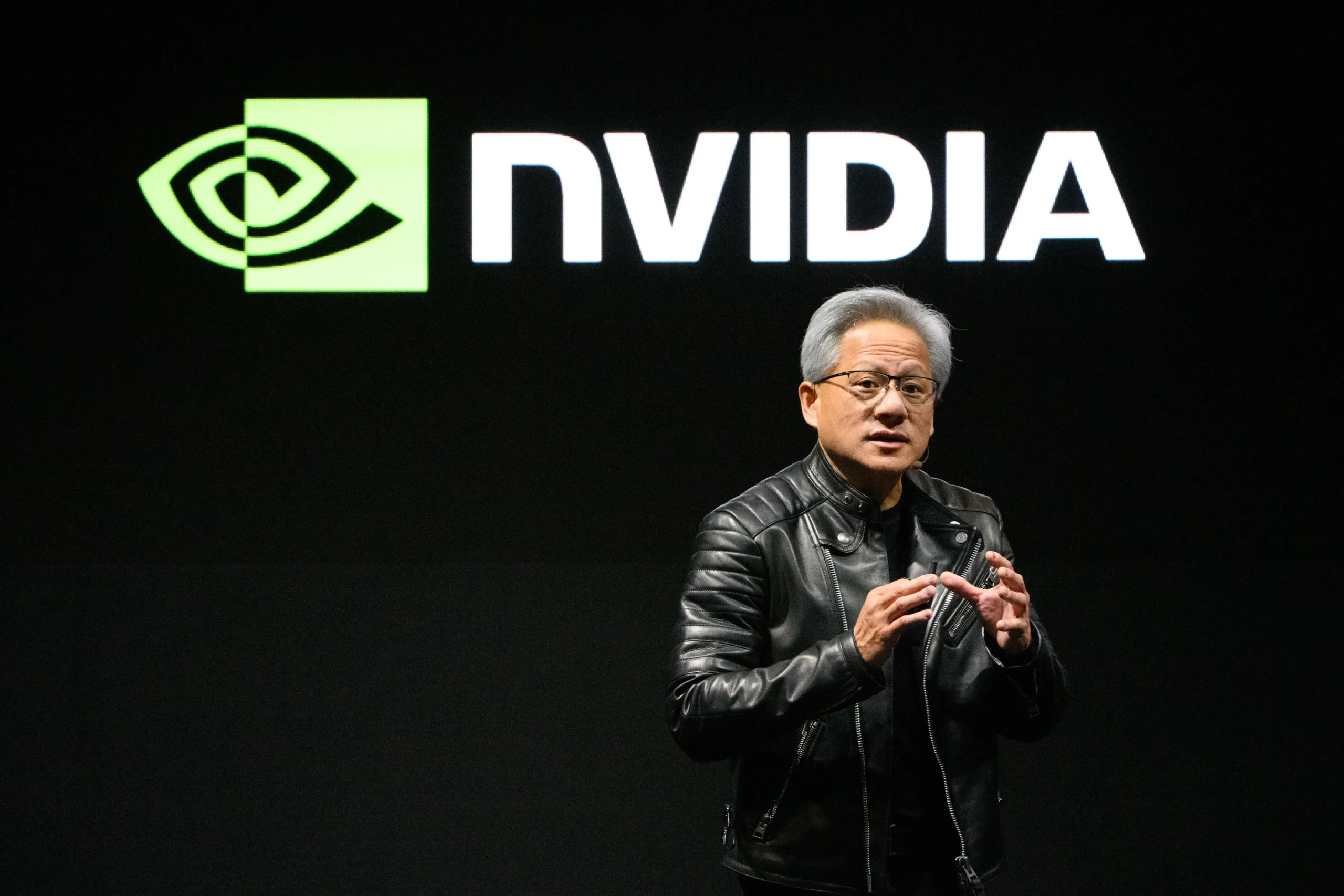
There is a version of the AI trade that has always lived just out of reach of ordinary investors. You could buy the chipmaker. You could buy the cloud providers. You could not buy the labs. That is about to change, and the scale of the change is hard to hold in your head: Anthropic is reportedly preparing to raise as much as $100 billion at a valuation somewhere around $2 trillion, and Nvidia is in talks to put up to $10 billion in as the anchor investor.
If it prices anywhere near those numbers, it is the largest initial public offering in history, and it is not close.
The Numbers, Such As They Are
Reported valuation figures cluster between $2 trillion and $2.3 trillion depending on which account you read, which is itself a signal that the terms are unsettled. The raise is described as approaching $100 billion. Nvidia’s slice would be up to $10 billion, in the anchor slot — the cornerstone position that gives a deal credibility with everyone who follows.
The timing is the sharpest detail in the whole story: the offering is being aimed at a window before November’s US midterm elections. That is not a coincidence and nobody involved is pretending otherwise. Elections reprice political risk, and a company whose regulatory future is a live legislative question would rather list into today’s environment than guess at January’s.
How the company got here
Anthropic’s revenue trajectory is the reason any of this is arguable rather than absurd.
| Period | Annualized revenue run rate |
|---|---|
| End of 2025 | Roughly $9 billion |
| End of July 2026 | More than $65 billion |
| 2028 (projected) | $190 billion to $200 billion |
A seven-fold increase in about seven months is the kind of curve that makes valuation models useless in both directions. The company’s last private round, in May, closed at a post-money valuation near $965 billion. A $2 trillion listing would roughly double that in four months.
The 2028 projection is where the debate actually lives. At $2 trillion, the company is being priced at roughly ten times a revenue number it has not earned yet, in a market where the cost of serving each token keeps falling and competitors keep undercutting each other on price. DeepSeek shipped a model this week at fractions of a cent per call. That is the bear case in one sentence.
Why Nvidia Wants In
Nvidia has been steadily converting customer relationships into equity positions. CFO Colette Kress has said the company has invested close to $50 billion across frontier AI labs, and framed it as a small fraction of expected free cash flow — which, given Nvidia’s cash generation, is defensible arithmetic.
The strategic logic is straightforward. Anthropic has committed to a gigawatt of compute on Nvidia’s Grace Blackwell and Vera Rubin systems. Money that goes out as investment comes back as hardware revenue, and Nvidia also ends up owning a piece of the company generating that revenue. Jensen Huang said recently that Nvidia’s roughly $30 billion position in OpenAI “might be the last time” before that company goes public, which reads less like restraint and more like a man watching his private-market window close.
The circularity question
Critics have a name for this pattern, and it is not flattering: circular financing. The chip supplier funds the customer, the customer buys chips, the supplier books revenue, and everyone’s numbers look excellent until demand outside the loop is tested.
The honest counterargument is that Anthropic’s revenue is real, paid by enterprises with procurement departments, not recycled vendor credits. But the criticism does not need the revenue to be fake to have force. It only needs growth to slow, at which point the equity stakes and the hardware backlog deteriorate in the same quarter, for the same reason.
Worth noting too: Anthropic is not a single-vendor shop. It has committed to spending more than $100 billion with Amazon Web Services over a decade and plans to deploy over a million Trainium2 chips. Nvidia would be buying into a company actively working to keep its silicon options open.
What a $100 Billion Raise Actually Does to a Market
Deals of this size do not just clear; they reshape the pipe they pass through. Roughly $100 billion of new equity has to come from somewhere, and in practice it comes from selling other things. Index funds rebalance. Growth managers trim positions to make room. There is a well-documented pattern where the biggest listings drag down the sector around them in the weeks either side of pricing, simply as a plumbing effect.
There is also the small matter of what public markets do to a company that has built its identity on caution. Anthropic’s CEO published an essay this week arguing the entire industry should slow down and let external evaluators inside frontier labs. Quarterly earnings calls are not famously sympathetic to that posture. The company will be asked, repeatedly and on the record, to reconcile “we should pace the frontier” with “we must beat consensus.”
The Caveats Are Load-Bearing
Everything above is reporting on private discussions. Neither company has confirmed the talks. No prospectus exists publicly. The valuation range moves by $300 billion depending on the source, the raise size is described as “up to,” and Nvidia’s participation is described as “considering.”
Deals of this magnitude fall apart, get restructured, or price 40 percent below the number that leaked. The November target is aggressive for an offering this complex, and a bad six weeks in the Nasdaq would push it into 2027 without much drama.
What This Means
Strip away the zeros and this is a straightforward bet on one question: is a frontier AI lab a durable business or an extremely expensive research program with unusually good sales?
The bull case is that model quality compounds into enterprise lock-in, that switching costs are real once a company’s workflows are built on a specific model’s behavior, and that a $65 billion run rate growing this fast justifies almost any multiple. The bear case is that models commoditize, price per token collapses toward the cost of electricity, and every dollar of the 2028 projection depends on capabilities nobody has shipped.
For retail investors, the practical takeaway is to treat the headline valuation as an opening bid rather than a fact, and to watch two specific things when the prospectus lands: the concentration of revenue across customers, and the gross margin after inference costs. Those two lines will tell you more than the valuation ever will.
For everyone else, the interesting part is what a listing does to the industry’s incentives. An AI lab with a share price has a new constituency, and that constituency has never once asked a company to go slower.