Amazon’s streaming arm just closed the books on another round of its annual culling, and the results tell a familiar, slightly brutal story: even shows that critics love and audiences embrace aren’t guaranteed a second season anymore. Prime Video confirmed a fresh batch of cancellations and renewals this week, and the headline casualty is a show that, by every normal metric, should have been a lock to come back.
The Renewals: Betting Big on What’s Already Working
Prime Video greenlit a second season of Neagley, the spinoff built around Maria Sten’s character, a sharp, no-nonsense private investigator and former protégé of Jack Reacher. Spinning a side character out of an established hit franchise is always a gamble — plenty of streaming spinoffs have quietly disappeared after one season — but the renewal suggests Neagley found its footing with viewers quickly enough to justify the investment in a full follow-up season.
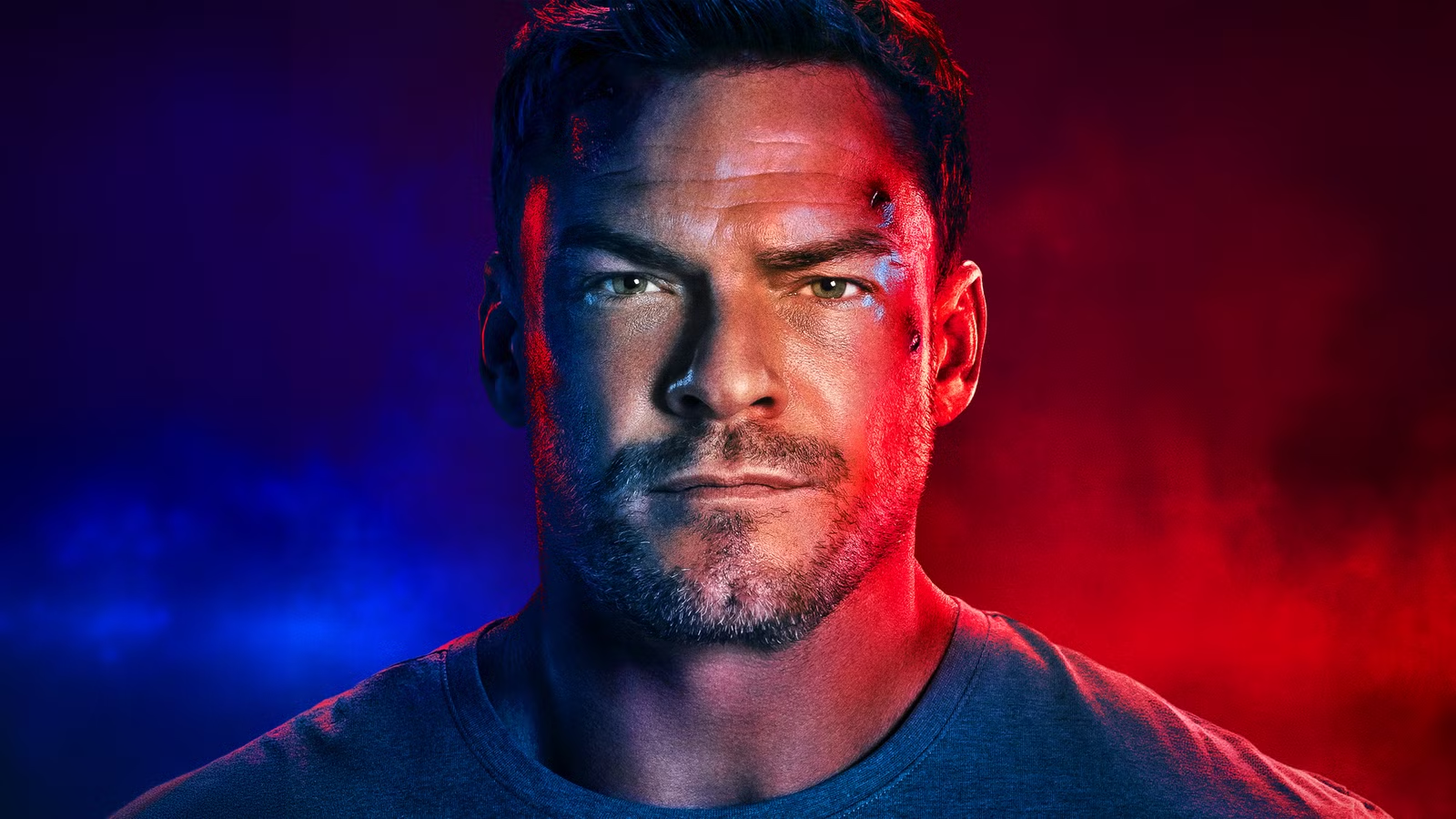
The bigger renewal news, though not exactly a shock, is that Reacher itself is locked in for two more seasons, five and six, with Alan Ritchson returning to the role that’s become one of Prime Video’s most dependable action franchises. Season five is already in production, which means fans won’t be waiting long relative to the usual streaming gap between seasons. Reacher has been a rare case of a streaming adaptation that grew its audience with each season rather than fading after an initial burst of curiosity, and locking in two seasons at once signals Amazon sees it as a cornerstone of its action-drama lineup for the foreseeable future.
Why Renewing Two Seasons at Once Matters
Double-season renewals aren’t just a scheduling convenience. They’re a signal of confidence that a show’s creative team can plan further ahead, lock in cast deals at more favorable terms, and avoid the awkward will-it-won’t-it limbo that’s killed momentum for other franchises. For a show carrying as much of Prime Video’s action-drama identity as Reacher does, that kind of long-term commitment matters both creatively and financially.
The Cancellation That’s Raising Eyebrows
Here’s where things get genuinely surprising. Ride or Die, the buddy spy comedy starring Octavia Spencer and Hannah Waddingham, is not coming back for a second season, despite numbers that most shows would kill for: a 96 percent critics’ score and an 85 percent audience score on aggregate review trackers. Those are the kinds of numbers studios usually point to as proof of concept, not a reason to pull the plug.
No official reason has been given for the cancellation, which is often the case in streaming — platforms rarely explain exactly which internal viewership metrics or budget calculations tipped the scale against a show, even one performing well critically. That silence tends to fuel speculation, and in this case, the obvious question is whether strong reviews simply didn’t translate into the raw viewership numbers Prime Video’s algorithm-driven renewal process actually weighs.
A Pattern Streaming Fans Know All Too Well
Ride or Die’s cancellation fits an increasingly familiar pattern across every major streamer: critical acclaim and audience love are no longer reliable predictors of renewal. Platforms are making these calls based on a combination of total viewing hours, completion rates, subscriber acquisition and retention impact, and production cost — metrics that rarely get published and don’t always correlate with how beloved a show appears to be on social media or review aggregators.
For a comedy pairing two performers as well-regarded as Spencer and Waddingham, both of whom have real box-office and awards pedigree, the cancellation is a reminder that star power and critical goodwill buy a show attention, but not necessarily longevity, on a platform that’s constantly recalculating which bets are worth continued investment.
The Bigger Picture: Prime Video’s 2026 Numbers
This latest round brings Prime Video’s 2026 tally to six cancellations against fourteen renewals for the year, a ratio that actually looks fairly healthy compared to the brutal cancellation waves some competing streamers have pushed through this year. It suggests Amazon is being more selective about which new shows it greenlights in the first place, rather than greenlighting broadly and canceling aggressively after one season, a strategy that’s generated plenty of subscriber frustration at other platforms.
What This Says About Prime Video’s Strategy
- Franchise bets are paying off. Reacher’s double-season renewal and Neagley’s spinoff pickup show Amazon doubling down on proven intellectual property rather than chasing one-off prestige projects.
- Comedy remains the riskiest genre on the platform. Ride or Die joins a growing list of well-reviewed comedies that haven’t survived past a first season industry-wide, suggesting comedy viewership numbers are harder to sustain than action or drama.
- A healthier renewal ratio than rivals. Fourteen renewals against six cancellations this year is a notably better retention rate than the cancellation waves that have defined other platforms’ 2026.
What This Means
For viewers, the takeaway is a slightly uncomfortable one: loving a show and talking about it online isn’t enough to save it anymore, and even strong critic scores are increasingly a footnote rather than a factor in these decisions. For Prime Video, the strategy looks deliberate — protect and expand the franchises already proven to work, like Reacher and its growing spinoff universe, while making faster, quieter decisions about shows that don’t hit undisclosed internal benchmarks, regardless of how well they’re reviewed. Ride or Die’s cancellation will sting for its fans, but it’s also a useful data point for anyone trying to predict what actually survives on a streaming platform in 2026: franchise strength and hard viewership numbers, not critical consensus.