If you live with atrial fibrillation and worry that exercise might push your heart too far, new research suggests the opposite: even light physical activity may meaningfully lower your risk of stroke and early death. For people with AFib, that makes moving your body as important as managing your meds.
Light movement, lower stroke risk
The new findings come from one of the largest looks yet at how physical activity relates to stroke and survival in adults, including thousands of people with atrial fibrillation. Researchers followed 87,340 adults in Norway for a median of 13.5 years, tracking who developed AFib, who had a stroke, and who died.
Participants reported how often they exercised, for how long, and at what intensity. Based on that, they were grouped into four buckets: inactive, low, moderate, and high physical activity.
Across the whole group, being even a little active mattered:
- Low physical activity was linked to a 9% lower risk of stroke and an 11% lower risk of death, compared with doing nothing.
- Moderate activity was tied to a 19% drop in stroke risk and an 18% drop in death risk.
- High activity showed an 18% reduction in stroke and a 22% reduction in death.
Those patterns held up in people with and without AFib. For those already living with the rhythm disorder, even small amounts of activity were associated with a significantly lower adjusted risk of stroke over 15 years versus being sedentary. Higher activity levels were also paired with longer life expectancy, with the most active AFib group living more than a year longer on average than the inactive group.
What this means if you have AFib
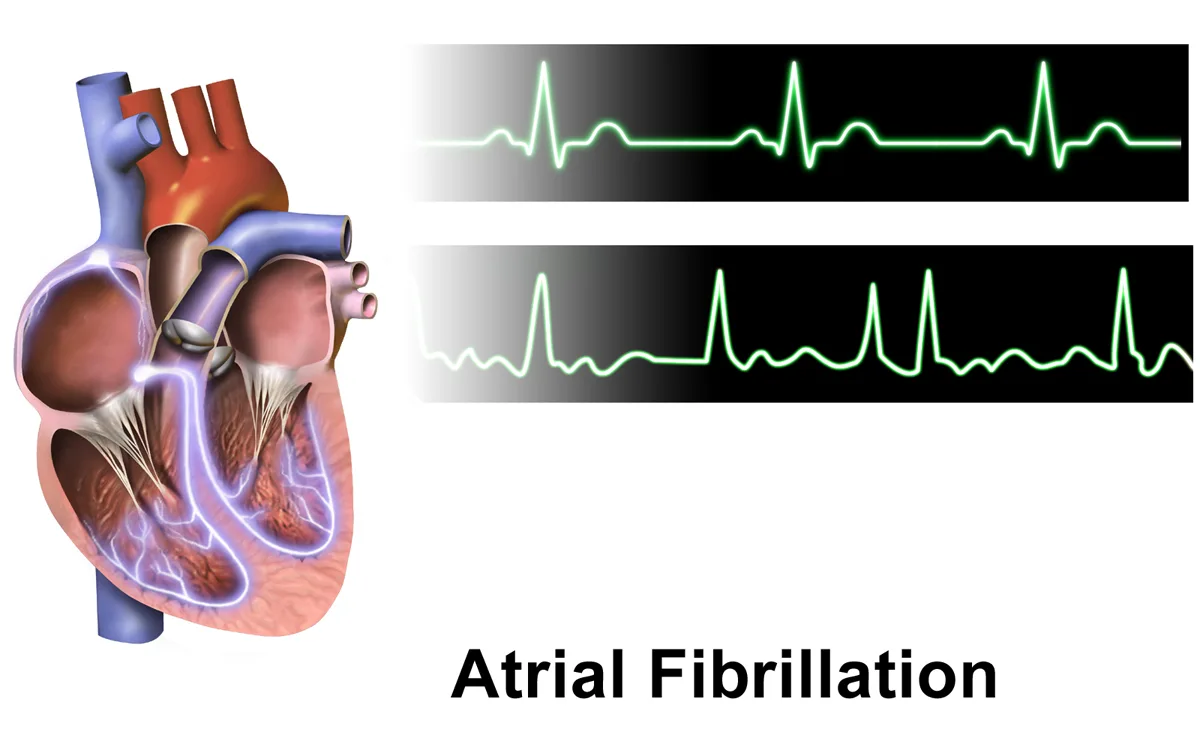
Atrial fibrillation is the most common sustained heart rhythm problem, affecting an estimated 5 million people in the United States, with more than 12 million projected to have it by 2030. The irregular rhythm raises the risk of blood clots forming in the heart and traveling to the brain, causing an ischemic stroke. That stroke risk is why blood thinners and other treatments are standard care.
But treatment plans have often been more conservative around exercise. Palpitations, fatigue, dizziness, and shortness of breath can make people with AFib understandably nervous about getting their heart rate up. Some fear that any exertion might trigger an episode or worsen symptoms.
This study pushes back on that fear. Within its limits, the data support several important ideas:
- Being completely inactive looks like the riskiest option.
- Moving from “no exercise” to “a little exercise” delivers real benefit. Low levels of activity still cut stroke and death risk compared with inactivity.
- More movement brings more payoff, up to a point. There was a clear dose-response pattern across low, moderate, and high activity groups.
In other words, if you have AFib and are currently sedentary, you may not need to turn into a marathoner to see a difference. Simply working modest amounts of physical activity into your week could help tilt the odds away from stroke.
Exercise is a complement, not a replacement
One point the cardiologists behind and commenting on this research emphasize: physical activity is an add-on to standard AFib care, not a trade-off.
Anticoagulant medications, rhythm and rate control drugs, and procedures like ablation are still the backbone of stroke prevention and symptom management. Nothing in this study says people can skip their blood thinners or other therapies if they exercise more.
There are also important scientific caveats. This was an observational study, not a randomized trial. Exercise levels were self-reported, so people might misremember or overestimate their activity. The researchers also didn’t have full detail on who was taking anticoagulants, which significantly change stroke risk. Other unmeasured lifestyle differences between active and inactive people could play a role in the outcomes.
Still, the consistency of the associations — across tens of thousands of people, over more than a decade of follow-up — lines up with what cardiologists already tell patients: regular movement is a core part of cardiovascular health, even when your heart rhythm is far from perfect.
How much activity is “enough” for AFib?
Because the study grouped participants by relative levels of movement rather than ultra-precise step counts, it doesn’t hand back an exact prescription. But it does support a few practical takeaways around light physical activity and AFib:
- Going from zero to something small — like short, easy walks most days — is associated with a meaningful risk reduction.
- Moderate levels of activity seem to offer additional benefit, but the biggest shift happens when people move out of the completely inactive category.
- There was no sign that reasonable levels of exercise were harmful in AFib overall; if anything, more activity tracked with longer life expectancy.
For many people with AFib, especially those with symptoms or other heart conditions, the safest plan is to aim for light-to-moderate movement spread throughout the week rather than rare, all-out efforts.
Designing a safe movement plan when your heart is irregular
If you’re new to exercise, have significant AFib symptoms, or live with other cardiovascular problems, you should work with your healthcare team before changing your activity level. They can help tailor a plan that fits your situation and medications.
For most people with stable AFib, a gentle starting point might look like:
- Short walks: 5–10 minutes at a comfortable pace, one to three times a day.
- Light cycling or stationary bike: easy pedaling without heavy resistance.
- Low-impact movement: such as beginner-level chair exercises, tai chi, or gentle stretching.
- Everyday activity: taking the stairs slowly, gardening, light housework, or walking to nearby errands instead of driving.
The key is listening to your body and increasing gradually. Many cardiology teams recommend the “talk test”: you should be able to speak in full sentences while moving. If you can sing, you’re probably at light intensity; if you can talk but not sing comfortably, you’re in moderate territory.
Because AFib can come with unpredictable flutters and fatigue, it’s smart to track how you feel during and after activity. Shortness of breath that feels unusual for you, chest pain or tightness, severe dizziness, or fainting are all reasons to stop and seek urgent care.
Wearable heart-rate monitors and fitness trackers can offer additional data, but they’re not a substitute for medical guidance. In AFib, heart rate readings can be irregular or confusing. Use the numbers as one piece of the picture, not the whole story.
Why movement helps protect the brain
Stroke risk in AFib is tightly linked to blood clots and the broader health of your blood vessels. Regular physical activity touches both sides of that equation.
Light-to-moderate exercise can help improve blood pressure, support healthy weight, and boost insulin sensitivity, all factors that influence stroke risk. It can also improve the function of the inner lining of blood vessels and reduce chronic inflammation, which plays a role in clot formation and vascular damage.
Beyond the blood vessels themselves, physical activity improves overall cardiovascular fitness, making the heart more efficient at pumping blood and handling daily stresses. Over years, that translates into a lower likelihood of the catastrophic events — like severe strokes and heart failure — that cut lives short.
For people with AFib, whose stroke risk is already elevated, stacking those benefits on top of anticoagulation and rhythm control adds up to a stronger safety net.
Questions to ask your doctor before you ramp up
Because AFib and stroke risk can vary so widely between individuals, it’s worth having a detailed conversation with your care team before shifting gears. Helpful questions include:
- Is there any reason I should avoid certain types of exercise given my heart rhythm and other conditions?
- How should I warm up and cool down to avoid triggering symptoms?
- Are there heart rate ranges I should aim for or avoid?
- Do any of my medications affect how I should interpret heart rate or fatigue?
- What warning signs should make me stop immediately and call for help?
For some people, cardiac rehabilitation programs or supervised exercise sessions can provide a safer, more structured way to build up endurance and confidence. Others may start with home-based plans and occasional check-ins.
What This Means
The big message from this massive Norwegian study is not that everyone with AFib needs to love the gym. It’s that doing nothing is riskier than doing a little — and that light physical activity is a powerful, realistic tool for lowering stroke risk and living longer with an irregular heartbeat.
If you have AFib, your first line of defense against stroke is still a solid treatment plan built around anticoagulants, rhythm or rate control, and management of other conditions like high blood pressure and diabetes. But once that foundation is in place, even modest, everyday movement becomes more than just “nice to have.” It’s part of the medicine.
For many people, that can start with something as simple as a slow walk around the block. Over the long arc of years, those steps add up — not just to better numbers on a chart, but to more time, and better time, in the life you’re trying to protect.
Photo: BruceBlaus / BY-SA via Openverse | Photo: Steven Fruitsmaak / CC BY-SA 3.0 via Wikimedia Commons