The push to halt an all-out Iran war has shifted from airstrikes to back-channel phone calls — and for the first time in weeks, mediators say there is real progress. That fragile pause matters far beyond the Middle East: it’s sitting directly on top of the global oil supply and, by extension, the world economy.
Regional officials say efforts are underway to bring the United States and Iran back into a framework that could cool the fighting and stabilize the Strait of Hormuz, the narrow chokepoint that carries a huge share of global crude exports. For now, both Washington and Tehran have paused direct attacks, offering a rare window to test whether diplomacy can outrun the drones.
How Close the Iran War Came to the Brink
The current mediation drive follows nearly two weeks of escalating strikes that pulled in multiple countries and armed groups. The latest phase was triggered after Iran fired on ships trying to transit the Strait of Hormuz, a critical waterway for global oil shipments.
The United States answered with airstrikes on Iranian coastal areas and infrastructure. Iran then hit back with missile and drone attacks on countries hosting U.S. forces, killing at least three American service members at a base in Jordan and one in Iraq. The exchanges raised fears that limited clashes could spiral into a much broader Iran war.
That cycle is now on pause. For three days, neither the U.S. nor Iran has reported fresh attacks, a notable break after what had become sustained bombardment. U.S. President Donald Trump has publicly claimed Iran is asking for more talks, saying there is a “good chance” something can be worked out — while warning that if diplomacy stalls, the military campaign could resume.
Iranian officials, for their part, insist there are no direct negotiations with Washington, but they acknowledge that mediators are relaying messages between the two sides.
Mediators Step In: Qatar, Pakistan and Oman
With direct diplomacy off the table, regional go-betweens have taken center stage. Officials say Qatar and Pakistan are leading efforts to bridge the gap between Washington and Tehran and revive an interim ceasefire deal that had already collapsed under the weight of recent attacks.
One regional official described the progress as “significant,” suggesting there is at least a framework emerging to manage the most dangerous flashpoints. A parallel track involving Iran and Oman is focused on a practical yet enormously consequential question: how to manage ship traffic through the Strait of Hormuz.
Talks held Friday and Saturday between Iran and Oman have zeroed in on what a mechanism for vessel transit might look like. The stated goal is to ensure safe navigation while respecting the sovereignty and security interests of both coastal states, including Iran’s insistence on its national security and economic interests.
For global markets, that seemingly technical work is exactly where the Iran war and the world’s energy balance intersect. Whoever controls Hormuz effectively has their hand on the tap of a major share of the planet’s oil and gas flows.
Hormuz: The Chokepoint the World Can’t Ignore
The Strait of Hormuz has long been one of the most sensitive points in global trade. Before the current war, the strait was open to all without fees. Tehran now argues that its interim deal with the U.S. allows it to manage shipping in the waterway and potentially charge for transit, a shift that would have direct price implications for every importer tied to Gulf crude.
At the same time, the U.S. has tried to back an alternative shipping route that passes closer to Oman — a move Iran sees as an effort to dilute its leverage and bypass its control. That dispute over whose rules reign in Hormuz is at the heart of the current standoff.
The U.S. Navy has reimposed a naval blockade against Iran, reporting that it has redirected 17 commercial ships, disabled two and boarded another two as part of its enforcement operations. While the 60-day window created by the interim deal in mid-June was supposed to be used to tackle big-ticket issues like Iran’s nuclear program, those talks have been pushed aside as mediators focus on the more urgent task of just keeping ships moving and missiles grounded.
So far, there are tentative signs of stabilization. A maritime body overseen by the U.S. Navy says commercial shipping traffic in the Strait of Hormuz is at a three-week low, and it has not confirmed any new attacks in the past 72 hours. But traffic remains reduced, and each day of uncertainty hangs over energy traders and policymakers watching fuel prices tick higher.
Drone Attacks Keep the Region on Edge
Even as mediators tout progress, the region is far from calm. Iran-backed groups and other actors are still using drones to signal that they can raise the cost of any misstep.
Saudi Arabia reported shooting down drones launched by Iran-aligned militias in Iraq that were aimed at its petroleum facilities. Separately, Yemen’s Houthi rebels, also backed by Iran, claimed to have targeted Saudi oil installations as part of a connected but distinct conflict. It is not yet clear whether they were talking about the same incident.
Elsewhere, two drone attacks struck a Kurdish Iranian dissident group in Iraq, and Jordan said it had shot down two drones without specifying their origin. There were no immediate reports of casualties or damage in those incidents — but the message is unmistakable: the tools of escalation are still in the air, even if the main belligerents are holding their fire.
Tensions aren’t limited to the Gulf. Iran and Ukraine are openly trading accusations after Ukrainian forces fired on at least one Iranian vessel in the Caspian Sea, an attack Tehran says killed a sailor. Iran has emerged as a key partner for Russia in its war against Ukraine, helping Moscow develop and deploy drones. That link makes every new clash between Kyiv and Tehran one more variable for already jittery energy and defense markets.
Energy Markets, Munitions and the Costs of a Long War
Behind the mediation push is a blunt economic reality: a prolonged Iran war and ongoing attacks around key shipping lanes are expensive for everyone involved.
For the U.S., the campaign has leaned heavily on airpower and advanced munitions — the same interceptors and missiles that analysts say are being drawn down from already stressed stockpiles. Trump has publicly insisted the U.S. munitions stockpile is in “very good shape,” while also conceding that he would “like to have more.”
Military leaders have been more pointed in private and in testimony to lawmakers. The chairman of the Joint Chiefs of Staff, Gen. Dan Caine, has warned that the state of the stockpile could begin to shape the range of options available for operations in Iran. His message to Congress was equally stark: airpower alone has its limits in achieving strategic goals, especially when overused.
On the other side, Iran faces its own financial and political strains. The war has shut down normal traffic through Hormuz, cutting into its ability to leverage fees or control flows in the way it envisions. The strait remains formally closed under Tehran’s position, even as mediators try to craft mechanisms that would restore some degree of predictable, safe passage.
From a global finance perspective, the equation is simple but unforgiving: the longer this crisis drags on, the more it threatens to tighten energy supply, push up gasoline prices and bleed into inflation and growth forecasts. Concerns are also rising around the Bab al-Mandeb strait near the Red Sea, another vital corridor for shipping. Houthi forces have threatened to blockade Saudi shipping there and are accused of firing on at least one Saudi tanker.
For investors, that means two narrow waterways — Hormuz and Bab al-Mandeb — now sit at the center of risk models for oil, shipping, and insurance. Even without a full-blown Iran war, periodic drone launches and naval maneuvers can move prices and sow volatility.
Diplomacy Focuses on the Oil Arteries, Not the Core Disputes
One of the more striking features of the current mediation drive is what’s not on the table. The big structural issues that have defined U.S.-Iran tensions for years — especially Iran’s nuclear program — are largely parked for now.
The 60-day interim deal agreed in mid-June was supposed to open the door to talks on those core disputes. Instead, the immediate survival of the deal has become the main topic, with mediators racing to prevent the remaining days from expiring in a haze of drone strikes and naval stand-offs.
In practical terms, that means most diplomatic energy is directed at risk management rather than resolution: keeping channels open, keeping the Strait of Hormuz from turning into a shooting gallery, and keeping Iran-backed militias from dragging their sponsor into a direct clash with the U.S. military.
Iran’s Foreign Ministry has framed the talks over Hormuz as a bid to ensure safe navigation while defending sovereign rights and security interests. That framing underscores a core tension: Iran wants recognition of its authority and possibly economic benefits from managing the strait, while many of its rivals and trading partners simply want predictable, apolitical access.
What This Means
The modest progress toward halting an Iran war rests on a knife’s edge shaped by drones, shipping lanes and weapons stockpiles. For now, mediators have carved out a pause that could, if it holds, cool one of the world’s most dangerous flashpoints and ease pressure on global energy prices.
But this is a ceasefire built on technical fixes and quiet phone calls, not on a broader political settlement. Armed groups still have the capacity to spoil it with a single well-timed drone launch. Iran and the U.S. are still talking around, not to, each other. And the core disputes — from nuclear ambitions to regional influence — remain unresolved.
For markets and governments, the message is sobering: the world’s energy arteries are still exposed, and the costs of miscalculation are rising. Any sustained diplomatic success here won’t just be a win for peace talks. It will be a stress test of whether the global economy can keep functioning when some of its most critical chokepoints sit one misfire away from war.
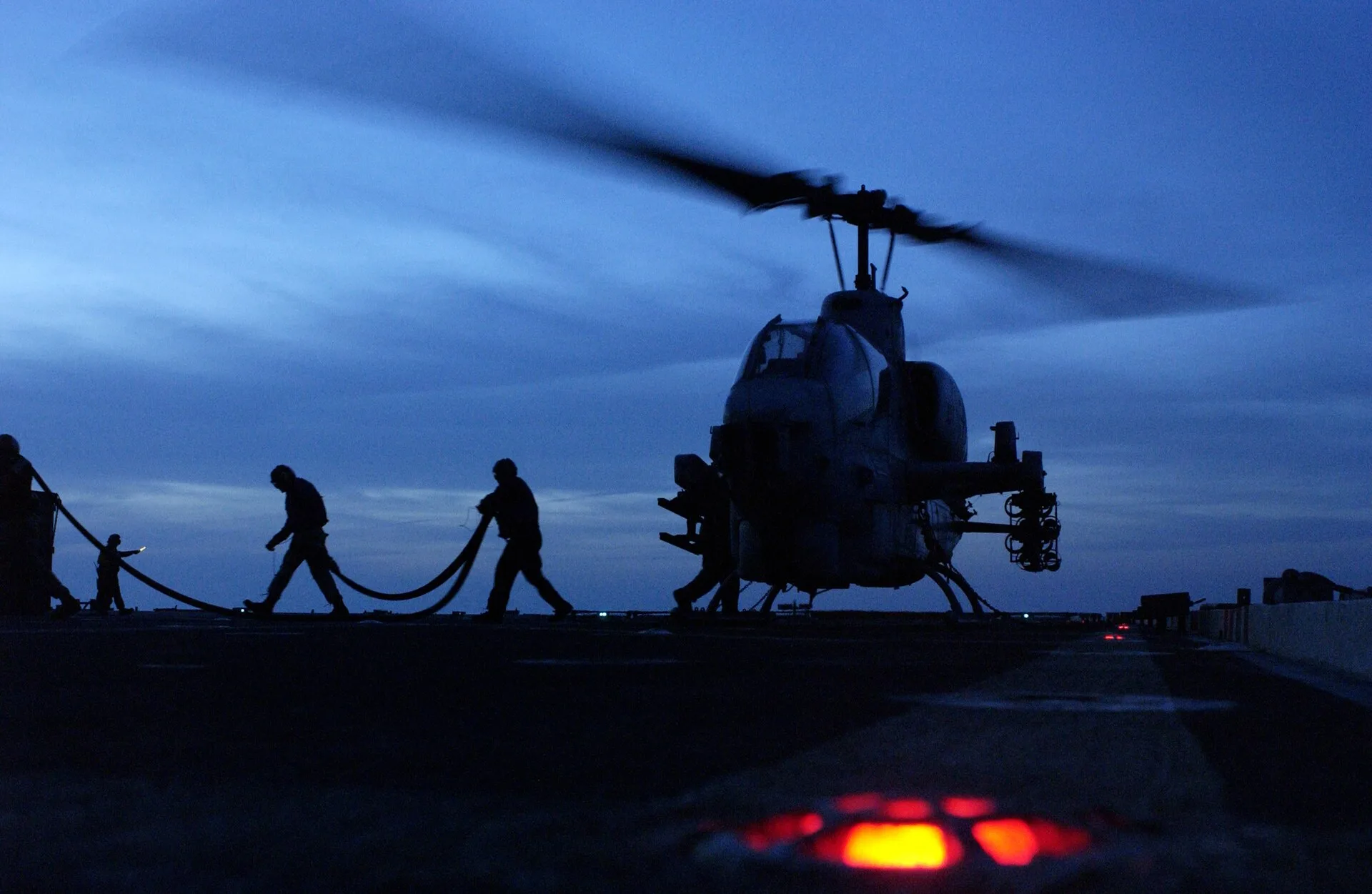
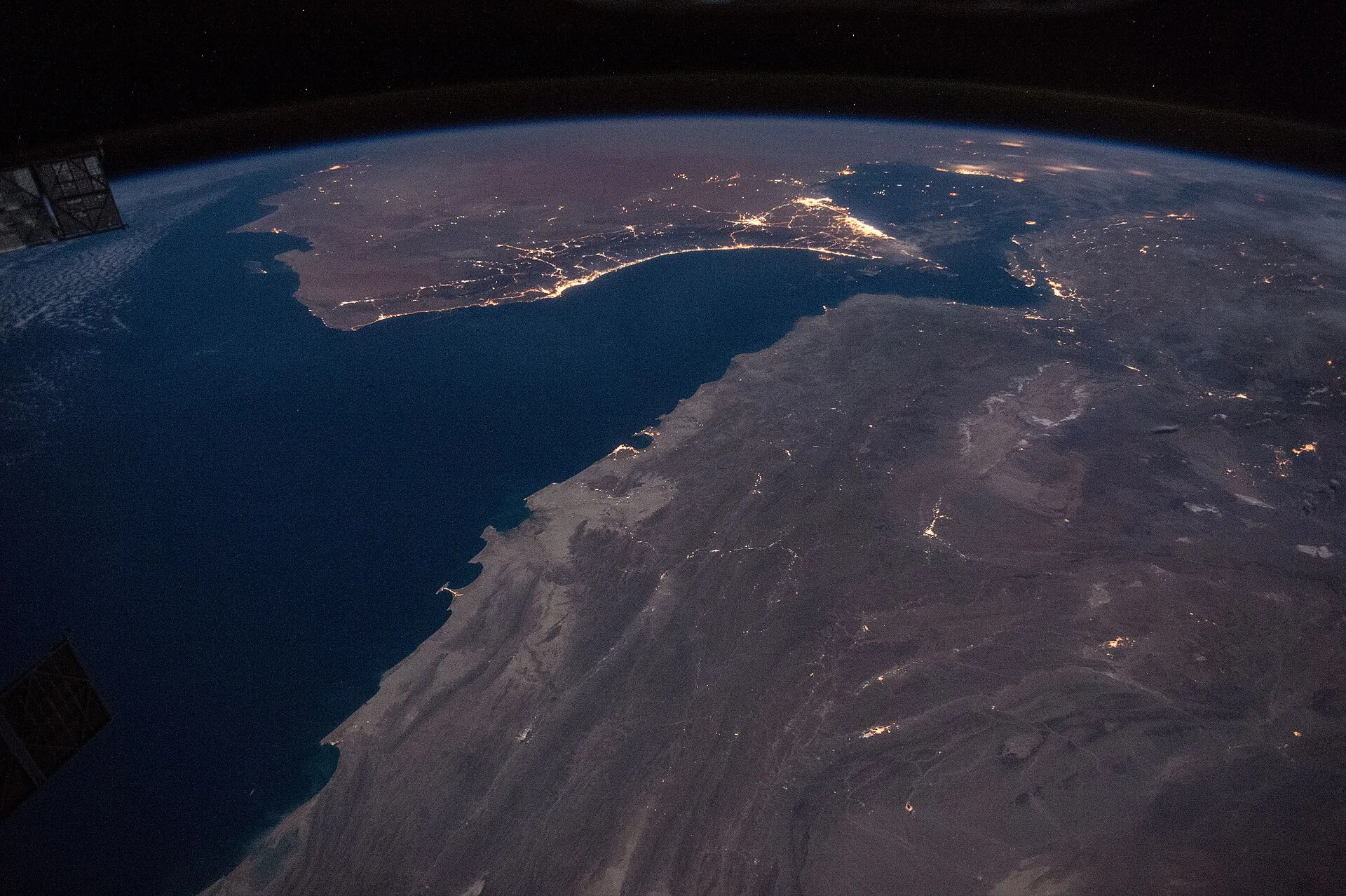
Photo: U.S. Navy photo by Photographer’s Mate 1st Class Aaron Ansarov / Public domain via Wikimedia Commons | Photo: NASA/Tim Kopra / Public domain via Wikimedia Commons