The politics of detention and memory collided on opposite sides of the Atlantic this week, underscoring a blunt reality: governments don’t just enforce laws, they decide what justice looks like—and who gets to feel its weight.
In Washington, a House Judiciary Oversight Subcommittee hearing is digging into conditions at the Delaney Hall ICE detention center in Newark, New Jersey, where detainees and protesters allege abuse, neglect, and heavy-handed policing. In Austria, the government has quietly finished turning Adolf Hitler’s birthplace into a police station, a symbolic effort to choke off neo-Nazi pilgrimages to the site.
Both moves sit squarely in the realm of politics, not just policy. They’re about what a state chooses to tolerate, what it wants to be seen confronting, and what it hopes the world will eventually forget.
Inside the Delaney Hall ICE detention hearings
The House panel’s hearing on Delaney Hall ICE detention center conditions is the clearest sign yet that complaints about the Newark facility have broken out of activist circles and into the legislative spotlight.
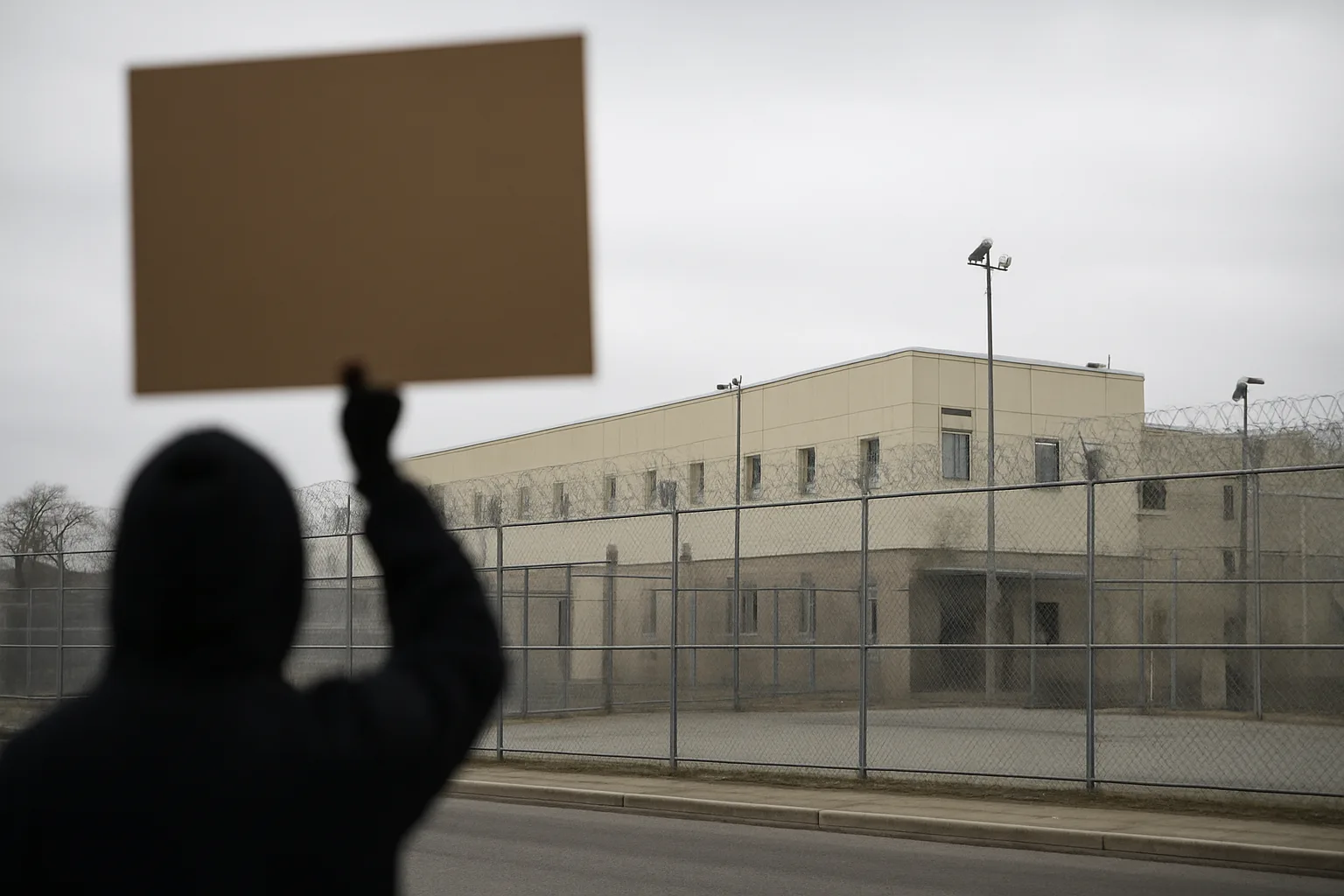
Set for Wednesday afternoon, the Judiciary Oversight Subcommittee session is expected to probe not just how the facility is run, but how authorities have responded to months of protests outside its walls. Since late May, law enforcement officers have repeatedly clashed with demonstrators who say they’re standing in solidarity with detained immigrants reporting harsh conditions inside.
The subcommittee has signaled that it will examine how those protests have “disrupted ICE’s immigration enforcement efforts” at Delaney Hall—bureaucratic language that hints at a deeper fight over whether dissent is being treated as a nuisance to manage or a warning sign that something has gone badly wrong.
Hunger strikes, squalid conditions, and medical concerns
Advocates say Delaney Hall’s problems are not subtle. An immigrant rights group reported that detainees launched a hunger strike in May, describing in handwritten letters what they say they endure: expired food, sometimes containing maggots; overcrowded cells without air conditioning; and spotty access to critical medication.
Several Democratic lawmakers who visited the facility have publicly backed up those accounts, saying they saw enough to validate detainees’ complaints about basic living standards and care. Their visits have fueled pressure on federal agencies that oversee the contract facility, and on ICE leadership, to explain why conditions deteriorated to the point where refusing food felt like the only form of leverage detainees had left.
In a separate budget hearing last month, multiple House members pressed Homeland Security Secretary Markwayne Mullin about Delaney Hall and similar reports of neglect at other immigration detention centers. The through-line: a growing skepticism on Capitol Hill about the government’s ability—or willingness—to police its own detention network.
Trump’s rhetoric and the protest crackdown
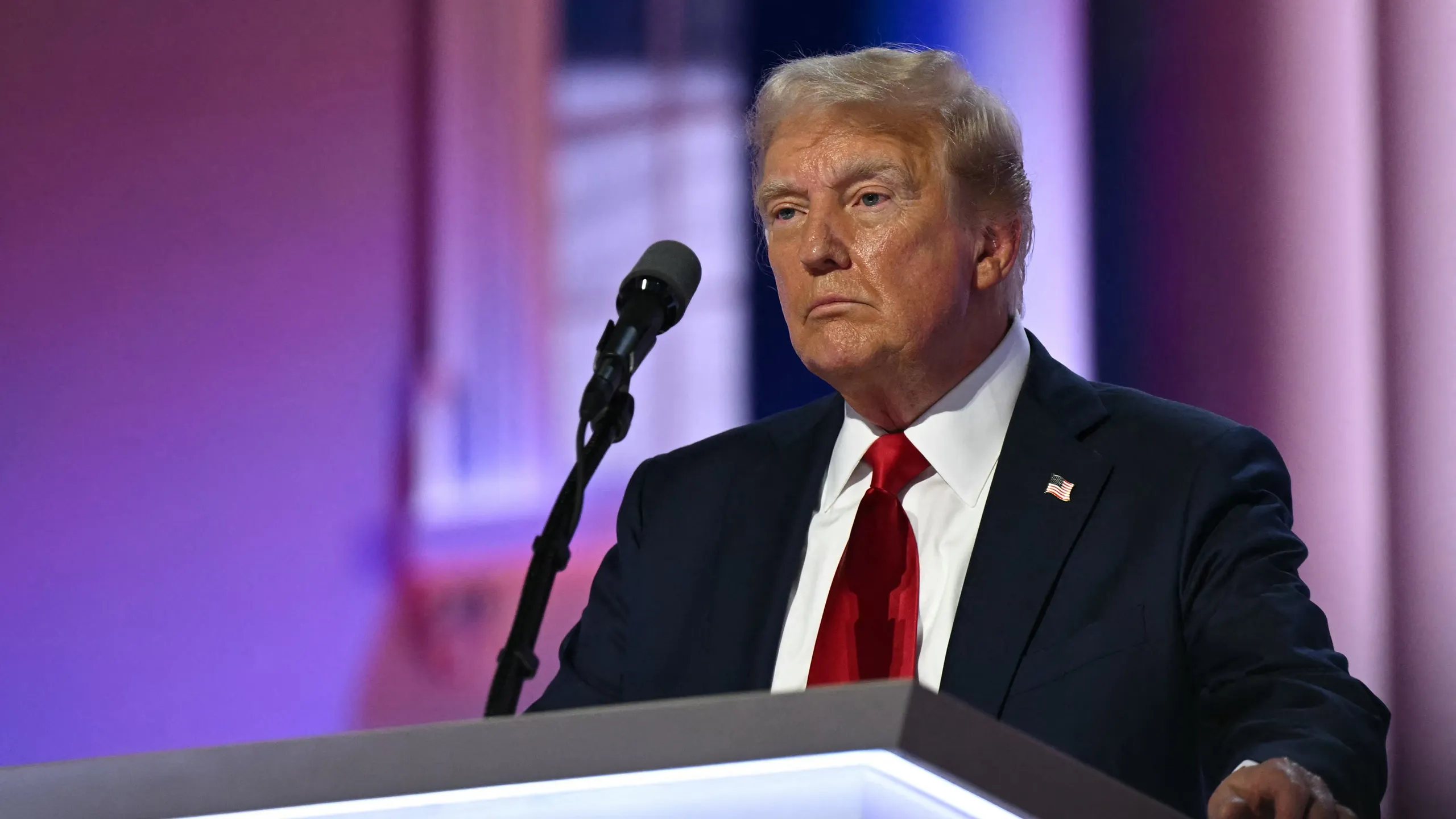
The political temperature around Delaney Hall spiked even higher when President Donald Trump weighed in during a late May Cabinet meeting. Asked about the reports out of Newark, he defended operations at the facility and dismissed the demonstrators outside as “fake” and “paid for,” framing the protests as a kind of manufactured theater rather than a grassroots response to alleged abuse.
On the ground in New Jersey, however, the clashes have been anything but theatrical. Police have repeatedly moved to clear protesters, with more people arrested in recent weeks for breaking curfews and failing to disperse outside the detention center. For activists, the crackdowns are part of the story: a system that, in their view, devalues immigrants’ lives and then criminalizes those who object.
The hearing gives lawmakers a rare chance to put that conflict on the record. Former ICE New York field office deputy director Scott Mechowski, border security adviser Art Del Cueto, and legal fellow Andrew Arthur are expected to testify, offering a counter-narrative that emphasizes enforcement, order, and the need to keep detention operations running smoothly.
That tension—between running an efficient deportation pipeline and upholding basic human rights—is exactly why Delaney Hall has become a political flashpoint.
Detention, symbolism, and the politics of place
Even as U.S. lawmakers interrogate one detention site, Europe is grappling with what to do with a very different kind of building that carries its own heavy history.
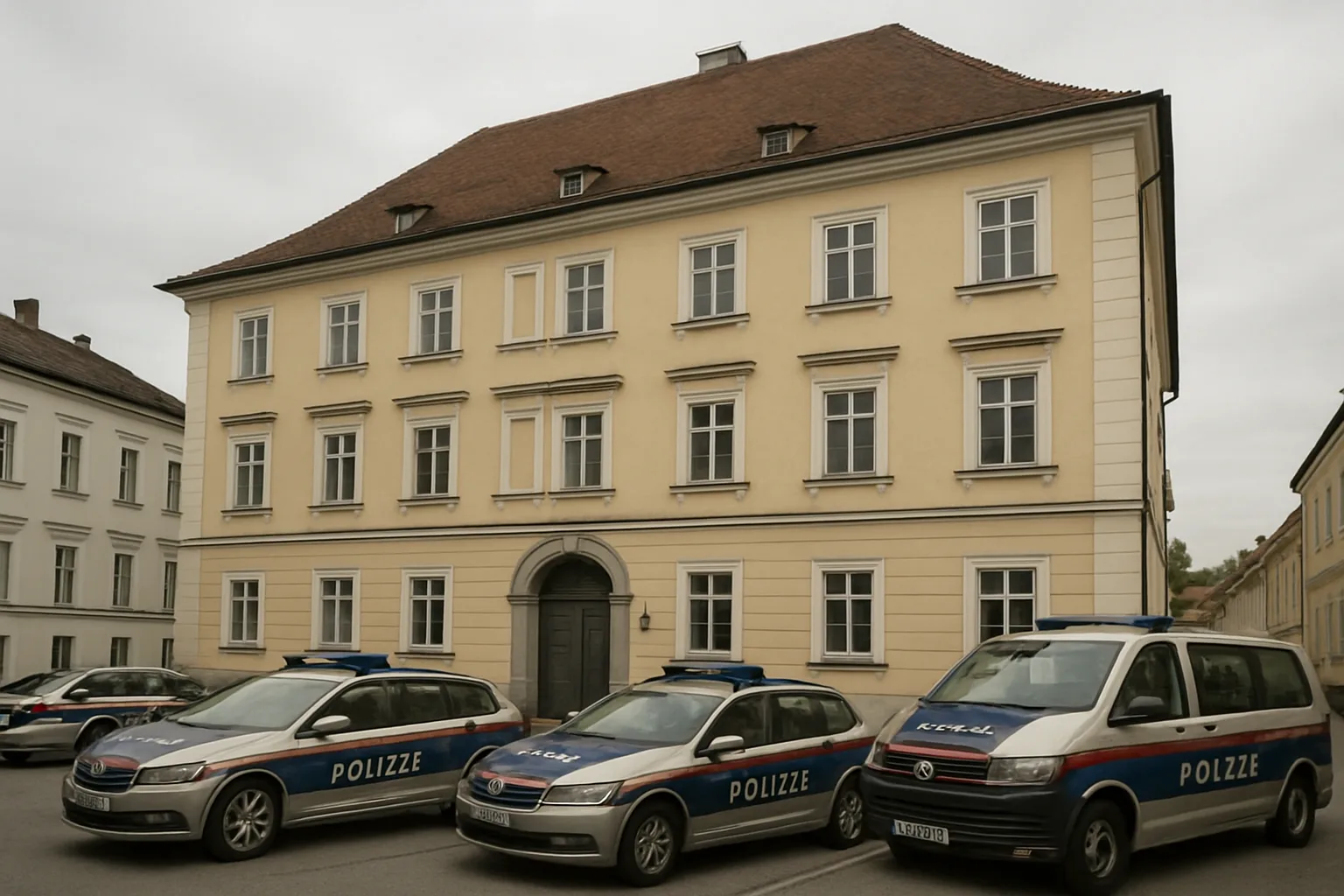
In Braunau am Inn, a small town near Austria’s border with Germany, the large terraced house where Adolf Hitler was born has officially reopened as a police station. It’s a bureaucratic rebrand with a sharp political edge: Vienna wants to strip the building of its symbolic power as a shrine for neo-Nazis.
For years, officials argued over how to handle the structure. It had been in private hands, at one point housing a charity for people with disabilities. But its association with Hitler turned it into an unwanted magnet, a place where far-right sympathizers occasionally gathered, and where the state risked looking complacent about the darker parts of its history.
Hitler’s birthplace becomes a police station
Austria eventually forced the issue. In 2017, the government carried out a compulsory purchase of the property, taking it out of private ownership. Two years later, it announced a more radical step: the building would be remodeled and converted into a police station.
That conversion is now complete. On Wednesday, the birthplace of the man who orchestrated the Holocaust began its “new life,” as officials describe it, as a hub for law enforcement. A memorial stone already sits outside the building, engraved with a message for passersby: for freedom and democracy, never again to fascism, and a reminder that millions of dead bear witness.
The idea is painfully literal but politically pointed. Instead of allowing the house to sit as a static monument to an infamous past—or worse, as a selfie backdrop for extremists—the government has turned it into an active site of the modern state’s authority. If you show up to venerate Hitler, you’re now walking into a police compound.
Can architecture blunt extremist nostalgia?
Austria’s move raises an uncomfortable question that echoes across democracies: can you redesign your way out of toxic symbolism? Turning a place of pilgrimage into a workplace for officers is meant to send a message that the state rejects nostalgia for fascism. It’s an attempt to collapse the distance between then and now, to insist that modern institutions are on guard against the ideology that once tore Europe apart.
Critics argue that changing a building’s use doesn’t erase history, and that the risk of forgetting can be just as dangerous as the risk of glorifying. Supporters counter that the memorial stone and continued public conversation do the work of remembrance, while the police station strips the site of its romanticized aura.
Either way, the choice is deeply political. It tells the far right: you don’t get this space. And it tells everyone else that the government is willing to wield eminent domain and state power when it believes the symbolism is too corrosive to ignore.
Two stories, one struggle over power and accountability
On the surface, a New Jersey ICE facility and a converted house in Braunau am Inn have little in common. One is a node in a sprawling immigration enforcement network; the other is a historical scar. But both are about the same core issue: who controls the spaces that define a country’s values.
At Delaney Hall, detainees and protesters are trying to force the U.S. government to confront what happens in its name—expired food, inadequate medical care, and cells that feel more like punishment than administrative hold. Lawmakers who have visited say those concerns have merit, and they’re now pulling ICE and Homeland Security officials into the glare of public oversight.
In Austria, officials are trying to preempt a different kind of shame: the spectacle of extremists rallying on the doorstep of Hitler’s birthplace. By remaking the building as a police station, they’re betting that everyday bureaucracy and a highly visible law enforcement presence will undercut its magnetism for the far right.
Both stories show how contested the politics of detention and memory have become. Immigrant rights groups insist that detention centers can’t be black boxes shielded from scrutiny. European governments, still shadowed by the 20th century, are experimenting with how to handle sites tied to their worst chapters without feeding the very movements they fear.
What This Means
The House hearing on the Delaney Hall ICE detention center won’t, on its own, transform the U.S. immigration system. Austria’s decision to turn Hitler’s birthplace into a police station won’t stamp out neo-Nazism. But together they highlight a crucial truth about modern politics: the fight over how power is used is also a fight over where it is used—and what those places say about us.
In Newark, the question is whether a facility run in the name of national security can be forced to meet basic human standards, and whether protest will be treated as a threat or a check on abuse. In Braunau am Inn, the question is whether a country can neutralize a toxic symbol without burying the history that made it dangerous in the first place.
Governments can redraw the map of power—turning detention centers into case studies in accountability, or turning the birthplace of a dictator into a daily reminder of the state’s responsibility to protect, not persecute. Whether they follow through on those promises is the political fight that comes next.