Hasan Piker wanted to make the Michigan Senate primary a morality play about bigotry. Instead, voters handed him a lesson in something far less glamorous and far more decisive: basic political judgment.
In the hours before all the ballots were tallied on Tuesday night, the streamer and left-wing commentator lit into Democrats who hadn’t backed Abdul El-Sayed, the progressive favorite in Michigan’s Democratic Senate primary. His verdict was blunt: anyone who didn’t vote for El-Sayed was an “unbelievably Islamophobic piece of s**t.”
Then the votes finished coming in — and El-Sayed won anyway, narrowly edging out establishment-backed Haley Stevens with roughly 48.5% to 47.5%, as progressive supporters packed Detroit’s Majestic Theatre to celebrate.
The story of this race isn’t that Democratic voters were too Islamophobic to support a Muslim candidate. It’s that enough of them did — while also refusing to let Piker’s bad-faith bullying stand in for serious debate over El-Sayed’s record and associations.
Hasan Piker’s outrage met a changing electorate
The focus keyword in this fight — Hasan Piker — isn’t a random activist yelling into the void. He’s built a lucrative brand as a bomb-throwing voice of the online left, a man who treats politics like a never-ending Twitch stream: maximal outrage, minimal accountability.
That pattern was on full display in his tirade about the Michigan primary. Rather than engage with why some Democrats might hesitate over El-Sayed — on policy, world view, or the company he keeps — Piker flattened any doubts into one word: Islamophobia.
The problem for him is that this is the same Hasan Piker who has publicly praised Hamas over Israel, calling the terrorist group “a thousand times better than Israel.” Hamas is not just controversial; it’s formally designated a terrorist organization by the United States, the European Union, Canada, Australia, and New Zealand. He has previously suggested the United States “deserved” the 9/11 attacks, and he’s appeared alongside El-Sayed and Rep. Summer Lee while reportedly refusing to condemn Hamas’s October 7 massacre.
When HBO host Bill Maher — a man who has spent decades skewering every religion and ideology, including his own allies — balked at rolling out the welcome mat for Piker, the response wasn’t introspection. It was yet another round of accusations: Maher, Piker claimed, was being “Islamophobic” and displaying “anti-Blackness,” all while lamenting that “Islamophobia is oftentimes not considered at all” in American politics.
This is the pattern that matters: criticism in, accusations out. Any question about judgment or values gets alchemized into proof of bigotry. The content of Piker’s own words — the praise of a terror group, the dismissal of dead Americans as somehow deserved — is treated as impolite to mention.
Abdul El-Sayed’s win complicates the Islamophobia script
Here’s what Piker’s tirade missed: if Michigan Democrats were as bigoted as he suggests, Abdul El-Sayed wouldn’t be celebrating right now.
El-Sayed’s narrow victory over Haley Stevens is, on its own, a big deal for the progressive movement. This wasn’t a blowout; it was a knife’s-edge race in which a left-wing, Muslim candidate toppled an establishment favorite in a major swing state. Progressive activists in Detroit and beyond flexed real organizational muscle.
That reality makes Piker’s pre-emptive meltdown almost farcical. The “unbelievably Islamophobic” Democrats he was screaming about were, in the aggregate, voting to send El-Sayed to a general election where he’ll be one of the most prominent Muslim political figures in the country.
Voters didn’t need Hasan Piker to explain bigotry to them. They were capable of sorting through the noise, weighing El-Sayed’s identity alongside his policies, his rhetoric, and yes, his associations. Enough of them decided he should carry the party’s banner regardless.
At the same time, some Democrats clearly balked — hence the razor-thin margin. It’s not hard to see why they might have questions when a prominent supporter like Piker is on tape praising Hamas and dismissing 9/11 as deserved, then showing up with El-Sayed while refusing to condemn the October 7 attacks. You don’t have to fear Muslims to worry about that.
Identity politics meets voters who can read the room
The deeper story here is about how voters are starting to respond to a specific kind of political performance: the reflexive use of identity as a shield against scrutiny.
Piker’s playbook is familiar by now. Anything short of enthusiastic support for his preferred candidate, policy, or pundit becomes proof of a moral failing. Disagree with him, and you’re not just wrong; you’re a bigot. Ask tough questions about Islamist extremism or the rhetoric around Israel and Hamas, and suddenly you’re “Islamophobic.”
But this Senate primary shows the limits of that approach. Michigan Democrats didn’t uniformly reject El-Sayed over his faith; they handed him a victory. At the same time, they kept the race close enough to send another message: you cannot simply wave away legitimate concern about extremism — or about the people you’re seen alongside — by crying prejudice and logging off.
Voters can, in fact, hold two ideas at once: that Muslims are entitled to full political participation and representation, and that cheering on a terrorist group or excusing mass murder is disqualifying behavior for anyone, regardless of belief.
The insistence that any mention of the latter is proof of the former is exactly what many Americans are starting to reject. They’re tired of being told that their unease with a candidate’s rhetoric or allies says more about their character than about the person asking for their vote.
Hasan Piker, Hamas rhetoric, and the cost of looking away
None of this means El-Sayed is responsible for everything Hasan Piker has ever said. Candidates collect messy coalitions, especially in primaries. But the choice to embrace, tolerate, or distance oneself from a figure like Piker is itself a political act.
El-Sayed’s camp has benefited from the energy that online influencers like Piker can generate — rage clicks, viral clips, a sense of insurgent momentum. The downside is that those same clips are now part of the public record, easily resurfaced and replayed in a general election campaign where the audience will be far broader and far less sympathetic.
And those clips are brutal. A would-be kingmaker who says Hamas is “a thousand times better than Israel.” A pundit who argues America “deserved” 9/11. A man caught alongside El-Sayed and Rep. Summer Lee, reportedly unwilling to condemn the October 7 massacre. Voters in Michigan’s primary may have chosen to look past those associations, or to weigh them against the rest of El-Sayed’s record and platform. Swing voters in November will be a different story.
That’s the other danger of Piker’s constant moralizing: by accusing everyone else of bigotry, he makes it harder to have the sober, grown-up conversation the left insists it wants about foreign policy, terrorism, and civil rights. When every criticism is “phobia,” there’s no space left to say: yes, Islamophobia is real and dangerous, and so is Islamist extremism; both need to be taken seriously at the same time.
Michigan Democrats just rewrote the lazy narrative
For years, a handy shortcut has floated around progressive circles: if a Muslim candidate loses, Islamophobia did it. Sometimes that’s clearly true. Religious bigotry, including against Muslims, is alive and well in American politics.
But Michigan’s result scrambles that narrative. When a Muslim progressive wins a Senate primary in a key state, it’s a lot harder to argue that Democratic voters are pathologically hostile to Muslim candidates. It’s even harder to defend a pundit who preemptively called them all “Islamophobic pieces of s**t” before the final precincts reported.
Instead, the primary suggests something more complicated — and more hopeful. Many Democratic voters were willing to back El-Sayed on the merits, not in spite of his faith and not because they were guilted into it, but because they liked what he represented. Others were wary, for reasons that can’t be dismissed with a hashtag.
This is what a maturing electorate looks like. Identity matters, but it doesn’t end the conversation. Voters are weighing ideology, competence, and character along with biography. They’re watching the clips, noticing who shows up with whom, and asking whether the people on stage can be trusted with power.
What This Means
The Michigan Senate primary is a warning shot to the outrage economy that fuels figures like Hasan Piker. The lesson is not that identity politics is dead, or that Islamophobia is imaginary. It’s that voters have started to tune out people who use those labels as a way to shut down debate instead of deepen it.
El-Sayed’s win shows Democratic voters are perfectly capable of supporting a Muslim progressive candidate in a high-stakes race. The closeness of that win, and the discomfort around some of his loudest surrogates, shows they’re equally capable of rejecting the idea that every question about judgment or extremism is an act of hate.
If the left wants to build durable majorities, it will need fewer influencers who shout “bigot” into a ring light and more politicians who are willing to say, clearly and consistently: our values apply to everyone. That means standing up both against Islamophobia and against those who cheer on terrorism; respecting Muslims as full citizens and asking hard questions about anyone, of any faith, who justifies the unjustifiable.
Michigan’s voters just signaled they’re ready for that level of seriousness. Whether Hasan Piker is remains an open question.
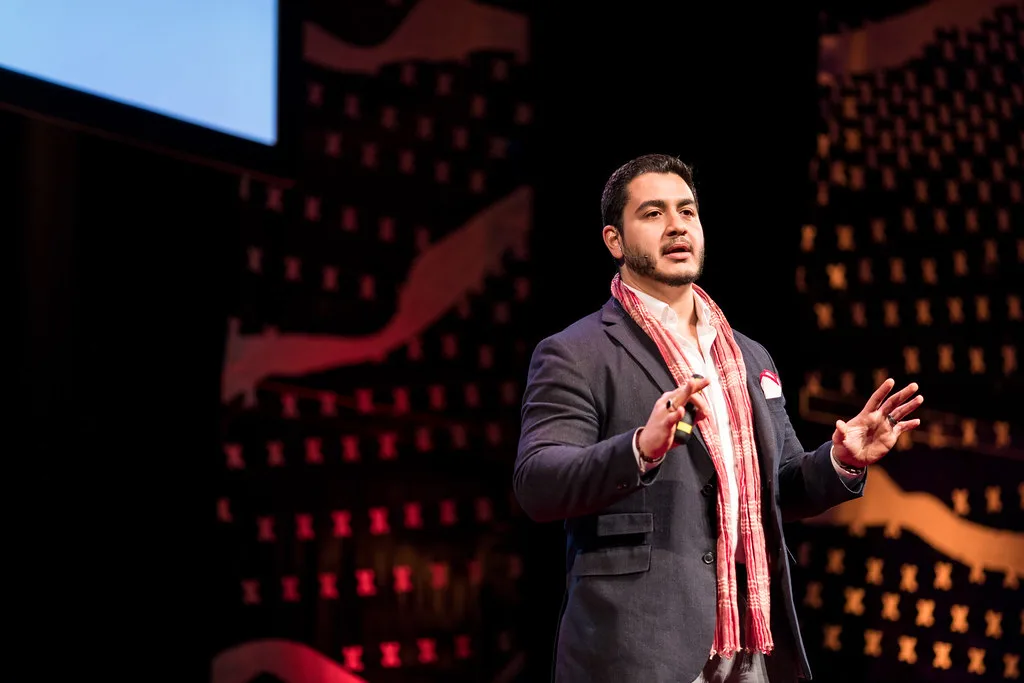
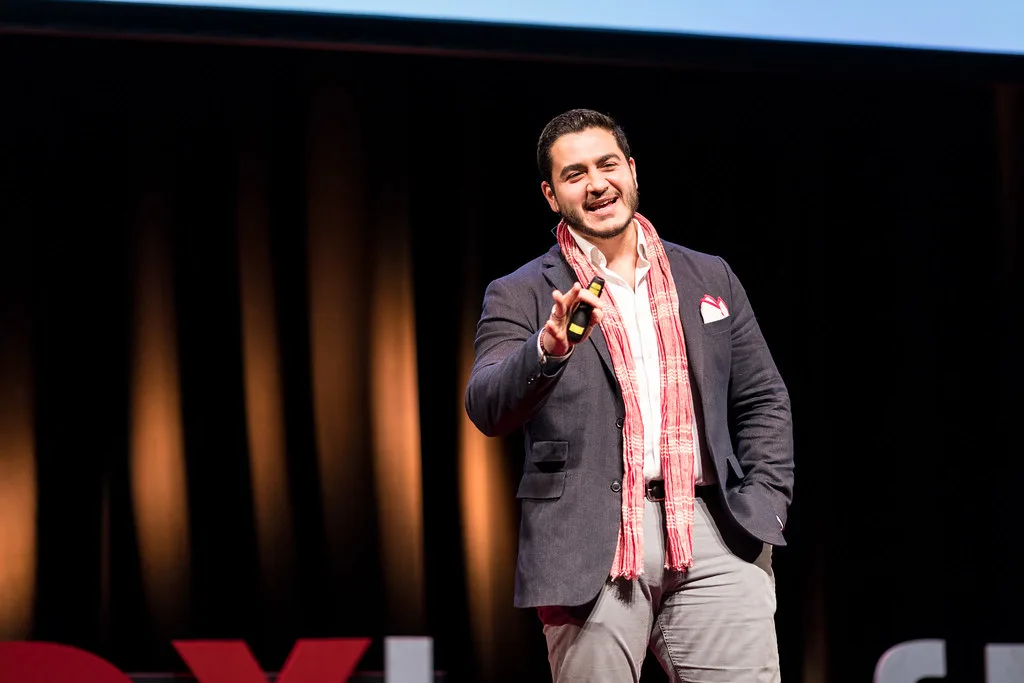
Photo: TEDxUofM Conference / BY-NC-ND via Openverse