The Galaxy Z Fold 8 vs Z Fold 8 Ultra showdown isn’t just about picking your favorite aspect ratio. Samsung’s new book-style foldables may share a name, but in practice they’re built for very different people, with design, cameras, and even battery priorities pulling them in opposite directions.
If you’ve been waiting years for the “one” perfect foldable, this generation makes you choose a side: the compact tablet that wants to be your Netflix-and-gaming buddy, or the productivity slab chasing laptop-lite multitasking. The focus keyword here is the Galaxy Z Fold 8 vs Z Fold 8 Ultra battle, and it’s the clearest fork in Samsung’s foldable story so far.
Galaxy Z Fold 8 vs Z Fold 8 Ultra: Two designs, two missions
The design split is the first big clue that Samsung isn’t aiming these phones at the same user.
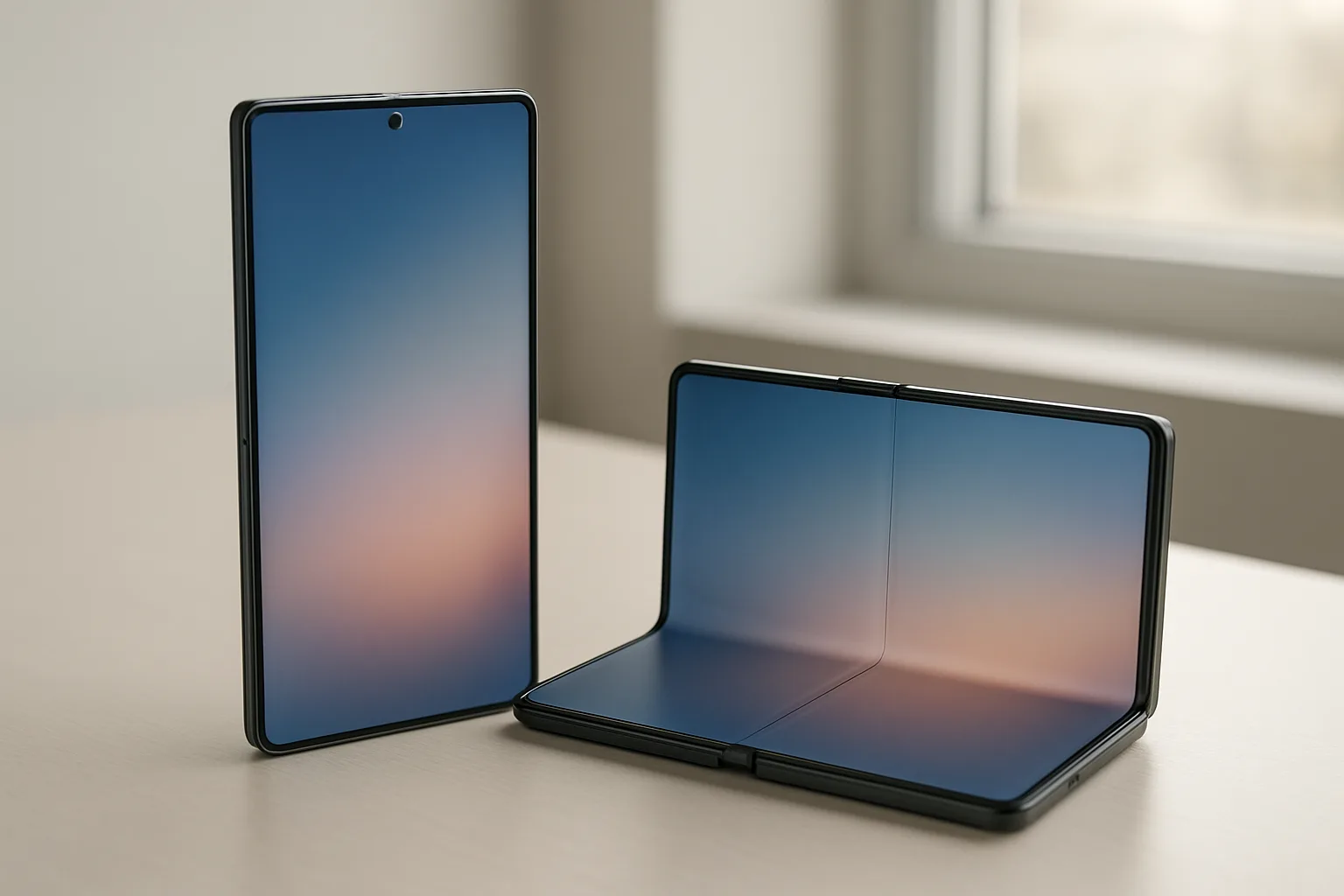
The Galaxy Z Fold 8 Ultra sticks closely to the template laid down by last year’s big Fold. Its dimensions and 215g weight are unchanged, and the internal display stretches to a sizeable 8 inches. Samsung has effectively given you the screen real estate of two 6.5-inch cover displays side by side when you open it up.
The result is a device that feels purpose-built for split-screen use. Multitasking is the point here, not just a bonus feature. Samsung is leaning into that with new software tricks like “Now Nudge”, where a single tap on an AI prompt can throw you into a predefined split-screen layout so you’re working in two apps at once instead of bouncing back and forth.
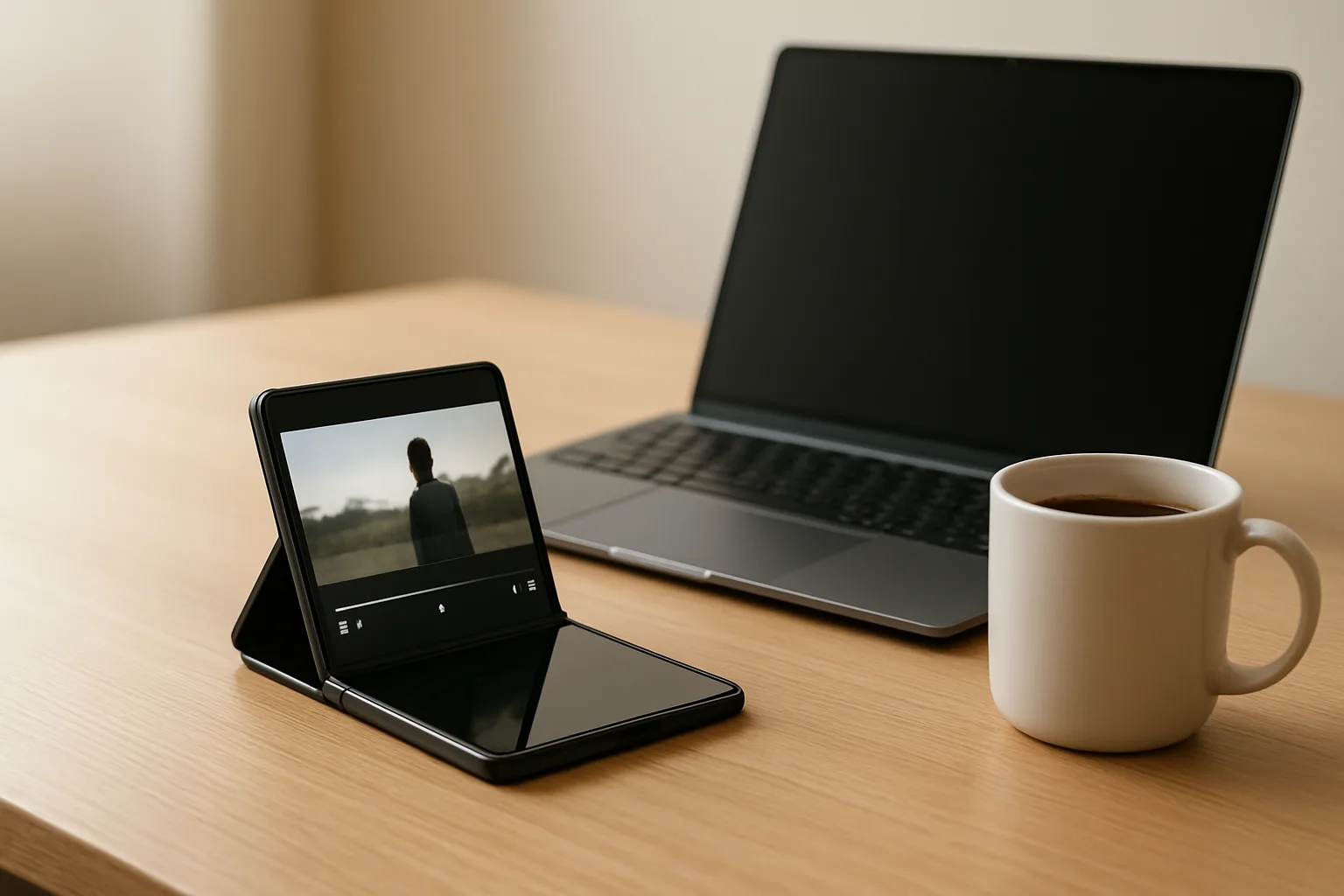
In contrast, the regular Galaxy Z Fold 8 takes a very different approach. Closed, it’s much shorter and wider, with a 5.5-inch cover display that can feel odd for vertical video or one-handed social scrolling. But open it up and the philosophy clicks: the 7.6-inch inner screen uses a more traditional 4:3 aspect ratio instead of the Ultra’s near-square panel.
That shift matters. The Z Fold 8’s internal screen looks and feels more like a conventional small tablet. Content framed for classic widescreen formats sits more naturally, and games that assume a tablet-style canvas feel immediately at home.
There’s another crucial takeaway: weight. The Fold 8 drops to 201g, a noticeable reduction from the Ultra. For anyone who plans to actually hold this thing for a full movie, that 14g difference could be the line between “luxury toy” and “device you reach for every night”.
Who each design really suits
When you translate those shapes and sizes into real life, the split is pretty clear:
- Galaxy Z Fold 8 Ultra: Better if you live in split-screen, juggle docs and chat, or want to watch vertical video (TikTok, YouTube Shorts) on a big canvas.
- Galaxy Z Fold 8: Better if you mostly care about long-form video, reading, and gaming, and want something that feels closer to a traditional tablet.
Think of the Ultra as a foldable workstation and the Fold 8 as a foldable media tablet that happens to fit in your pocket.
Camera showdown: Ultra really means Ultra this year
You can’t sell phones at this price and shrug at the cameras, and Samsung clearly knows that. But while the Galaxy Z Fold 8 vs Z Fold 8 Ultra look similar from the back, their photographic ambitions are very different.
Both phones share a few core components: a 50Mp ultrawide camera with a 120-degree field of view, and 10Mp selfie cameras on both the cover and inner displays. That’s the baseline.
The real split starts with the main sensor. The Z Fold 8 Ultra gets the same 200Mp primary camera that previously fronted Samsung’s most premium foldable. It’s not a generational leap on paper, but staying put at 200Mp keeps it in properly flagship territory.
The regular Z Fold 8, on the other hand, steps down to a 50Mp main sensor – the same resolution used on the cheaper Z Flip 8. It should still be a very capable shooter, especially given how far Samsung has pushed processing in recent years, but this is a clear message: if you care deeply about image quality, you’re being nudged toward the Ultra.
The telephoto problem on Z Fold 8
The bigger controversy is what Samsung took away. The Ultra keeps a 10Mp telephoto lens with 3x optical zoom, even if it doesn’t rise to the dramatic periscope levels of the brand’s top slab phones.
The Galaxy Z Fold 8, however, drops telephoto entirely. There’s no dedicated zoom lens at all. Any “zoom” you get is digital, effectively just cropping into that 50Mp main sensor.
That’s a significant compromise. Digital zoom can look fine in bright light and at modest levels, but once you push beyond that, noise and softness creep in quickly. Portrait shots that rely on longer focal lengths to really flatter your subject also take a hit.
So if you rely on zoom — whether for travel, concert photos from the stands, or just better candid shots — the “vs” in Galaxy Z Fold 8 vs Z Fold 8 Ultra becomes stark: the Ultra is the only sensible option.
Battery and chipset: Silicon-carbon debuts on both
Under the hood, the two devices are much closer siblings.
Both the Galaxy Z Fold 8 and Z Fold 8 Ultra debut Samsung’s use of silicon-carbon (Si-C) batteries in its phones, shared with the latest Z Flip. This chemistry shift is about packing more capacity into roughly the same footprint as older lithium-ion designs.
You can see that play out in the numbers. The Ultra moves to a 5000mAh battery, while the smaller Fold 8 lands at 4800mAh – both up from the 4400mAh pack used in the previous-gen Fold. On paper, that’s a healthy improvement, especially for phones that double as miniature tablets.
Of course, capacity isn’t the whole story. The Ultra’s bigger display can easily devour that extra 200mAh, especially if you’re running two apps side by side all day. Both devices rely on the same Snapdragon 8 Elite Gen 5 for Galaxy chipset, which is designed to be highly power-efficient, but how long they last will depend heavily on how you use those inner screens.
Charging is effectively a draw: 45W wired and 20W wireless on both models. You still don’t get native Qi2 support baked into the chassis, so if you want the newer magnetic charging experience and accessories, you’ll need to add a compatible case.
In other words, you’re not picking between these phones for battery or performance alone. The difference is how that power is spent: the Ultra uses its reserves on a larger, multitasking-centric canvas, while the Fold 8 aims to give you tablet-style entertainment in a lighter shell.
Colors and personality: subtle vs bold
Samsung is also using color to quietly push the Galaxy Z Fold 8 vs Z Fold 8 Ultra split.
Both phones share two core finishes: a dark grey “Graphite” and an off-white “Cream”. Those are the safe, executive-friendly options that will probably account for most sales.
Where things get more interesting is in the extras. The Fold 8 adds a light purple “Lavender” finish, giving the smaller, more media-focused model a softer, lifestyle-oriented look. The Z Fold 8 Ultra counters with a much louder “Violet Shadow” option, a bolder purple that fits the phone’s more aggressive, spec-heavy posture.
Green follows a similar pattern. The Fold 8 picks up a lighter “Pistachio” shade, while the Ultra gets a deeper “Green Shadow”. Both green finishes are limited to Samsung’s own store, adding a bit of scarcity appeal for people willing to order direct.
The message is subtle but clear: the regular Fold 8 is where Samsung wants to express more playful, consumer-friendly colors, while the Ultra leans into the “power user” persona even in its paint jobs.
Price and positioning: premium vs even more premium
Samsung hasn’t built a budget foldable here. Both the Galaxy Z Fold 8 and Z Fold 8 Ultra sit firmly in the ultra-premium space, even before you start adding storage upgrades and accessories.
What matters more than the exact figure is how Samsung is carving up the value proposition. The Ultra stakes its claim on being the no-compromise option for productivity and photography: bigger canvas, heavier, more powerful main camera, and crucially, a real telephoto lens.
The Galaxy Z Fold 8, meanwhile, is pitched as the slightly more approachable, entertainment-first foldable. It still gets the new battery tech, the flagship chipset, and that versatile 4:3 inner display, but trims back in places like the main camera sensor and zoom hardware to hit a lower (though still high) price.
If you’re cross-shopping the two, you’re really deciding how much you value that camera upgrade and the extra screen real estate for multitasking.
Galaxy Z Fold 8 vs Z Fold 8 Ultra: Which one should you actually buy?
When you strip away the spec sheets, the decision largely comes down to how you see yourself using a foldable day to day.
Pick the Galaxy Z Fold 8 Ultra if:
- You want the biggest possible canvas for split-screen work and vertical video.
- Camera quality is a top priority, especially zoom and portrait photography.
- You’re willing to live with more bulk and weight for the added capabilities.
- You like the idea of a phone that feels more like a tiny productivity workstation.
Pick the Galaxy Z Fold 8 if:
- You mainly want a compact tablet for watching movies, TV, and gaming.
- You care more about weight and comfort over long sessions than sheer screen size.
- You can live without a dedicated telephoto camera.
- You prefer a more traditional tablet-like aspect ratio on the inner display.
What This Means
The Galaxy Z Fold 8 vs Z Fold 8 Ultra comparison shows that Samsung is finally treating its book-style foldables as distinct products instead of just “big” and “bigger” models. The Ultra doubles down on the productivity, camera, and spec-flexing side of the lineup, while the Fold 8 leans harder into comfort, content, and that familiar tablet feel.
Neither is objectively better; they’re optimized for different lives. If your phone is where you work, organize, and multitask, the Z Fold 8 Ultra is the one that actually leans into that ambition. If your phone is primarily where you escape — to binge shows, read, and grind through games — the lighter, more video-friendly Galaxy Z Fold 8 might finally be the foldable that fits.