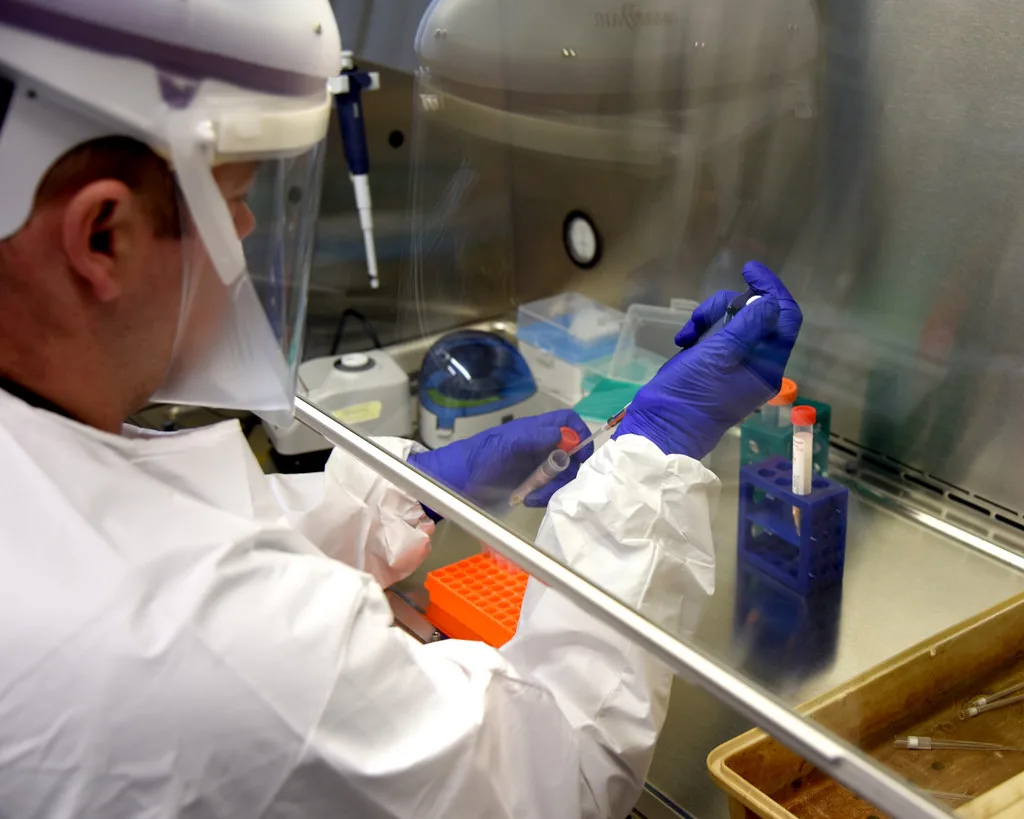
Mourners crowd the courtyard of an orphanage in Bunia, in the Democratic Republic of Congo, as a tiny white coffin is lowered into the red earth. The six-month-old girl inside died from Ebola. For health workers on the ground, this isn’t just another outbreak – it’s the fastest-spreading Ebola crisis ever recorded, and it’s burning through eastern Congo like a fire.
This latest Congo Ebola outbreak, driven by a strain with no approved vaccine or treatment, has already killed more than a thousand people, and officials warn those numbers are almost certainly an undercount. The question hanging over the region isn’t just how to stop it – it’s whether the world is willing to move fast enough to matter.
A Congo Ebola outbreak that’s outpacing the response
The current outbreak was officially declared on May 15, and within weeks it was clear this wasn’t following the usual script. Case counts climbed quickly, with health authorities saying they had never seen Ebola spread so fast. Behind every statistic are scenes like the burial in Bunia: hurried funerals, families afraid to touch their own dead, and communities struggling to balance grief with fear of further infection.
World Health Organization officials are blunt about the scale of the crisis. “You have to imagine that this is a fire,” said Dr. Chikwe Ihekweazu, describing a virus that is both intense at its core and spreading outward at the same time. That “fire” analogy isn’t rhetoric. In epidemiological terms, it means each chain of transmission is seeding new ones faster than health teams can find and extinguish them.
Dr. Thierno Balde, who leads the Ebola response effort, put it even more starkly: the outbreak remains ahead of the response, and teams are still trying to catch up. When an epidemic moves faster than the people fighting it, the usual playbook – trace contacts, isolate cases, protect health workers – starts to crack.
The Bundibugyo strain: deadly, fast, and poorly armed against
Part of what makes this Congo Ebola outbreak so alarming is the specific virus involved. This time it’s the Bundibugyo strain of Ebola, a variant that has no approved vaccines and no licensed treatments. That’s a brutal step back from recent crises, where experimental but promising vaccines helped turn the tide against other Ebola strains.
Here, there’s no such cushion. Health workers are essentially fighting blind, relying on classic infection control – isolation, barrier nursing, and community outreach – without the added protection of immunization campaigns. In an area already worn down by years of conflict and distrust, that’s a dangerous gap.
The World Health Organization warns that the true scale of infection is likely far larger than what shows up in official reports. By their estimates, real case numbers could be two to four times higher than confirmed figures. That suggests a shadow epidemic, spreading in households and remote villages that health teams haven’t even reached yet.
Why Ebola hits the body – and health systems – so hard
Ebola is terrifying not just because it spreads through contact with bodily fluids, but because of how aggressively it destroys the body once it takes hold. The virus attacks the gut lining and the liver, triggering severe diarrhea and uncontrollable vomiting. Patients can lose more than two gallons of fluid a day – a catastrophic loss even in a fully equipped intensive care unit, let alone a crowded clinic with intermittent electricity.
That extreme dehydration pushes the body toward shock. Organs start to fail. Blood pressure crashes. In many of eastern Congo’s small health centers, staff are trying to manage that level of fluid loss with minimal supplies, limited protective gear, and no guarantee that the next patient through the door won’t infect them too.
At the same time, this mode of transmission – through vomit, diarrhea, blood, sweat, or other fluids – turns the most intimate acts of care into high-risk encounters. Washing a loved one, feeding a sick child, preparing a body for burial: in this outbreak, every one of those gestures can become a transmission event.
Conflict, fear, and the politics of a virus
Stopping an Ebola outbreak is hard even in a stable region. Eastern Congo is anything but. Ongoing conflict, armed groups, and chronic political tension make it dangerous for health workers to move freely. Clinics may be under-resourced or damaged; roads can be unsafe or impassable. That instability gives the virus exactly what it needs: time and space to spread beyond view.
There’s another layer to this: money, and the lack of it. African health officials say there is a huge funding gap in the response – a shortfall that directly translates into fewer staff, fewer treatment centers, and fewer protective supplies in exactly the places that need them most. “These are people dying,” said Jean Kaseya of the Africa Centers for Disease Control and Prevention. “They are dying because we don’t have vaccines, we don’t have medicine, we don’t have funding.”
That’s not abstract budget talk. In a viral emergency, funding dictates how many teams can go door to door tracing contacts, how fast lab samples are processed, whether an overwhelmed rural clinic gets protective gear this week or next month. When the virus is already ahead, every delay is another lane opened for transmission.
Global fears, local realities
As the numbers climb in Congo, attention outside the region tends to swing between panic and indifference. On one side, there are worries about Ebola slipping across borders and reaching major cities. On the other, there’s the slow, grinding reality of an African epidemic that rarely breaks into the daily news cycle until a case is suspected in Europe or the United States.
Some governments are already signaling their posture. U.S. Secretary of State Marco Rubio has vowed that the administration will not allow Ebola to enter the United States, emphasizing border vigilance and coordination with agencies like the Centers for Disease Control and Prevention. That kind of political messaging plays well domestically, but it doesn’t change the basic math: the best way to keep Ebola out of other countries is to help stop it where it is now.
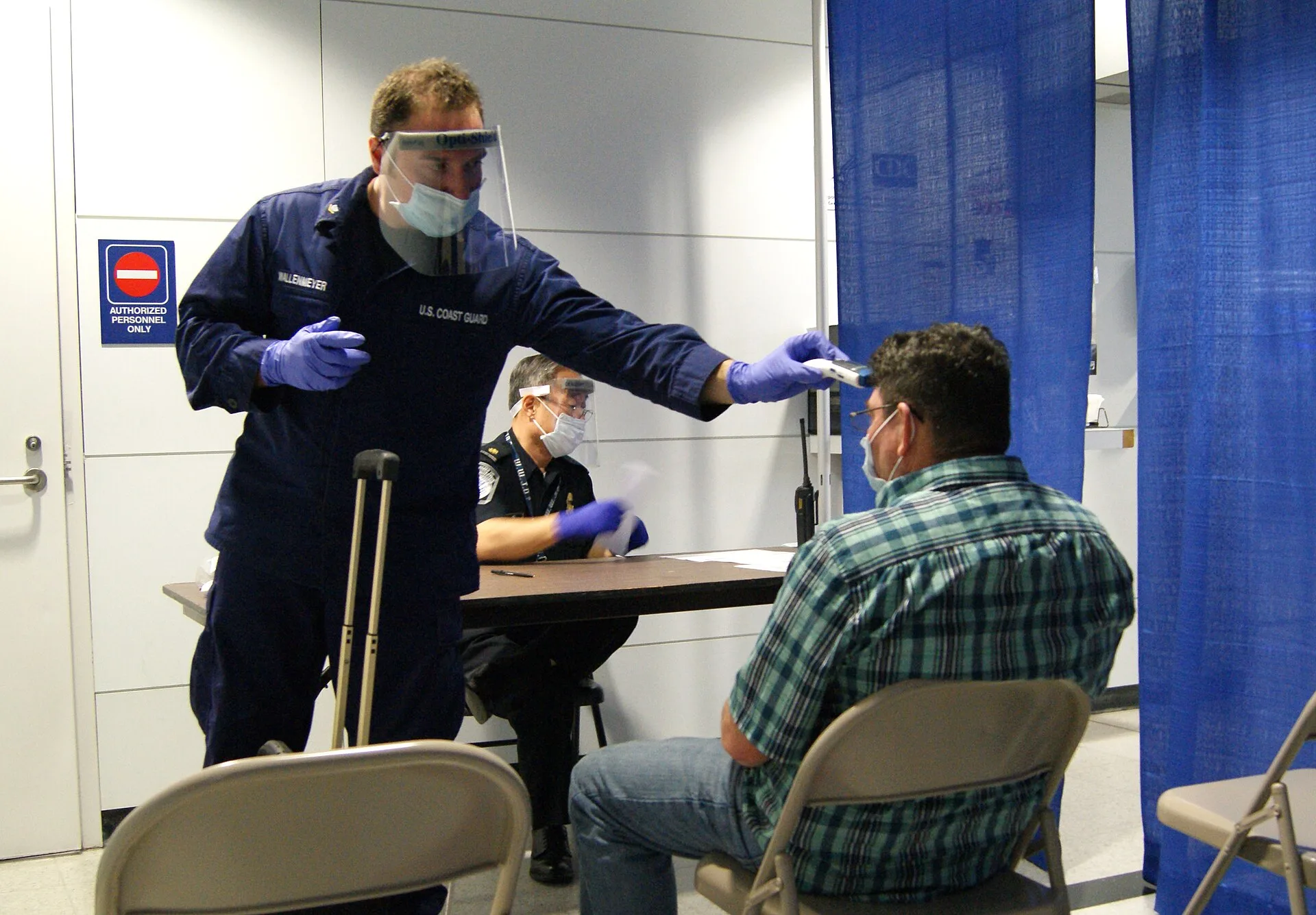
Viruses don’t respect borders, and they don’t care about talking points. Airport screening and travel restrictions can buy time, but they can’t compensate for weak surveillance and underfunded health systems at the epicenter of an outbreak. The front line of global health security is currently running through places like Bunia, not through passport control in distant capitals.
Why this outbreak demands a different kind of urgency
This Congo Ebola outbreak is a stress test for lessons the world claimed to learn after previous epidemics. We know community engagement matters. We know early funding beats late heroics. We know vaccines and treatments are only part of the story when conflict and mistrust keep people from seeking care.
But this time, the Bundibugyo strain has stripped away some of the tools that offered hope in earlier crises. There’s no approved vaccine to roll out in a rapid ring vaccination campaign. There’s no widely available therapeutic to point to as a reason to come in early for care. That puts even more pressure on basics: clean water, protective equipment, trained staff, safe burials, transparent communication.
If the true infection count really is two to four times the official tally, then the world is not looking at a localized flare-up. It’s watching an epidemic that is already deeper and wider than the numbers suggest. The “fire” metaphor returns here: on the surface you see one line of flames; underneath, the roots are burning unseen.
What This Means
For people in Bunia and across eastern Congo, the stakes of this Ebola outbreak are immediate and brutal: whether a sick child gets to a treatment center in time, whether a caregiver has gloves, whether a village can bury its dead without seeding new infections. For the rest of the world, the stakes are quieter but no less real.
This is what a fast-moving epidemic looks like when it collides with fragile health systems, a dangerous virus strain, and chronic underfunding. It’s also a reminder that global health security isn’t an abstract line item – it’s built, or neglected, in places like this. If the Congo Ebola outbreak is a fire, then the choice facing the international community is simple: either help put it out at the source, or wait until the sparks land somewhere much closer to home.
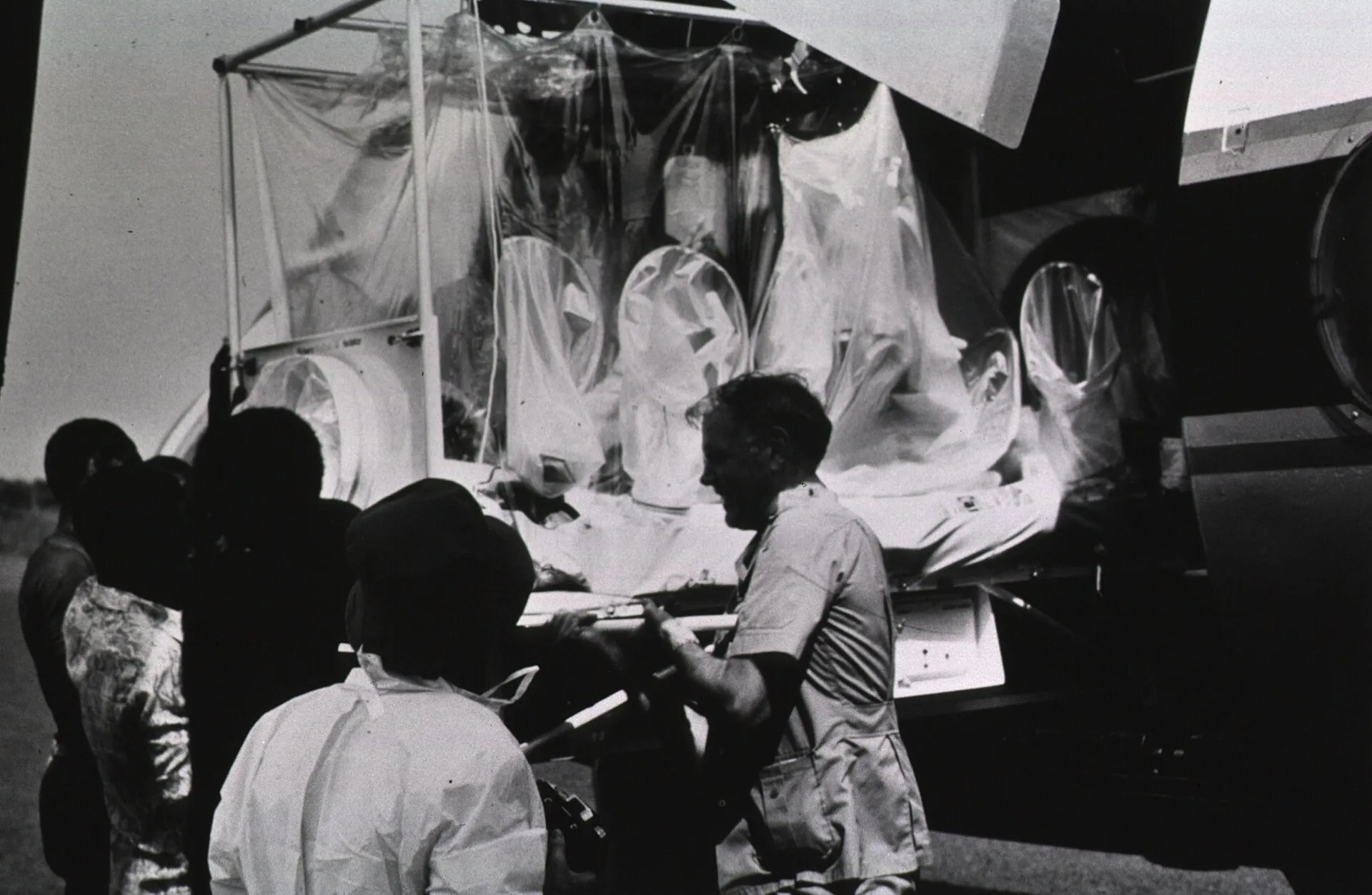
Photo: Melissa Maraj/U.S. Customs and Border Protection / Public domain via Wikimedia Commons | Photo: Unknown photographer, Centers for Disease Control / Public domain via Wikimedia Commons