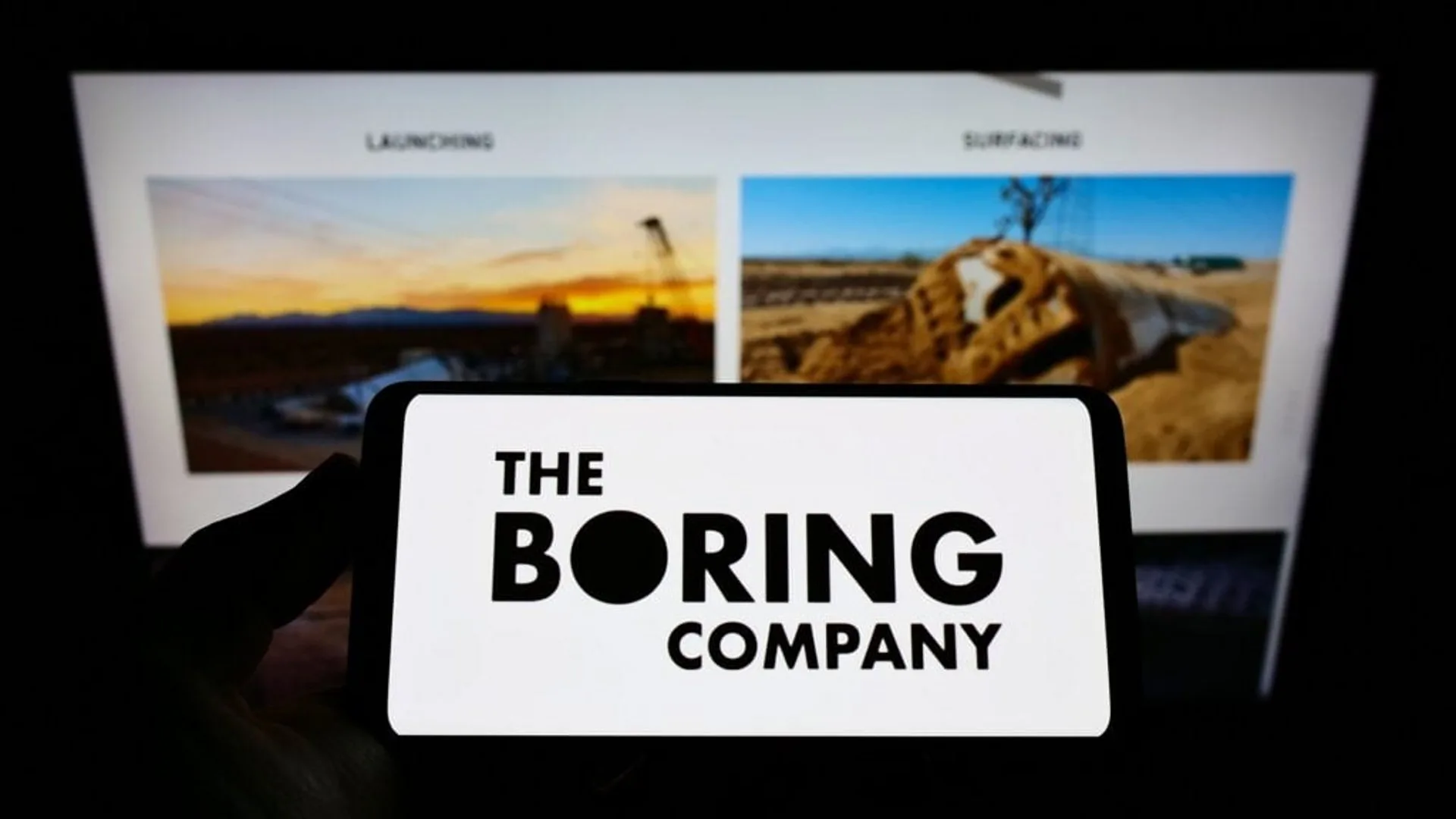
The Boring Company has closed a $3 billion Series D led by the United Arab Emirates, valuing Elon Musk’s tunnelling venture at $23 billion. The headline deliverable attached to the round is more than 150 kilometres, roughly 93 miles, of new tunnel in the Emirates.
For a company whose entire operating footprint to date is a few miles of loop under Las Vegas, that is a considerable leap.
Who Wrote the Cheques
Alongside the UAE as lead investor, the round drew Andreessen Horowitz, Sequoia Capital, Human Capital, Vy Capital and Valor Equity Partners. Vy Capital and Valor are familiar names in Musk’s orbit, having backed multiple ventures across his portfolio.
The terms moved in Boring’s favour during negotiation. Reporting in July had the company seeking up to $4 billion at a $20 billion valuation. It ended up taking less money at a higher price, which is the shape of a round where demand exceeded the allocation. In a funding environment where most hardware-heavy infrastructure startups are being marked down, that is a notable outcome.
Why the Emirates
The UAE as anchor investor and first major international market makes more sense than it might initially appear, and for reasons that have little to do with Musk.
Tunnelling in the Gulf is attractive on climate grounds alone. Surface transit in a region where summer temperatures routinely exceed 45°C is a genuinely unpleasant proposition, and underground is air-conditioned by default. The geology is workable. The permitting environment is, to put it diplomatically, less encumbered than a typical American municipality. And the capital is patient in a way that public infrastructure budgets are not.
The UAE has also been conspicuously aggressive about buying positions in frontier technology over the past two years, from AI compute to space to advanced manufacturing. A tunnelling company is a logical addition to a portfolio built around owning physical infrastructure for the next economy.
The Track Record Is Thin
Here is the part that has to be said plainly. The Boring Company’s operational history consists of the Vegas Loop, a system of tunnels connecting hotel-casinos to the Las Vegas Convention Center, where Teslas with human drivers ferry passengers between stations. It works. Convention attendees use it. It is also a long way from the autonomous high-throughput network originally pitched.
A 10-mile loop in Nashville is the newest announced project. Several previously announced projects in other American cities did not proceed, and the company has faced labour disputes and regulatory friction along the way.
So the honest framing is this: investors have valued the company at $23 billion on the strength of its tunnelling cost curve, not its transit network. Boring’s actual claim to significance is that it has pushed the cost per mile of small-diameter tunnelling down substantially against conventional methods, through its Prufrock machines and a continuous-mining approach that lines the tunnel as it advances rather than stopping to do it.
Cost Per Mile Is the Whole Product
If you think of Boring as a transit company, the valuation is indefensible. If you think of it as a tunnelling-cost company, it becomes arguable.
Conventional urban tunnelling runs to hundreds of millions of dollars per mile in Western cities, and a large share of that is the cost of stopping, surveying, lining and restarting. A machine that bores continuously and installs segments as it goes attacks that directly. Every piece of buried infrastructure on earth, utilities, water, data, freight, rail, is priced off that cost curve.
A company that genuinely bends it has a market far larger than moving convention-goers in Teslas. That is the bet the UAE and a16z just made, and 150 kilometres of committed tunnel in a single country is the proving ground.
What Has to Go Right
Several things, none of them guaranteed.
- Throughput. Loop systems have to move meaningfully more people per hour than they currently do to justify the capital. That means autonomy, higher vehicle density, or larger vehicles, and so far the answer has been human drivers in cars.
- Scale of execution. Going from a few miles in one city to 93-plus miles in a foreign country is an operational step-change in machines, crews, logistics and local partnerships.
- Safety and regulation. Long underground vehicle tunnels carry ventilation, evacuation and fire-suppression requirements that scale non-linearly with length. The Vegas Loop’s short runs have not stress-tested any of it.
- Attention. Musk runs several companies at once and Boring has historically received the least of his bandwidth. A $3 billion round raises expectations that it will get more.
What This Means
This round moves The Boring Company from a side project with an interesting machine to a capitalized infrastructure firm with a nine-figure order book and a sovereign backer. That is a real change in category.
It does not resolve the central tension. The company sells a vision of solving traffic through three-dimensional underground networks, and what it has built is a well-liked shuttle under a convention centre. The gap between those two things is where the $23 billion lives.
The Emirates project is the clearest test yet. Ninety-three miles of tunnel, on a real schedule, in a market that wants it built. If Boring delivers that at the cost per mile it claims, the valuation looks cheap in hindsight and the tunnelling industry has a new benchmark. If it does not, this becomes the round where a lot of sophisticated money paid for a hypothesis about drilling.