Australia’s teen social media ban was supposed to redraw the boundaries of childhood online. Instead, three months in, the data shows most kids are still scrolling — and the government is now arguing the policy should be judged less by perfect compliance than by how it’s changed the conversation.
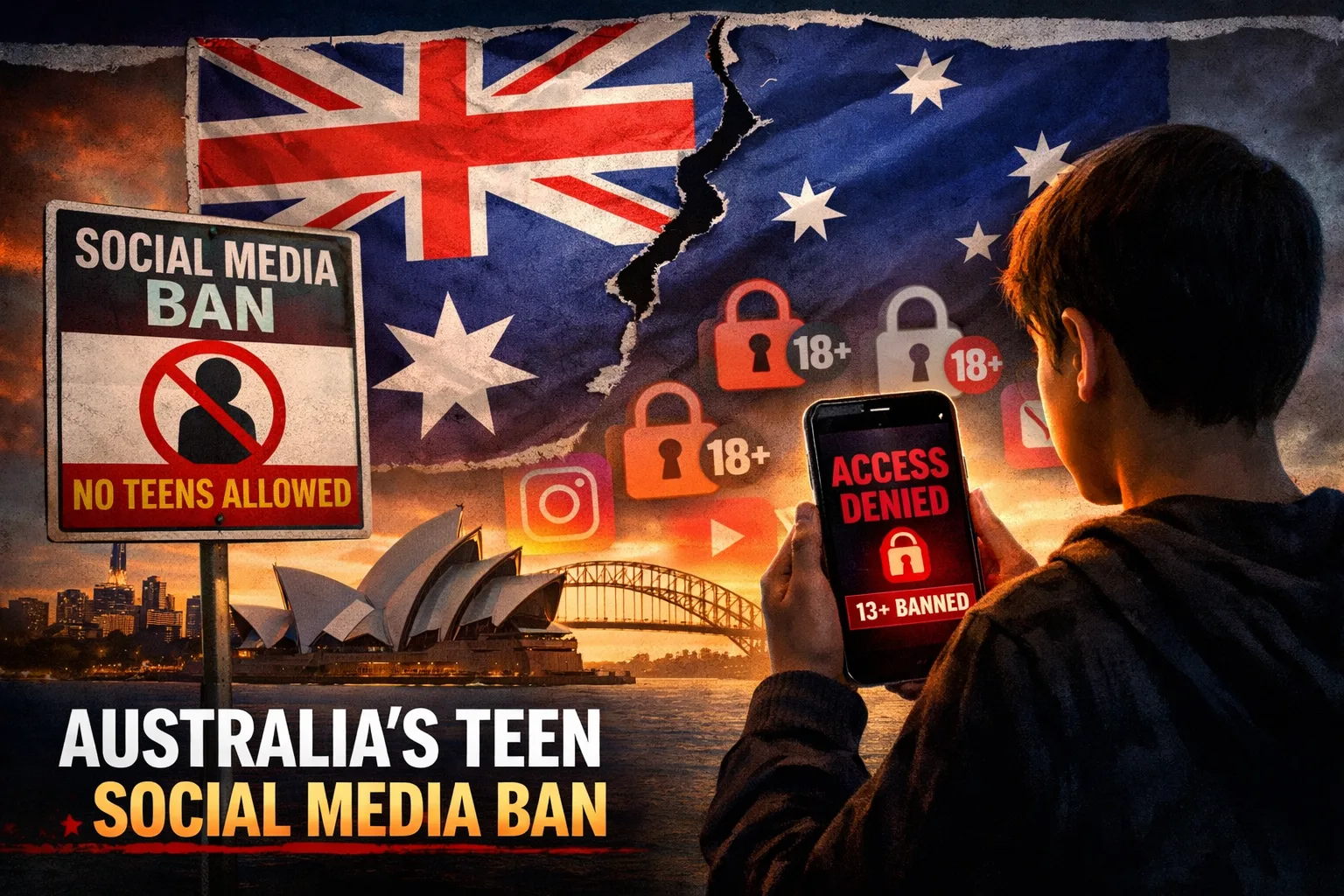
The world-first Australia teen social media ban, which bars children under 16 from using major platforms, took effect on December 10, 2025. It was sold as a hard reset on the mental and physical harms of endless feeds, viral challenges and algorithmic rabbit holes. But new figures from the country’s internet regulator suggest the law hasn’t yet pried smartphones from young hands.
What the new data reveals
The latest eSafety study is blunt: three months after the ban came into force, children aged 10 to 15 were using social media just as often in March as they did before December 10. In other words, the headline behaviour the law targeted hasn’t shifted in any measurable way.
That’s not the only worrying trend. The same research found that parents actually knew less about what their children were doing online after the ban than before it. For a law explicitly pitched as a way to give families more control, that’s a tough datapoint to explain away.
Put simply, the early numbers point to three uncomfortable realities:
- More than eight in ten Australian teenagers are still on social media despite the ban.
- Young users aged 10 to 15 haven’t significantly cut back their time on platforms.
- Parental visibility into kids’ online habits has declined, not improved.
For critics who warned that age-based bans are easy to dodge and hard to police, this is confirmation. For governments elsewhere watching Australia as a test case, it’s a reminder that legislating behaviour in a digital world is far messier than passing a bill.
The government’s defence: it’s about the norm shift
Faced with the regulator’s findings, the Australian government didn’t back away. Instead, it reframed what success looks like.
Assistant Minister for Productivity, Competition, Charities and Treasury Andrew Leigh argued that the teen social media ban has already had a major impact, not by eliminating underage use but by changing how the country talks about it.
He pointed to “millions of accounts shut down” since the law came into force as evidence that the policy has real teeth. And he drew a comparison that tells you exactly how Canberra sees this: minimum drinking age laws. Nobody expects 100% compliance with those either, Leigh said, but that doesn’t make them symbolic. They signal what society deems acceptable, set legal boundaries and give regulators leverage.
That’s the frame the government wants for the ban: not as an airtight shield that keeps every child off every app, but as a baseline rule that reshapes incentives for parents, platforms and policymakers.
How the ban actually works
The ban targets social media use by anyone under 16, with platforms required to keep children off their services or close accounts that breach the rule. Although the specific technical mechanisms sit with each company, the expectation is that firms will deploy more robust age checks and monitoring tools — and accept real penalties when they fail.
In March, before the latest data landed, the centre-left Labor government signalled that enforcement would get tougher. It announced plans to double the maximum penalty the internet regulator can impose on tech companies that don’t uphold the ban, making breaches more expensive and theoretically harder for platforms to treat as a cost of doing business.
The policy is being watched closely overseas. Governments from Europe to North America are wrestling with how far to go in regulating kids’ screen time and exposure to social feeds, and Australia has positioned itself at the hardline end of that debate.
The enforcement problem no one has solved
The core challenge is brutally simple: the internet isn’t built around age. It’s built around accounts and attention. As long as a 13-year-old can enter a fake birth date, borrow an older sibling’s details or jump platforms when one cracks down, a ban alone isn’t going to erase their presence online.
Three months of data showing unchanged usage among 10- to 15-year-olds confirms just how porous the system remains. Platforms can purge obviously underage accounts, but determined teens can move. VPNs, alternative apps, group chats and web versions of services all offer routes around enforcement that are hard to shut off without veering into much broader internet controls.
Then there’s the home front. The regulator’s finding that parental awareness has dipped suggests some families may be assuming the law has things handled — a kind of false comfort where adults lean a little less on conversation and oversight because there’s now a formal ban in the background.
That combination — leaky enforcement and softer parental vigilance — is precisely what can neutralise even the most aggressive law on paper.
Why Australia pushed ahead anyway
To understand why Canberra is defending the policy despite the sobering numbers, you have to go back to what motivated it in the first place: escalating anxiety over the mental and physical health impacts of social media on children.
Lawmakers have been flooded with stories of kids losing sleep to late-night scrolling, being drawn into self-harm and body image content, or facing relentless bullying in group chats. Health experts have warned that constant notifications and endless feeds are rewiring attention spans and amplifying anxiety. The December ban was the government’s answer to a simple question from worried parents: if we don’t want our 12-year-old on TikTok or Instagram, why does the default always favour the platform?
By setting a hard age line at 16, the government flipped that default. Instead of parents having to fight against an always-on social media ecosystem, platforms are now on the hook for proving they’re not onboarding kids illegally.
That’s the argument Leigh leaned on in defending the law: the ban has been a “game changer in the conversation among parents”. It’s given adults clearer backing when they set rules at home and handed regulators a stronger mandate to demand action from tech firms.
Parents, platforms and the new power struggle
For parents, the picture is complicated. On one hand, the law hands them a powerful rhetorical tool: “It’s not just my rule, it’s the law.” On the other, the numbers suggest some are now less plugged into what their children are doing online.
The risk is that the ban becomes a kind of political “set and forget” — something governments can point to as proof they’re acting, even as kids continue to live their digital lives largely out of sight. If parental awareness keeps slipping, the policy could end up weakening, not strengthening, the offline support structures that actually help young people navigate social media.
For social media companies, most of them headquartered in the United States, Australia’s move is more than an annoyance. It’s a test of how much responsibility they’ll be forced to shoulder for underage use. The prospect of higher fines and ongoing regulatory scrutiny raises the stakes. The question is whether that pressure leads to meaningful age verification and safety features, or just better optics and more aggressive PR.
What other countries are watching for
Australia has effectively turned itself into a live experiment in hard age limits for social media. Other governments will be watching a few key indicators over the coming months and years:
- Whether teen usage eventually starts to fall as enforcement tightens.
- How aggressively tech firms invest in age checks and child safety tools.
- Whether there’s a rise in alternative or fringe platforms that slip through the regulatory net.
- How courts respond if and when the law is challenged on privacy or rights grounds.
If Australia can show that a ban, backed by stronger penalties and sustained political will, meaningfully reduces harmful exposure without driving kids into darker corners of the web, expect similar legislation to surface elsewhere. If not, the conversation may shift towards more nuanced approaches: time limits, default content filters, mandatory design changes and better resourcing for digital education.
What This Means
The early verdict on Australia’s teen social media ban is uncomfortable: the law is tough on paper, but teens are still online, and parents may be looking away more, not less. Yet that doesn’t mean the experiment is doomed.
Rules like this rarely transform behaviour overnight. They redraw the baseline and give regulators leverage, but they only work when they’re paired with persistent enforcement, genuine cooperation from platforms and engaged parents who don’t outsource the whole problem to Canberra.
For now, Australia has sent a clear political signal: under 16s shouldn’t be the product in an attention economy designed for adults. Whether that signal becomes real change will depend on what happens after this first reality check — and whether the next round of numbers finally shows kids spending less of their childhood inside someone else’s feed.
Photo: Department of Foreign Affairs and Trade / BY via Openverse | Photo: denisbin / BY-ND via Openverse