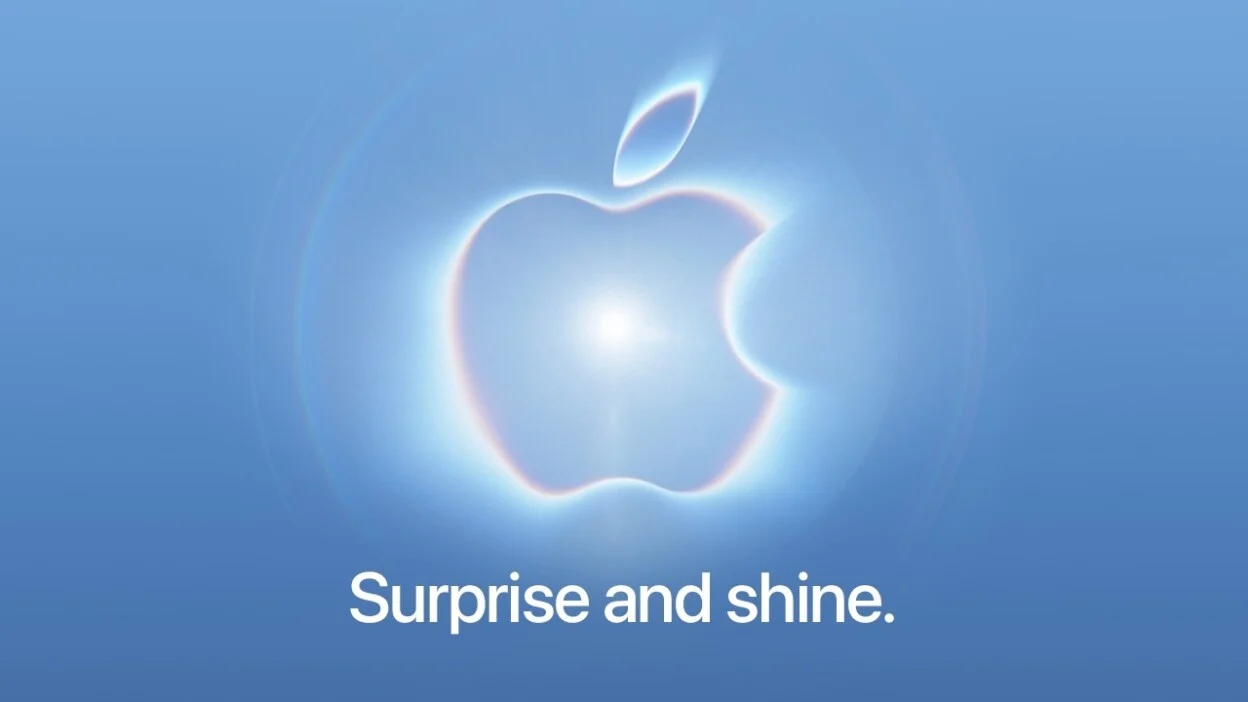
Apple has locked in Wednesday, September 9, for its fall keynote, and for once the tagline on the invitation feels like the least interesting thing about it. “Surprise and Shine,” the company wrote alongside a glowing Apple logo in invites that went out to press on August 26. The event kicks off at 10 a.m. Pacific at the Steve Jobs Theater in Cupertino, with a livestream on Apple’s site, the Apple TV app, and YouTube. What makes this one different is everything happening around it: a brand-new chief executive walking on stage for the first time, an iPhone lineup that has been chopped in half, and a folding phone that Apple has spent the better part of a decade refusing to ship.
What Apple Has Actually Confirmed
Very little, which is normal. The invitation gives you a date, a time, and a phrase designed to send people hunting for hidden meaning. This will be the third September 9 keynote in a row, which is a strange kind of consistency for a company that historically favored Tuesdays. The explanation is mundane: Labor Day lands on September 7 this year, so Tuesday was off the table.
Everything past that is reporting, supply chain leaks, and analyst forecasts. It happens to be unusually detailed reporting this year, and the broad strokes line up across sources that rarely agree on much.
A New CEO Steps Into the Spotlight
John Ternus becomes Apple’s chief executive on September 1, eight days before the keynote. Tim Cook moves to executive chairman after 15 years in the top job, staying involved mainly on policy and government relations. Ternus, 51, has been at Apple since 2001 and has run hardware engineering since 2021. If you have watched an Apple product video in the last five years, you have almost certainly seen him.
The subtext of the transition has been continuity. People inside Apple have reportedly described the handoff as deliberately boring, right down to Cook’s executive assistant staying in place. But a keynote is not a memo. September 9 is the first time Ternus has to sell Apple’s year to the public, and he inherits a genuinely awkward pitch: fewer phones, higher prices, and a flagship product category the company is entering half a decade after its rivals.
The Foldable Is the Whole Show
Apple’s first folding iPhone is expected to be the headliner, and reports suggest it is called the iPhone Ultra internally. That name is not official, and Apple has confirmed nothing about the device at all.
The consistent picture across leaks: a book-style foldable with roughly a 5.5-inch cover screen opening to an inner display in the 7.6 to 7.8-inch range, closer to an iPad mini in shape than a typical phone. It reportedly gets extremely thin when open, somewhere around 4.5mm. Apple is said to have chased a crease-free panel without much regard for cost, developing new display materials and a heavily engineered hinge to get there. Testers describe the crease as nearly invisible.
There are real compromises. Face ID is out; a Touch ID sensor in the side button takes its place. The rear camera is a dual system built around a 48MP main sensor and an ultrawide, with no telephoto at all. And the price is expected to be brutal, with estimates ranging from about $2,000 to as much as $2,500 depending on which analyst you believe.
What Early Testers Are Saying
Bloomberg’s Mark Gurman reported in late August that people who have handled pre-release hardware came away impressed, which is not always how these leaks go. The praise centered on pocketability, the feel and durability of the hinge, and iPad-style app layouts that appear when the device is unfolded. Testers apparently liked using the large inner screen as a camera viewfinder too.
The missing telephoto lens was the sticking point. At two grand and up, asking buyers to give up optical zoom that a cheaper Pro model includes is a hard sell, and it may be the single thing that decides how this launch is remembered.
iPhone 18 Pro: Modest Upgrade, Steep Price
Here is the structural shock. Apple is reportedly splitting its iPhone launches across the calendar for the first time. Only the iPhone 18 Pro, iPhone 18 Pro Max, and the foldable are expected in September. The standard iPhone 18 is said to be pushed to spring 2027, likely alongside a new budget model.
If you walk into this event hoping to buy a normal, sensibly priced new iPhone, there may not be one.
The Pro models themselves look iterative. The headline change is the A20 Pro, Apple’s first chip built on TSMC’s 2nm process, reportedly using wafer-level packaging that puts memory on the same module as the CPU and GPU. Estimates point to gains around 15 to 18 percent in speed and roughly 30 percent in efficiency. The Pro Max is expected to get a mechanical variable aperture on the main camera, a first for iPhone.
| Expected | iPhone 18 Pro / Pro Max | Foldable “iPhone Ultra” |
|---|---|---|
| Chip | A20 Pro (2nm) | A20 |
| Display | 6.3″ / 6.9″ LTPO+ OLED | ~5.5″ cover, ~7.8″ inner |
| RAM | 12GB | 12GB |
| Cameras | Triple 48MP, variable aperture | Dual: 48MP + ultrawide |
| Biometrics | Face ID | Touch ID in side button |
| Rumored price | ~$1,299 / ~$1,399 | $2,000–$2,500 |
The Memory Crunch Behind the Prices
The price increases are not Apple being greedy for the sake of it, and the company has been unusually open about why. Cook said on the most recent earnings call that Apple raised Mac and iPad prices in June reluctantly, blaming surging memory costs. A global DRAM and NAND shortage, driven by memory makers prioritizing high-margin server chips for AI data centers, has pushed component costs up sharply. Analysts have projected the Pro models could carry $200 or more in increases. Nobody expects meaningful relief before 2027.
There is a software wrinkle too. Reports indicate iOS 27’s most advanced on-device Apple Intelligence features require 12GB of RAM, a bar only the Pro models and the foldable clear this year. Buy the cheaper spring iPhone and you may get a lesser version of Siri.
The Rest of the Card
New Apple Watches are the safest bet on the board. A Series 12 and an Ultra 4 are both expected, with a long-overdue chip upgrade being the main story after several generations of near-identical silicon. A ceramic case option for the Series 12 has come up repeatedly. The AI health coaching feature Apple has been working on reportedly is not ready.
Beyond that it gets speculative: new AirPods, possibly including a model with built-in cameras for AI features, plus a refreshed Apple TV 4K, HomePod mini, and Apple’s long-rumored smart home display. Apple often holds this kind of thing back for a press release in October.
What This Means
September 9 is the most consequential Apple keynote since the Apple Watch debuted, and not because the iPhone 18 Pro is exciting. It is a test of three things at once: whether Ternus can carry a keynote and a company, whether Apple can convince buyers to absorb price hikes it did not choose, and whether arriving last to foldables was patience or paralysis.
The foldable is the part that actually matters. Samsung has been iterating on this form factor for seven years, and it remains niche. If Apple has genuinely solved the crease and built software that makes a tablet-sized inner screen feel purposeful rather than novel, it changes the category’s trajectory overnight. If it ships a $2,400 phone with worse cameras than a $1,299 one, it becomes a very expensive proof of concept.
Watch for the pricing slides. That is where the real news will be.