Apple is finally doing the thing everyone assumed it would do roughly eight years ago. After watching Amazon and Google own the smart display category for the better part of a decade, the company is reportedly set to unveil its own answer on October 13, and the design choice behind it is the kind of move only Apple would make: it’s bringing back the iMac G4.
A Smart Home Hub Shaped Like Nostalgia
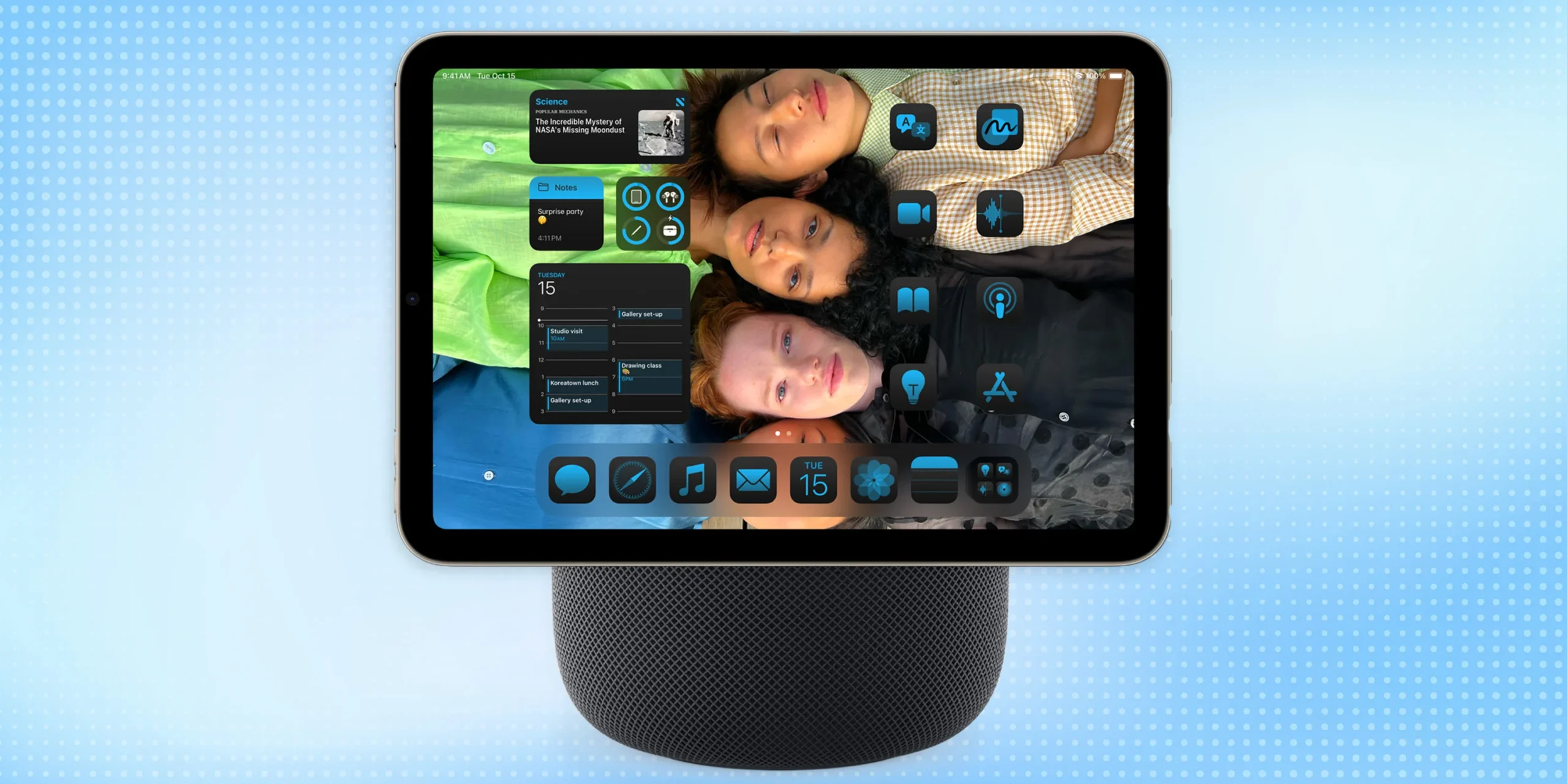
The device, said to be called HomePad internally, borrows its silhouette from one of the most beloved industrial designs in Apple’s history. The original iMac G4, released in the early 2000s, paired a hemispherical base with a flat panel display mounted on an adjustable arm that could swing, tilt, rotate, and rise like a desk lamp. That same shape is reportedly coming back as the physical frame for a six-inch touchscreen smart home controller, and the resemblance is apparently intentional rather than coincidental.
It’s a curious choice for a company that usually leans into flat glass and minimalism rather than retro throwbacks, but it also solves a real design problem. A smart display that lives in a kitchen or entryway needs to be easy to glance at, easy to touch, and easy to angle depending on where someone is standing. A floating screen on an adjustable neck does that better than a flat tablet propped against a stand, and it gives Apple a visual identity in a product category where most devices look like interchangeable black rectangles.
What the Device Reportedly Does
Underneath the design, the HomePad is being built as a genuine hybrid rather than a single-purpose gadget. Reporting points to two distinct versions, one meant to sit on a counter or table and one designed to mount directly on a wall, which suggests Apple wants this treated as a flexible piece of home infrastructure rather than a one-size-fits-all accessory.
Inside, it reportedly combines the functions Apple has kept separate until now:
- A built-in speaker that lets it double as a HomePod, handling music and audio on its own.
- A dedicated control panel for Apple’s smart home ecosystem, covering lights, thermostats, locks, and cameras from compatible accessory makers.
- A custom software layer that reportedly blends elements of iOS, tvOS, and watchOS rather than running a stripped-down version of just one.
- Siri sitting at the center of the interaction model, positioned as the primary way people will talk to and control the device.
That last point is the one worth sitting with. Siri has spent years as the butt of jokes relative to Alexa and Google Assistant, and Apple has been quietly rebuilding it for its next generation of software. Putting a freshly reworked Siri at the heart of a brand-new always-listening home device is either a bold vote of confidence or a significant gamble, depending on how far along that rebuild actually is by launch day.
Not Launching Alone
The HomePad reportedly won’t arrive as a solo product. Apple is said to be using October 13 to refresh its home and living room lineup more broadly, with a new HomePod mini expected to show up in additional color options alongside an updated Apple TV 4K that gains its own Siri-powered capabilities. Bundling the launches makes sense strategically: a smart display is far more useful when it’s already talking to a speaker and a streaming box that speak the same language, and Apple has historically preferred to launch ecosystem pieces together rather than drip-feed them.
The product is reportedly carrying the internal codename J490, which is typically a sign that the hardware has been in active development for a meaningful stretch of time rather than being rushed out the door. Apple does not usually assign internal names and years of engineering work to products it isn’t confident about shipping on schedule.
Why Now
Apple’s absence from the smart display market has been one of the more conspicuous gaps in its product lineup for years. Amazon’s Echo Show and Google’s Nest Hub line have had the counter-top display category largely to themselves since the late 2010s, giving both companies a foothold in rooms where Apple previously had none beyond an iPad propped on a stand. That gap matters more now than it did a few years ago, because the real battleground in home tech has shifted from playing music on command to orchestrating entire households through connected accessories and, increasingly, AI assistants capable of actually understanding context.
The timing also lines up with a broader leadership shift inside Apple’s hardware groups, with the smart home push said to be moving forward under new engineering leadership following recent executive changes. A fresh product category launching under a relatively new executive mandate often signals a company trying to prove it can still move at the pace its competitors have set, rather than simply iterating on products it already dominates.
The Pricing Blank Spot
What’s notably missing from everything reported so far is a price. Apple hasn’t confirmed the device exists, let alone what it will cost, and most of what’s circulating traces back to supply chain and sourcing reporting rather than anything from Apple itself. Given where Amazon and Google have priced their own displays, usually well under 150 dollars to drive mass adoption, Apple faces a real strategic choice: undercut the category to build a user base fast, or price toward its usual premium tier and bet that the Apple ecosystem lock-in does the selling for it.
Final Verdict
A smart display wrapped in iMac G4 nostalgia is exactly the kind of product only Apple could get away with announcing, and exactly the kind of product that will either delight people who remember that era fondly or baffle everyone who doesn’t. What matters more than the design, though, is whether the rebuilt Siri at its core can actually hold a conversation and control a house without the frustration that’s defined the assistant for most of the last decade. If it can, Apple just filled the last major hole in its home lineup in one event. If it can’t, this becomes a beautifully designed paperweight competing against assistants that, whatever their flaws, already work.