Amazon’s new AI-focused data center in Gilroy, California, isn’t just another hulking server farm. For many residents, it’s a flashing warning sign for how tech giants can use decades-old zoning rules to push critical infrastructure into communities that barely know it’s coming. And it’s a case study in how the AI gold rush is running faster than local democracy can keep up.
The Gilroy project – a massive Amazon data center complex off Highway 101 – is moving ahead under 45-year-old zoning rules, leaving residents furious and scrambling to understand how it was effectively greenlit before most of them even knew it existed. The controversy is less about Amazon’s right to build and more about how it did it.
How a 45-year-old rule unlocked an Amazon data center
At the center of the fight is a stretch of farmland in Gilroy, about 30 miles south of San Jose. Amazon’s data center will cover roughly 438,500 square feet on a 56-acre site between a Walmart and a local shopping center – prime, visible land that residents assumed would go through the usual public scrutiny.
Instead, city officials treated the project as an industrial use already allowed under old zoning rules created roughly 45 years ago to encourage freeway-adjacent development. Those rules meant the Amazon data center could move ahead without the kind of full, fresh public debate many locals expected for a power-hungry AI facility in 2026.
Residents who tried to weigh in found out it was already too late. One local who attempted to file a complaint was told that public comments on the plans had closed in 2024 – long before most people in Gilroy realized an Amazon data center was in the works.
On paper, everything may be technically compliant. In practice, it feels to many like the city reached back into the 1980s to fast-track a 2020s AI infrastructure project.
Gilroy residents feel blindsided
The sense of betrayal in Gilroy isn’t just about traffic, noise, or views. It’s about trust – and whether a city of around 60,000 people got steamrolled by one of the most powerful companies on Earth.
Citizens say they were not adequately informed of the development as it moved through the process. The fact that plans were first submitted in 2020, with comments closed by 2024, only came into sharp public focus once construction began.
By then, heavy equipment was already on the 56-acre site, and the project looked less like a proposal and more like a done deal.
That’s when local opposition began to coalesce. Residents questioned not just the data center itself, but the way it had been handled – from communication gaps to the apparent reliance on old zoning language never written with AI-era power and water demands in mind.
Water, power, and a mayor who says it’s no different than a warehouse
The Gilroy fight is also about what AI data centers actually are: massive industrial facilities that inhale electricity and water to keep thousands of servers running and cool, 24/7. Amazon has reportedly made provisions to divert wastewater to the site – a key detail in a state where water politics are never far from the surface.
Yet the city’s messaging has been strikingly casual. The mayor has publicly compared the Amazon data center to a recently approved food distribution center, seemingly downplaying the project as just another big box in a commercial zone.
To residents staring at a 438,500-square-foot tech facility, that analogy lands poorly. A food warehouse doesn’t usually symbolize the explosive growth of AI infrastructure, nor does it raise the same long-term questions about power capacity, grid strain, and how many similar projects might follow once the first one is locked in.
Money, sponsorships, and the appearance of cozy deals
Fueling suspicion is the perception that Amazon and city leadership have been working closely behind the scenes while the broader public was left in the dark.
Amazon has donated money for local spending, part of a familiar playbook in which large companies offer community benefits, sponsorships, or local projects to smooth over the impact of industrial development. At the same time, the company has worked with the city to address infrastructure needs such as wastewater diversion.
None of that is inherently improper. But the timing – with key public comment periods already over before many residents heard about the project – has left some feeling that the goodwill gestures were less “partnership” and more “PR cover.”
Opposition organizers in Gilroy have started to frame the issue as a breakdown in transparency and public engagement. For them, this isn’t just about one data center; it’s about whether city hall is too eager to bend old tools like 45-year-old zoning rules to accommodate modern tech giants.

The AI boom meets small-city zoning
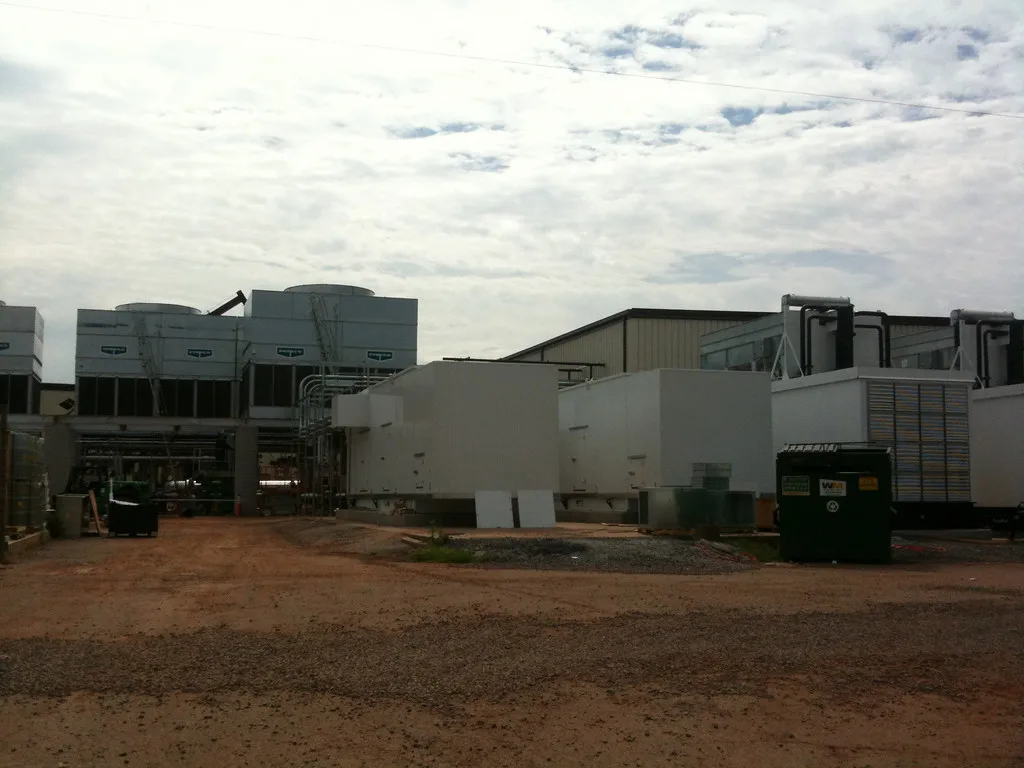
The Amazon Gilroy data center controversy lands at an awkward moment in the broader tech industry. AI is surging, and so is the demand for the data centers that power it. Those facilities don’t live in the cloud; they live in physical places like Gilroy, where residents have to deal with the noise, traffic, and resource demands.
What makes Gilroy stand out is how visible the seams are. Rather than drafting new rules for a new kind of infrastructure, the city leaned on a 45-year-old freeway-oriented industrial zoning policy to usher in a cutting-edge AI data center. That may be legally tidy, but it also exposes how unprepared local frameworks can be for the scale and speed of today’s AI buildout.
For other communities watching from the sidelines, the message is clear: if your zoning code is old, it may already be a welcome mat for data centers, even if no one has actually talked about it in public yet.
Why this Amazon data center matters beyond Gilroy
Gilroy is not a tech capital. It’s a commuter city on the edge of Silicon Valley, better known for its garlic festival than its cloud infrastructure. That’s exactly why this Amazon data center matters.
As AI workloads explode, the easiest place to drop large facilities is often on the fringes – in smaller cities with older zoning rules, cheaper land, and councils under pressure to attract jobs and investment. Gilroy checks every one of those boxes.
What happens here could quickly become a template, intentional or not:
- Use long-standing industrial zoning along major highways to classify data centers as by-right uses.
- Submit plans years in advance, with limited public awareness.
- Close formal comment periods before the project hits mainstream local attention.
- Supplement with community donations and infrastructure upgrades once construction is underway.
From a corporate perspective, it’s efficient. From a resident’s perspective, it feels like the decision was made long before they ever got a chance to say anything.
Communities are waking up to AI infrastructure
What’s different now is that people have started connecting these local fights to a much bigger story: the physical footprint of AI. Gilroy residents aren’t just objecting to another warehouse; they’re objecting to being quietly turned into part of the backbone of global AI infrastructure.
That raises questions local governments are only beginning to grapple with. Should AI-focused data centers be treated like any other industrial building? Should they trigger new environmental reviews or public hearings, given their energy and water use? And who gets to decide when decades-old rules no longer fit the moment?
The Amazon Gilroy data center doesn’t answer those questions. It exposes them.
What This Means
The Amazon data center in Gilroy shows how the AI boom is colliding with the fine print of local planning – and, for now, the fine print is winning.
By leaning on 45-year-old zoning rules, city leaders have effectively treated a 438,500-square-foot AI data center as just another industrial project. For residents, that feels like a sidestep of public accountability at the exact moment when AI infrastructure is reshaping not just the tech industry, but the physical and environmental fabric of their town.
Other cities should be paying attention. If your zoning code hasn’t been touched since the late 20th century, it may already be a green light for the next wave of AI data centers, long before anyone asks whether that’s what the community actually wants.
Gilroy is learning that lesson the hard way, under the shadow of an Amazon facility that will outlast most of the people who watched it go up. The question now is whether other communities will update their rules – and their expectations – before the next AI data center quietly breaks ground.
Photo: xcorex / BY via Openverse | Photo: NASA Goddard Photo and Video / BY via Openverse