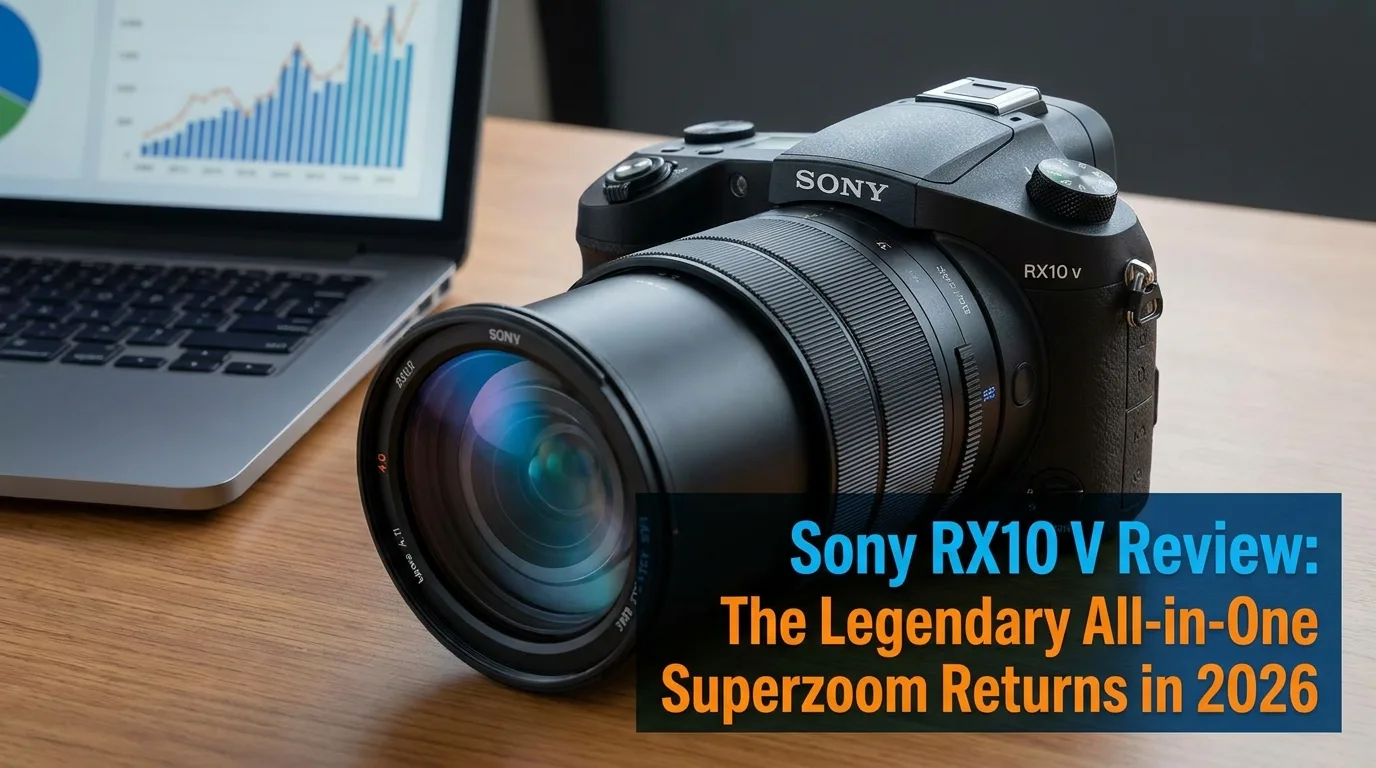
Nearly a decade after the RX10 IV redefined what a bridge camera could do, Sony has brought the iconic RX10 series back from the brink. The new Sony Cyber-shot RX10 V (DSC-RX10M5), announced on July 9, 2026, arrives with meaningful upgrades that address the aging aspects of its predecessor while preserving the formula that made the line legendary: an extraordinary Zeiss 24-600mm f/2.4-4 superzoom lens paired with a 1-inch stacked sensor in a weather-resistant body.
For travelers, wildlife enthusiasts, sports shooters, and hybrid content creators who value one-camera convenience above all else, this is welcome news. The RX10 IV was discontinued in early 2025, leaving a noticeable gap in the market for a high-performance fixed-lens camera with serious reach. The RX10 V doesn’t reinvent the wheel — it sharpens it with modern AI-driven autofocus, significantly improved video specs, and refined ergonomics.

The core appeal remains unchanged. You get 25x optical zoom from wide-angle landscapes to extreme telephoto wildlife and sports without ever changing lenses or carrying extra glass. At roughly 1kg, it’s far more portable than any interchangeable-lens setup offering comparable reach. The question for 2026 buyers is whether the updates justify the premium $2,299 price tag.
The Return of an Icon: Context and Key Upgrades
Sony’s RX10 line has long stood as the premier all-in-one bridge camera for enthusiasts who want serious reach without the bulk of interchangeable lenses. The RX10 IV (2017) earned praise for its sharp Zeiss lens, solid build, and hybrid capabilities, but by 2025 its aging processor, menu system, and video specs felt dated compared to modern mirrorless bodies.
The RX10 V keeps the proven 20.1-megapixel 1-inch stacked Exmor RS sensor and the same Zeiss Vario-Sonnar T* 24-600mm f/2.4-4 lens, but layers on a new BIONZ XR processor, dedicated AI processing unit, and meaningful feature upgrades. Early reports and official details confirm 30 fps blackout-free burst shooting, advanced real-time AI subject tracking, and a substantial jump in video performance.
RX10 V vs RX10 IV: Key Upgrades at a Glance
| Feature | Sony RX10 IV (2017) | Sony RX10 V (2026) |
|---|---|---|
| Sensor | 20.1MP 1-inch stacked Exmor RS | Same sensor + new processing pipeline |
| Lens | Zeiss 24-600mm f/2.4-4 (25x zoom) | Same Zeiss 24-600mm f/2.4-4 lens |
| Processor | BIONZ X | BIONZ XR + dedicated AI processing unit |
| Autofocus | 315 PDAF points + Real-time Animal Eye AF | Advanced AI real-time tracking, Eye AF for humans/animals/birds, subject detection |
| Continuous Shooting | Up to 24 fps with AF tracking | Up to 30 fps blackout-free with improved tracking |
| Video | 4K 30p, Full HD 120p | 4K up to 120p, Full HD up to 240p, S-Log3, LUT support |
| Ergonomics & Controls | Solid but dated layout | Modern Alpha-inspired grip, dedicated AF/MF switch, extra custom button, updated dials |
| Battery | NP-FW50 | Larger NP-FZ100 (expected significantly better life) |
| Connectivity | micro-USB | USB-C (faster charging and data transfer) |
| Price at Launch | $1,699 | $2,299 |
Design and Ergonomics: A Modern Makeover
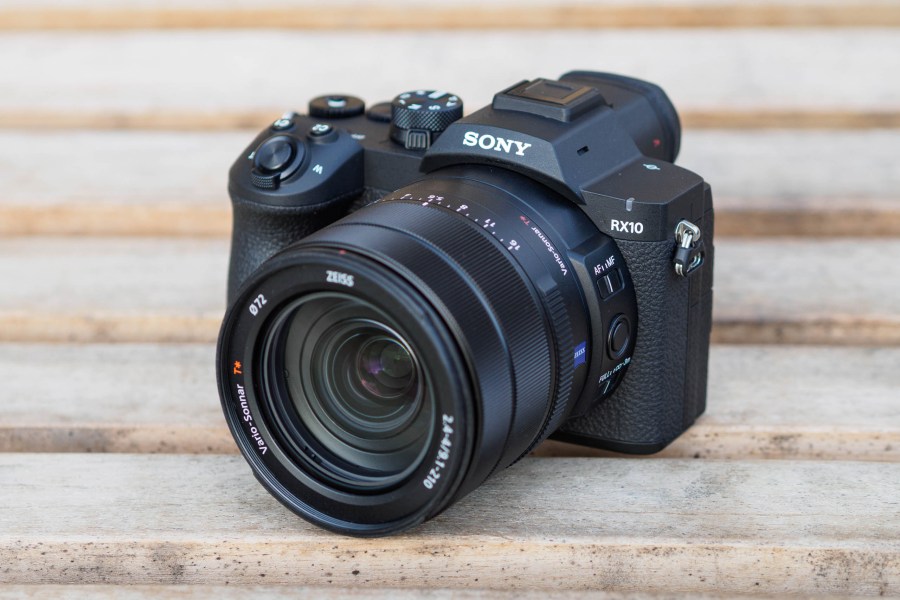
Sony has given the RX10 V a noticeable ergonomic refresh. Early images show a deeper, more comfortable grip inspired by recent Alpha mirrorless bodies. This should make extended handheld shooting — especially at 600mm — less fatiguing for wildlife and sports photographers.
The control layout has been updated for better familiarity with Sony’s current systems. Expect a more prominent PASM mode dial, dedicated AF/MF switch, and at least one additional customizable button. A top LCD panel appears retained or refined, and the Multi Interface hot shoe is the newer version.
Build quality remains robust with magnesium-alloy construction and weather sealing that made the RX10 IV a reliable travel and hiking companion. One noted change: the pop-up flash may have been removed, and some high-frame-rate controls could move to menus or custom buttons.
Overall, the V feels like a contemporary Sony camera rather than a 2017 holdover while keeping the same compact-yet-substantial form factor.
Imaging Performance: Same Sensor, Smarter Brains
The 20.1-megapixel 1-inch stacked sensor returns, but the new BIONZ XR processor and AI unit should deliver better noise handling, color science, and dynamic range utilization than the RX10 IV. Real-world performance from the predecessor was already strong in good light, with pleasing colors and excellent detail from the Zeiss lens.
The 24-600mm f/2.4-4 optic remains a standout. It delivers impressive sharpness across the range, especially when stopped down slightly at longer focal lengths. The relatively bright f/2.4 aperture at the wide end helps with low-light shooting and subject separation better than most superzooms. Optical SteadyShot stabilization continues to perform well even at extreme telephoto distances.
Strengths carried forward and enhanced:
- Very good straight-out-of-camera color and contrast
- Effective stabilization for handheld telephoto work
- Versatile close-focusing ability for detail and macro-style shots
- Strong performance for travel, wildlife, and daylight sports
Realistic limitations persist. High-ISO noise and dynamic range still lag behind those of APS-C and full-frame cameras. This is not the ideal tool for dark concert venues or serious astrophotography beyond moon shots. For its intended uses, however, the combination of image quality and reach remains compelling.
Autofocus and Burst Shooting: AI Changes Everything
This is the area where the RX10 V makes its most significant leap. The RX10 IV already had strong phase-detect autofocus and gained Animal Eye AF via firmware. The new model brings full modern Sony AI subject detection and tracking.
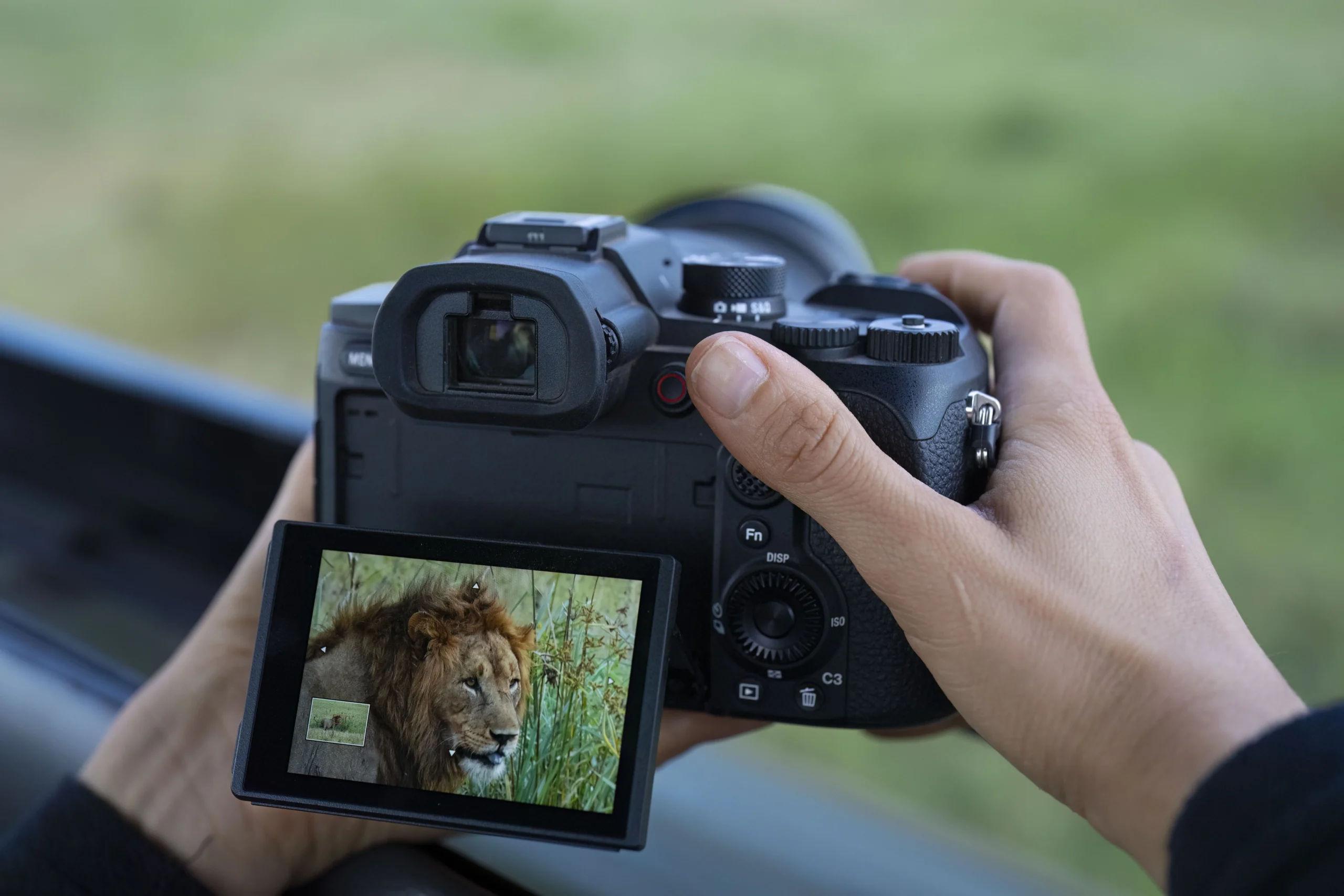
Users can expect reliable real-time Eye AF for humans, animals, and birds, plus broader subject recognition that maintains focus even at 600mm where movement is dramatically magnified. The jump to 30 fps blackout-free continuous shooting with AF tracking improves on the IV’s already capable 24 fps.
For bird photographers, wildlife shooters, and action enthusiasts, this removes one of the last major pain points of superzoom bridge cameras. The “set it and forget it” reliability of contemporary Sony AI autofocus makes the long zoom far more usable in dynamic situations.
Video Capabilities: From Capable to Creatively Powerful
The RX10 IV was already a respectable hybrid option. The RX10 V transforms it into something far more versatile for serious video work. Official details confirm support for 4K up to 120p, Full HD up to 240p, S-Log3 gamma, and LUT support.
These features open genuine slow-motion creative possibilities and more flexible post-production workflows — capabilities previously unavailable in this form factor at this price. The 24-600mm zoom becomes a powerful storytelling tool for travel vloggers, documentary shooters, and sports videographers who need reach without a full cinema setup.
Audio inputs are expected to carry over or improve, and the combination of better ergonomics, stabilization, and high-frame-rate options makes the RX10 V a legitimate one-camera hybrid solution for many creators.
Battery Life, Connectivity, and Practical Use
Early information points to the larger NP-FZ100 battery (the same high-capacity cell used in recent Alpha bodies), which should provide noticeably better endurance than the smaller battery in the RX10 IV — a meaningful improvement for long days in the field.
Connectivity upgrades include USB-C for faster charging and data transfer, along with improved Bluetooth and Wi-Fi for seamless smartphone integration. The tilting touchscreen and high-resolution OLED EVF are expected to remain excellent.
Pros and Cons
| Pros | Cons |
|---|---|
| Unmatched 24-600mm reach in a relatively compact, weather-sealed body | 1-inch sensor still limits low-light performance and dynamic range compared to APS-C or full-frame |
| Significantly improved AI autofocus and subject tracking for reliable wildlife and action shooting | Premium $2,299 price tag may deter some buyers |
| Major video upgrades including 4K 120p, S-Log3, and LUT support | Fixed lens means no future upgrades or ability to change focal lengths |
| Refined modern ergonomics with better grip and Alpha-inspired controls | Possible removal of pop-up flash and relocation of some high-frame-rate controls |
| Excellent Zeiss lens sharpness, color, and stabilization across the full zoom range | Not ideal for extreme low-light specialists or photographers who prioritize maximum resolution |
| True all-in-one convenience for travel, hiking, and hybrid content creation | Competition from mirrorless systems with versatile telephoto lenses for users who already own interchangeable-lens gear |
This camera excels for travel and adventure photographers who want one reliable body for everything, wildlife and bird photographers who value portability and extreme reach, and hybrid content creators needing serious telephoto capability for both stills and video. It is less suitable if you already own a versatile mirrorless system with good telephoto options, shoot primarily in very low light, or need the flexibility of interchangeable lenses and maximum future-proofing.
Final Verdict
The Sony RX10 V successfully revives one of the most compelling camera concepts of the last decade. By retaining the extraordinary Zeiss 24-600mm lens and 1-inch stacked sensor while adding modern AI autofocus, pro-level video features, and refined handling, Sony has created a camera that feels relevant and competitive again in 2026.
It will not replace a full-frame mirrorless kit for every scenario, but for anyone who prioritizes convenience, reach, and strong hybrid capability in a single weather-sealed package, the RX10 V is currently the best all-in-one superzoom solution available. The upgrades in autofocus and video are substantial enough to justify the price for the right buyer.
If you have been waiting for Sony to bring back the RX10 line with meaningful updates, your patience has been rewarded. The RX10 V is not just a refresh — it is a confident statement that the premium bridge camera still has a valuable place alongside mirrorless systems.