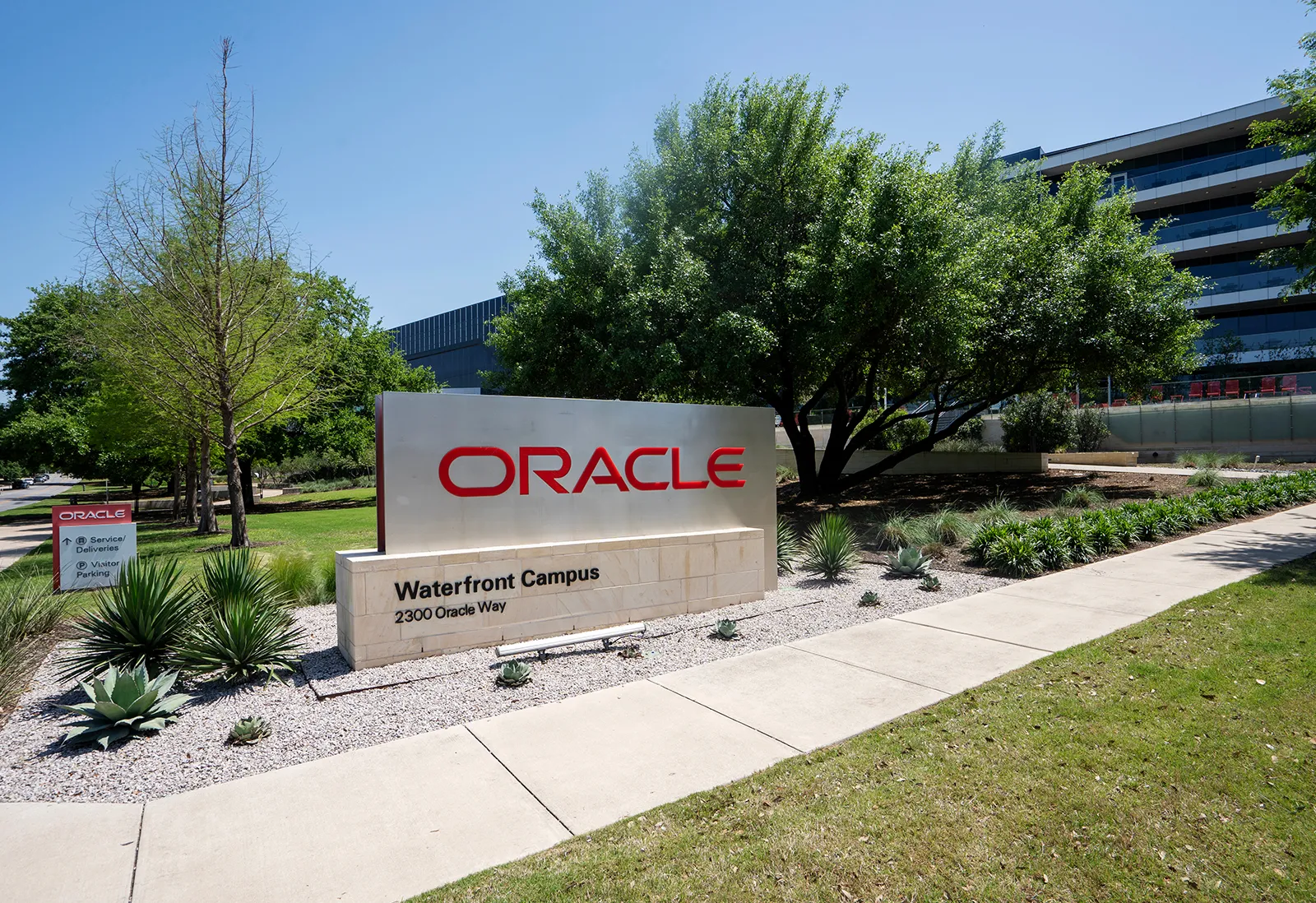
Every enterprise software company wants you to believe its AI agents can run your business. Oracle just made a more specific, and honestly more interesting, claim: that its agents can do the tedious optimization work nobody wanted to do manually in the first place, and show their work while they’re at it.
From Chatbots to Actual Execution
The company unveiled Fusion Claw this week, a new execution runtime built to sit inside its existing Fusion Applications suite. If that sounds like corporate jargon, the plain-English version is this: Claw is designed to take on the kind of sprawling, math-heavy business tasks that used to require a spreadsheet jockey, a few days, and a lot of coffee. Reconciling messy accounting entries. Building a staffing plan that actually balances who’s available, what they’re qualified to do, and what it costs to schedule them that way. Consolidating shipments across a supply chain to shave down freight spend. Mapping out sales territories so reps aren’t stepping on each other’s accounts.
Oracle’s SVP of Fusion Applications, Natalia Rachelson, put it plainly: the company simply didn’t have a good answer for this category of problem before. Basic automation could handle rote, repetitive steps. Full AI agents were flashy but hard to trust with anything that touched real money or real schedules. Claw is Oracle’s attempt to occupy the middle ground — enough reasoning to handle genuine complexity, enough structure to keep a finance team from waking up to a surprise.
Twenty-Five New Apps, Seventy-Five Total
The rollout isn’t a single feature. Oracle is shipping twenty-five new Claw-powered applications at once, which brings its broader portfolio of what it calls Fusion Agentic Applications to seventy-five. That’s a meaningful jump in a fairly short window, and it signals Oracle is treating this less as an experiment and more as a core product line it intends to keep expanding on a regular cadence.
How It Actually Works
Under the hood, Claw blends large language models — Oracle is using both Google’s Gemini and OpenAI’s models depending on the task — with conventional, rules-based computation. That hybrid approach is deliberate. Pure LLM reasoning is expensive and occasionally unpredictable; pure rules-based automation is cheap but brittle. Claw is built to lean on the expensive reasoning layer only when a task genuinely calls for judgment, and fall back to deterministic logic for everything else. It’s a sensible way to keep compute costs from spiraling while still giving the system enough flexibility to handle situations nobody explicitly programmed for.
Oracle has also built in a layer of containment that’s clearly a response to the anxiety hanging over agentic AI generally: Claw operates in an isolated environment and can’t directly rewrite a company’s core business records. Every action it takes has to happen through defined, auditable channels.
The Governance Layer
That containment shows up most clearly in two features Oracle is leaning on hard in its messaging. The first is something it calls the Enterprise Operating Envelope, which is essentially a rulebook an organization sets up in advance — what the system is allowed to optimize for, what constraints it has to respect, and which decisions require a human to sign off before anything actually happens. The second is the “Outcome Receipt,” a record generated every time Claw completes a task, laying out what policy it followed, what evidence it relied on, what it decided, and what it actually did as a result.
Oracle CEO Mike Sicilia framed the whole release as a shift “from AI assistance to execution,” pairing that ambition with a promise of “enterprise-grade governance” — language clearly aimed at procurement officers and compliance teams who’ve been burned by vendors overselling what their AI tools could safely handle unsupervised.
Why This Lands Differently Than the Usual AI Pitch
It’s worth putting Claw in context against the broader wave of “agentic” announcements flooding out of every major software vendor right now. Most of them are still fairly vague about what, specifically, an agent is allowed to touch and how a customer would even audit its behavior after the fact. Oracle’s pitch is narrower and, as a result, more credible: these aren’t general-purpose digital employees wandering around your ERP system. They’re purpose-built tools aimed at a handful of genuinely painful, genuinely quantifiable business processes, with a paper trail attached to every decision.
That specificity is also a limitation. Claw isn’t going to run your company. It’s going to reconcile your ledger, build your staffing plan, and consolidate your shipments, assuming you’ve already bought into the Oracle Fusion ecosystem in the first place. Customers running on competing ERP platforms won’t see any of this unless Oracle eventually opens it up through the APIs it mentioned supporting for third-party integration.
What This Means
Fusion Claw is a useful data point in a broader argument playing out across enterprise software: whether AI agents earn trust by being impressively general or narrowly reliable. Oracle has clearly picked a side. Rather than promising an agent that can do anything, it’s promising twenty-five agents that can each do one specific, expensive, error-prone task correctly and prove it afterward.
For finance and operations leaders currently drowning in vendor pitches about autonomous AI, that kind of specificity might be exactly the pitch that actually gets budget approved. Whether Claw performs as advertised once it’s running against messy, real-world data at scale is the question that will actually determine if this becomes Oracle’s next major growth engine or just another feature buried in a seventy-five-app portfolio nobody outside the Fusion ecosystem ever hears about again.