The NBA offseason grades are in, and while the league still waits on LeBron James’ next move, the rest of the chessboard is already shifting around Victor Wembanyama, blockbuster star trades, and a couple of franchises that finally picked a direction. The focus keyword here is NBA offseason grades, and this summer’s report card says plenty about where the 2026-27 title race is really headed.
Why NBA offseason grades actually matter
Offseason noise is cheap. Grades, though, are a rough snapshot of which front offices turned flexibility, draft picks and cap space into something closer to a plan. With most major trades and signings done and only LeBron’s looming decision left to drop, NBA offseason grades highlight the teams that maximized their window — or quietly stretched it out.
This year’s clear winners: the San Antonio Spurs, Utah Jazz, Atlanta Hawks, Charlotte Hornets, Philadelphia 76ers and Houston Rockets, with the Memphis Grizzlies landing in that uneasy middle ground. The common thread is simple: each of them made big, structural choices, not cosmetic tweaks.
Spurs lock in Wembanyama — and a decade-long window
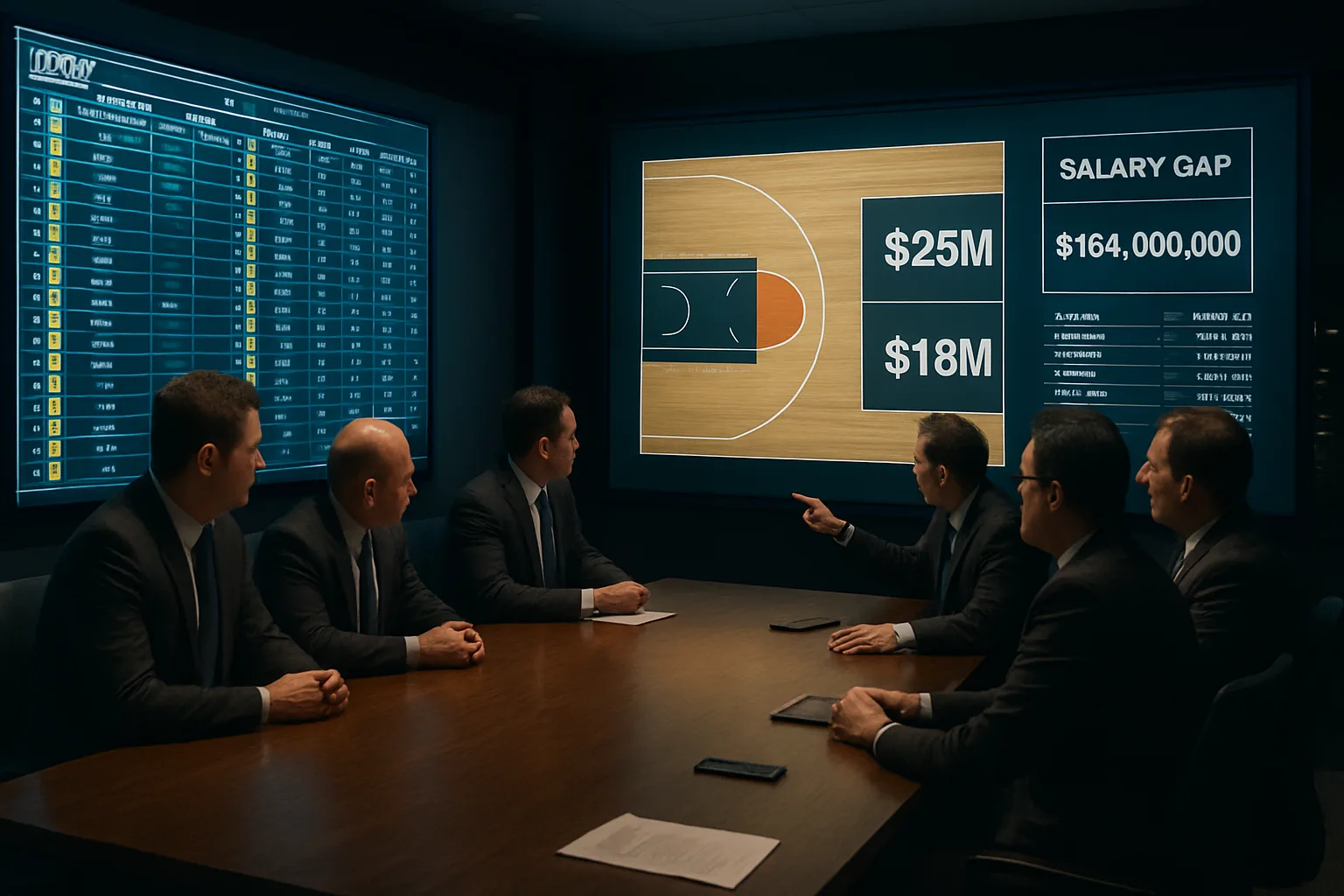
The headline of this summer’s NBA offseason grades is in San Antonio. The Spurs secured Victor Wembanyama on a 25% maximum extension instead of a 30% supermax, a subtle numbers shift that could save them more than $50 million over roughly five years.
In a cap system where contenders are now punished for over-spending with stiff tax and roster restrictions, that gap is enormous. It’s the difference between living on the margin and being able to chase one more high-level starter when the roster is close.
On the floor, San Antonio also tried to patch the problem that burned them in the playoffs: depth. A two-year deal for Tobias Harris isn’t flashy, but it fills a glaring hole at forward. He can eat regular-season minutes, give Wembanyama a steady veteran next to him, and keep the offense coherent when the bench checks in.
But make no mistake: the real win is financial. Locking in Wemby below the supermax tier doesn’t just help the Spurs. It could become a case study for the next collective bargaining talks as owners and players wrestle over how to price true franchise players without suffocating team-building flexibility.
Jazz cash in Walker Kessler and hit the long game
If San Antonio’s grade is about locking in a superstar, Utah’s is about letting go of a very good player at the exact right time. In one of the most stunning moves of the summer, the Jazz traded center Walker Kessler for a haul of two unprotected first-round picks and two swaps.
Kessler is good — an elite rim protector with real value — but he’s not a top-tier star. When an offer like that lands on the table for a non-star, smart teams swallow hard and say yes. Utah did.
There’s a short-term cost. Without Kessler, the Jazz don’t have a clear-cut starting-caliber traditional center. Jaren Jackson Jr. may see more minutes at the five. Jusuf Nurkic and new arrival Jaxson Hayes are options, but neither matches Kessler’s ceiling. Utah will be less intimidating in the paint next season, and any dark-horse contender talk cools off a bit.
Long term, though, the Jazz boosted one of the league’s most imposing draft pick stashes. For a franchise outside a glamor market, that’s the currency that matters most. Loading up on unprotected firsts and swaps gives Utah multiple paths: stack prospects, or bundle picks when the next disgruntled star inevitably becomes available.
Hawks upgrade the floor, bet the ceiling on Jalen Johnson
Atlanta’s spot near the top of these NBA offseason grades comes from a different kind of play: depth over splash. The Hawks may not have added a single new full-time starter, but they went to work on the second unit and backcourt stability.
Re-signing CJ McCollum on a one-year deal keeps a reliable veteran scorer and ballhandler in the mix, strengthening a rotation that has occasionally sagged whenever the primary creators sit. Around him, Atlanta scooped up Luguentz Dort, Aaron Wiggins and Devin Carter via salary dump trades — exactly the kind of opportunistic moves good front offices live on — and added Ryan Nembhard to steady the guard room.
The logic is simple: the Hawks’ true ceiling depends on Jalen Johnson graduating from very good to borderline star. Short of that happening, they can at least raise their floor, stop throwing away bench minutes, and give their coaching staff more lineups that actually defend.
Hornets hit reset on LaMelo Ball, build around Miller and Knueppel
Charlotte had one of last season’s best five-man lineups and spent months as the hottest team in the league. Then, they looked at that group, decided the long-term upside wasn’t good enough, and detonated it anyway.
Trading away 28-year-old Miles Bridges and 24-year-old LaMelo Ball is the kind of call that can define a decade. The cost is immediate: Ball’s playmaking was the engine of Charlotte’s surge, and they almost certainly take a step back in 2026-27 without him.
The payoff is a clearer, younger core and one of the league’s biggest draft pick stockpiles. The Hornets pivoted hard to a new timeline centered on Brandon Miller and Kon Knueppel, while doubling down on depth and shooting around them. Re-signing Coby White and pulling in Dorian Finney-Smith along with more picks fit that philosophy: flexible, switchable lineups, and a war chest for future deals.
This is the part of the rebuild that tests ownership patience. The roster probably looks worse now. The bet is that in two or three years, those extra picks and a more cohesive age curve around Miller and Knueppel will look a lot smarter than clinging to a good-but-capped core.
76ers trade age for prime with Jaylen Brown
Philadelphia’s front office has taken plenty of criticism over the years for half-measures around Joel Embiid. This summer didn’t feel like that. Flipping 36-year-old Paul George for 29-year-old Jaylen Brown is exactly the kind of aggressive, age-curve-correcting move you make when your MVP big man is still close to his peak.
Whatever quibbles people might have about Brown’s precise value, he checks the boxes the 76ers have been missing. He’s a strong two-way wing, durable, and far more likely to hold up as a second pillar next to Embiid for the next several seasons. Adding Dean Wade beefs up the forward rotation even more, giving Philly actual size and versatility at spots that have been a problem area.
The roster still isn’t flawless. Shooting is thinner than you’d like for deep playoff runs, and the team still leans heavily on Embiid for rim protection and interior scoring. But for the first time in a while, there’s a believable path to the Finals. In the context of NBA offseason grades, that’s the difference between a polite B and a confident A-.
Rockets double down on defense
Houston didn’t have the loudest summer, especially coming off a discouraging playoff loss to a short-handed Lakers team. But the Rockets made moves that fit their identity rather than chasing vibes.
They paid a tangible price to reset the books, surrendering three second-round picks just to move off Dorian Finney-Smith’s contract. That’s the part of contention that fans rarely love but front offices sometimes have to accept: every long-term plan eventually runs into a cap sheet you have to clean up.
In return, Houston reinforced what already makes them dangerous. Marcus Smart arrives as a defensive tone-setter and playoff-tested guard who can bother elite wings and lead lineups without the ball sticking. Locking up Tari Eason on a five-year, $81.5 million deal might quietly be one of the smartest signings of the entire offseason — a rare combination of upside, versatility and value on a contract that should age well.
For a team still growing into itself, clarity of identity is a win. The Rockets know they’re going to be physical, switchy and annoying to score on. This summer pushed them further down that path.
Grizzlies finally move on from Ja Morant
Memphis picked a lane this summer, and it’s the one without Ja Morant. That alone makes their situation one of the most complicated to grade.
The return — Jerami Grant and Kris Murray, without any draft picks attached — is light on its face for a former franchise cornerstone. But that’s the reality when a player’s value has plummeted over multiple years of off-court issues, injuries and inconsistency. The prize here isn’t the package. It’s the clean slate.
With Morant gone, the Grizzlies can build without tiptoeing around a star whose trajectory no longer matches the rest of the roster. The franchise is now clearly oriented around young pieces like Cameron Boozer, Cedric Coward and Zach Edey, with new additions Isaiah Stewart and Quinten Post reshaping the big-man rotation after Santi Aldama’s exit.
Memphis may not have maximized Morant’s trade value, but they did something arguably more important: they stopped waiting for a version of him that might never come back and started constructing a future that makes sense on its own terms.
LeBron’s decision still looms over the board
All of these NBA offseason grades come with one giant asterisk: LeBron James hasn’t made his call yet. His next contract and team choice will ripple through the contender tier, just as it has every other time he’s approached free agency.
What’s different this time is how many teams have already committed to their paths without waiting on him. The Spurs, Jazz and Hornets, in particular, made moves that speak more to 2028 than 2027. The 76ers and Rockets solidified identities that can survive a shifting power balance. The Hawks and Grizzlies focused inward, worrying more about their own rotation structure than external star hunts.
What This Means
Stripped down, this summer’s NBA offseason grades tell a familiar story: the league belongs to the teams that balance star power with timing and flexibility.
San Antonio may have pulled off the stealth move of the year by keeping Victor Wembanyama on a 25% max, quietly buying themselves another top-tier teammate down the road. Utah and Charlotte embraced controlled pain now for more upside later. Philadelphia and Houston aligned their rosters with their best players’ primes. Atlanta and Memphis finally admitted who they are and who they aren’t.
LeBron will make his decision, and the headlines will follow. But when the 2026-27 season tips off, the franchises that aced this offseason — on the court and on the balance sheet — will already have a head start.