
Ødegaard Lifts Arsenal Past Hull as City Lose at Forest
Martin Ødegaard scored in the 72nd minute to give Arsenal a 1–0 Premier League win over Hull City on Saturday, November 7. The reigning champions moved to 27 points from 10 games and finished the day six points ahead of Manchester City, who lost 3–1 at Nottingham Forest. The Premier League said Arsenal had equalled their best start to a season in the competition.
It took Arsenal more than an hour to turn a difficult home match into three points. By the end of the day, the significance of that single goal had grown. Arsenal had added to their lead at the top, while City’s third consecutive league defeat exposed a different problem: recovering from an early deficit away from home.
How did Arsenal break through against Hull?
Ødegaard scored from a rebound with 18 minutes of regulation time remaining. The goal ended a long stretch in which Hull had kept the score level and left Arsenal with a lead to protect. It was Arsenal’s sixth league victory by a single goal this season. That total helps explain how the team reached 27 points despite needing late or narrow margins in a substantial share of its wins.
A rebound can turn a defended attack into an opening because players have already started reacting to the first attempt. Defenders may have stepped toward the ball, and the goalkeeper may be moving away from the place where it eventually drops. An attacker arriving in a useful position has a brief chance to take advantage before the defense resets. That was the decisive second phase of the scoring move on Saturday.
What Arteta wanted to see earlier
Arsenal manager Mikel Arteta said his team needed to be more efficient and score earlier. That is a different measure of the match from the result itself. Arsenal banked all three points. The manager’s assessment focused on how long the team had to work with the score level and how much pressure that left on the closing stages.
Scoring earlier can change the range of choices available to both teams. The side behind may have to send another player forward or take a quicker route toward goal. The team ahead then has a chance to attack spaces that were harder to find when the opposition could protect a draw. Saturday’s late breakthrough left relatively little time for those changes to play out. It also meant that Hull remained one goal away from taking a point until the final whistle.
Forest’s fast start leaves City chasing
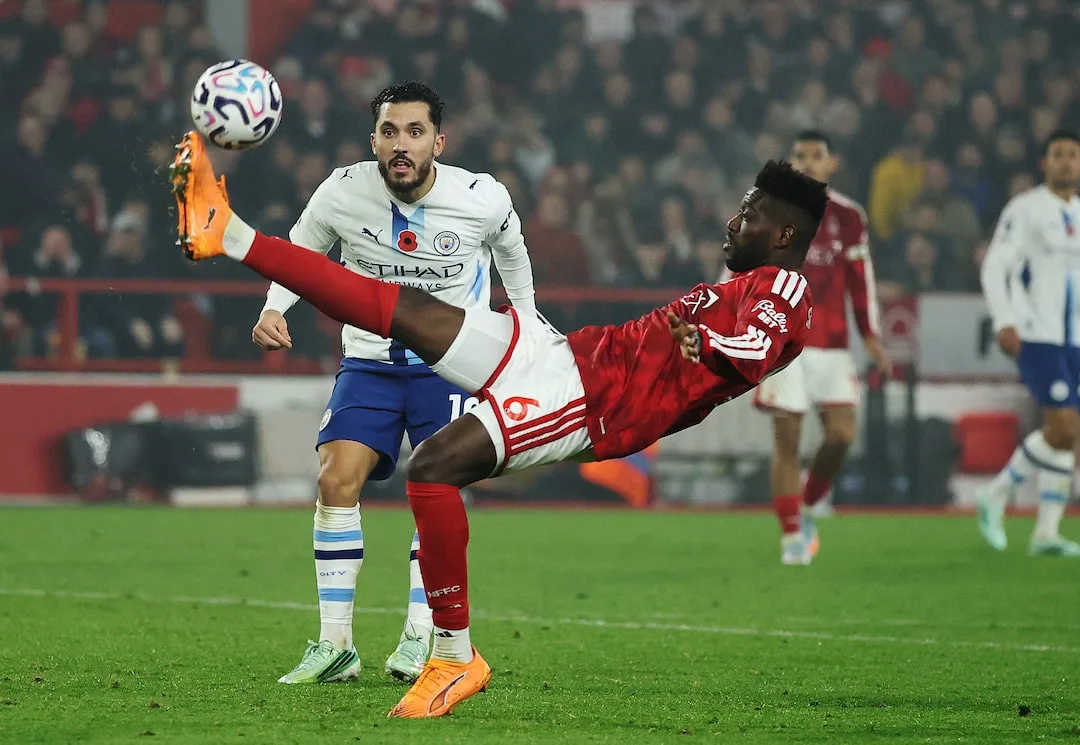
Nottingham Forest went two goals ahead inside 20 minutes through Jair Cunha and Liam Delap. Rayan Cherki pulled one back for Manchester City, but Delap scored again to restore the two-goal margin. The 3–1 win moved Forest up to 16th, while City lost for the third league game in succession.
The sequence matters more than the final margin alone. City brought the score back to 2–1 and were within an equalizer before Forest scored again. A team that has just cut a deficit can commit players in search of the next goal, particularly if it has already spent a long period chasing the game. Forest’s third changed the situation again. City needed two goals to draw, while the hosts could manage a lead with more room for a mistake.
For Forest, the result had immediate value near the bottom of the table. For City, the run of three defeats matters because it gives the teams above and around them opportunities to gain ground even when their own performances are uneven. Arsenal demonstrated that on the same day by earning a full return from a match that remained scoreless deep into the second half.
What does a six-point lead tell us after ten games?
Six points represent the equivalent of two wins, which is meaningful even this early in the season. The gap gives Arsenal room to absorb a setback and still keep some control of their position. There is also time for the picture to shift quickly. Consecutive rounds in which one contender wins and another loses can erase much of an advantage built over several weeks.
Arsenal’s six single-goal wins are worth following in that context. They show how often the champions have turned close matches into maximum points. They also identify where Arteta sees room to improve. An earlier goal or a second one can make a match less vulnerable to a deflection, a set piece, or a late error. A narrow win delivers exactly the same league points as a comfortable one, even though the path to those points offers a coach different lessons.
What This Means
Arsenal have matched their strongest Premier League start by continuing to win games that remain close late on. Ødegaard’s rebound against Hull was the latest example. Forest showed the advantage of changing a match early, then answering when City threatened to close the gap. The next league rounds will show whether Arsenal can create more breathing room in individual games and whether City can stop losing ground in the table.