A sulfur-based compound called LASSS may do something aging bodies have been begging for: supercharge muscle repair. In lab tests, this small molecule didn’t just protect a key growth factor from age-related damage — it appeared to turn it into a more powerful, “Super HGF” form that could help preserve strength as we grow older.
How aging quietly breaks your muscle repair system
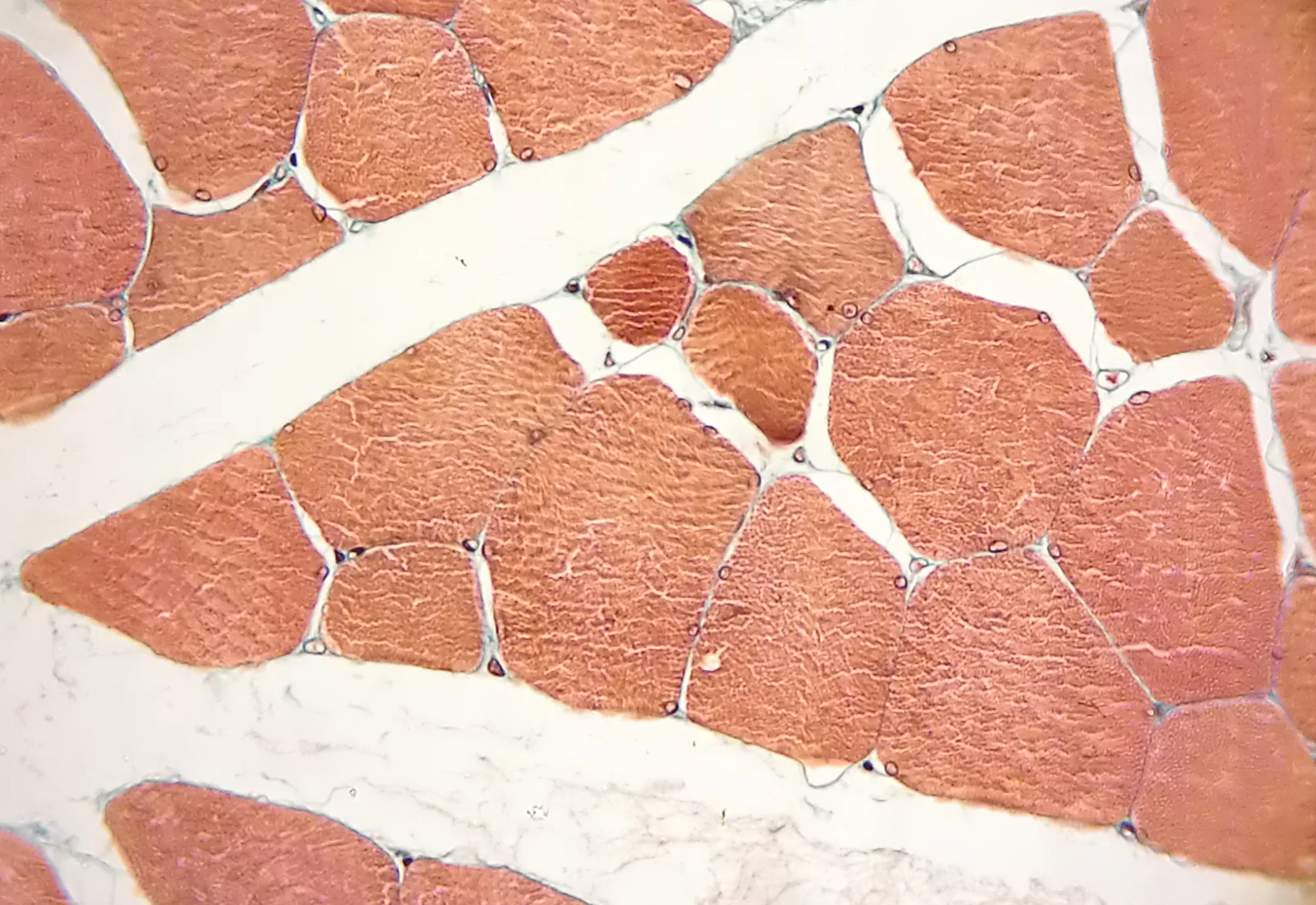
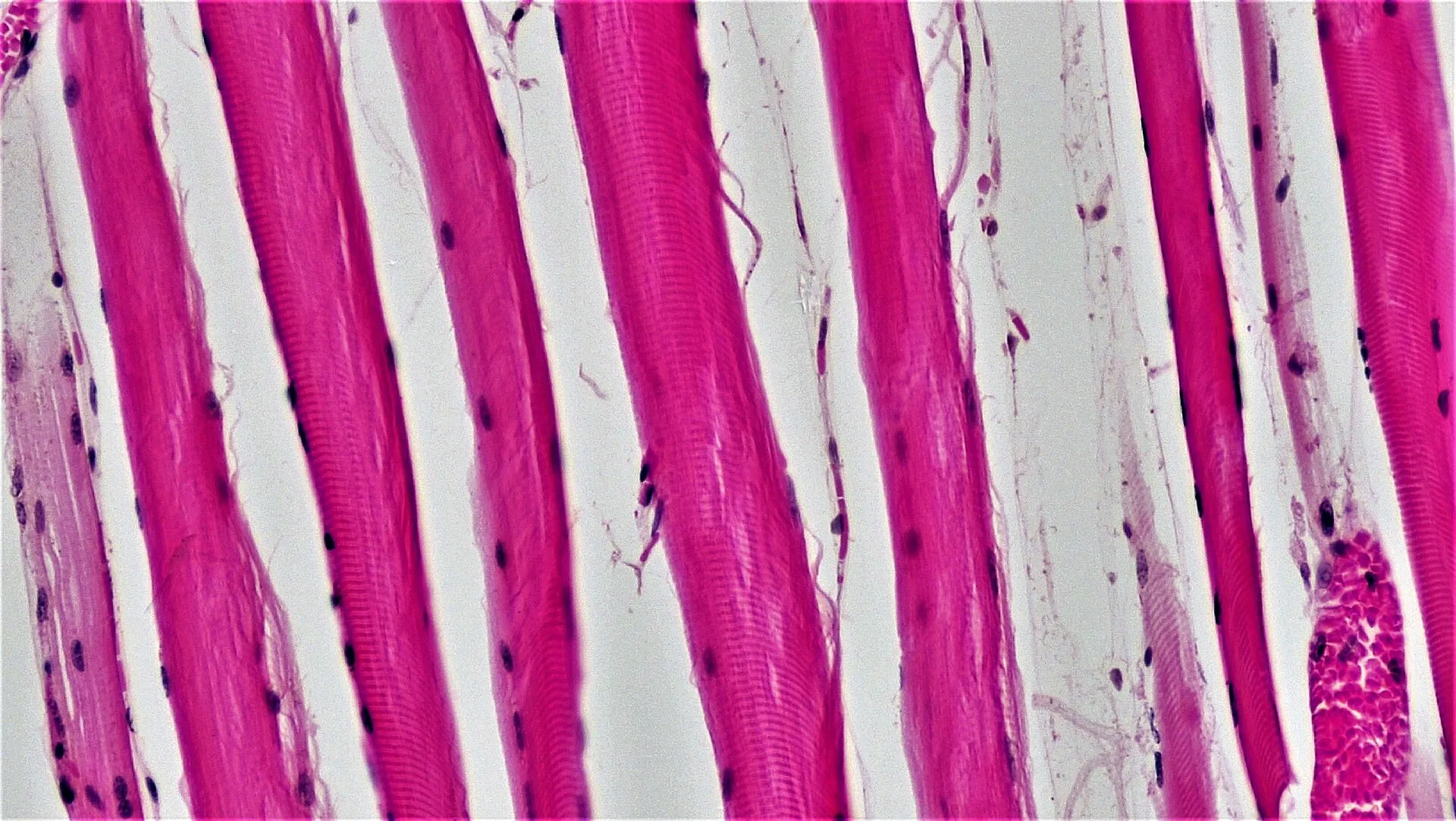
Long before most people think of themselves as old, skeletal muscle is already slipping. With age, muscles lose fast-twitch fibers that power sprints and sudden lifts, scar tissue creeps in, and fat starts to infiltrate what should be lean tissue. The machinery that repairs everyday wear and tear simply doesn’t fire as reliably as it used to.
At the heart of that machinery is hepatocyte growth factor, or HGF. It’s a protein that acts like an emergency text message to dormant satellite cells — the stem cells that repair and renew skeletal muscle. Under normal conditions, HGF sits quietly in the scaffolding around muscle fibers. When you injure a muscle or put it under heavy load, HGF is released and latches onto c-met receptors on satellite cells, jolting them awake so they can multiply, mature, and rebuild damaged fibers.
In younger muscle, that system is remarkably efficient. In older muscle, it starts to misfire. Earlier work from the same research team showed why: HGF can undergo a chemical change called nitration, where nitro groups attach at two key spots on the protein, Y198 and Y250. Unfortunately, those are in the same region HGF uses to connect with its c-met receptor. Once nitrated, HGF becomes like a rusted key that no longer fits the lock, weakening the signal that tells satellite cells it’s time to repair.
The search for a protector: sulfur-based antioxidants
Professor Ryuichi Tatsumi and colleagues set out with a simple question: if nitration is gumming up HGF, could a strong antioxidant shield it from that damage or help it function better even after modification?
They zeroed in on two sulfur-rich molecules with potent redox activity: glutathione trisulfide (GSSSG) and lipoic acid trisulfide (LASSS). Both belong to a family of trisulfides — compounds that string three sulfur atoms together in sequence. These molecules are already drawing interest in pharmaceutical research precisely because their sulfur chemistry lets them soak up or shuffle around reactive species inside cells.
In controlled experiments, the team mixed HGF with each trisulfide and watched what happened to those vulnerable Y198 and Y250 sites. At first, the results looked modest but promising: both GSSSG and LASSS reduced nitration at those positions, suggesting they could help protect HGF from the specific damage that interferes with muscle repair signaling.
What they didn’t see, at least initially, was a full comeback. Even with less nitration, HGF’s ability to bind its receptor wasn’t completely restored. So the researchers pushed further, dialing up the ratio of HGF to trisulfide from 1:4000 to 1:8000 to see whether a stronger presence of the sulfur compound would make a more meaningful difference.
LASSS turns HGF into a “Super” signal
At the higher concentration, the experiment took a sharp turn — and it all hinged on LASSS. When HGF was mixed with LASSS at the elevated ratio, the protein’s binding to the c-met receptor shot up to more than double that of untreated HGF. Not only that, the HGF-LASSS mix became more resistant to the functional loss typically caused by nitration, especially at the Y198 site.
That boost did not show up with GSSSG, even under the same conditions. Something specific about LASSS was interacting with HGF in a way that went beyond simple antioxidant cleanup.
The team’s interpretation is striking: LASSS seems to do more than mop up reactive molecules. It likely nudges HGF into a slightly different three-dimensional shape — a subtly reconfigured “Super HGF” that grabs onto c-met more tightly and holds up better against nitration. In other words, instead of just preserving the existing key, LASSS may be reshaping it into one that fits the lock even better.
If that holds up under further testing, LASSS isn’t just protective; it’s performance-enhancing for a protein that sits right at the start of the muscle repair cascade.
From test tube to living muscle
Promising biochemistry often dies when it hits a real organism, where metabolism, distribution, and side effects can all get in the way. So the researchers took the next obvious step: testing LASSS in a mouse model of muscle atrophy.
They used tail suspension, a well-established method for inducing disuse atrophy in rodents by unloading the hindlimb muscles. Some mice received LASSS treatment before suspension; others did not.
The difference was clear. Animals treated with LASSS showed significantly lower levels of nitration compared with untreated mice. Once again, the alternative trisulfide, GSSSG, failed to deliver the same protection. That finding matters because it shows the LASSS effect isn’t confined to a clean, isolated protein in a dish. It appears to operate in complex, living tissue undergoing real physiological stress.
Still, this is early-stage science. The mouse model focused on atrophy from disuse, not natural aging, and the study did not address long-term safety or how LASSS behaves across different organs and systems. The next steps will have to include experiments in older animals and more detailed work on dosing, delivery, and potential side effects.
Why LASSS matters for aging muscle health
Even with those caveats, the implications for aging muscle health are hard to ignore. If LASSS can reliably create a more active, nitration-resistant HGF signal in vivo, it points toward a new strategy for preserving muscle repair capacity when the body’s own systems start to falter.
Instead of trying to replace lost muscle after the fact, this approach aims at the source of the repair signal itself. By enhancing HGF and protecting it from age-related chemical damage, LASSS could, in principle, help maintain:
- More responsive satellite cells that wake up when muscle is stressed
- Better regeneration after everyday micro-injuries and heavier exertion
- Less scarring and fat infiltration inside skeletal muscle
- Greater retention of fast-twitch fibers that power strength and speed
The potential applications stretch beyond natural aging. Periods of extended bed rest, long-term immobilization, and even some chronic illnesses can drive rapid muscle loss. A compound that keeps HGF chemistry in working order during those windows might help people maintain function, avoid falls, and stay independent longer.
The researchers also point out that the basic biology of HGF and its receptors is shared across many species. That raises the possibility that LASSS-based strategies could one day support muscle health in humans as well as companion animals like dogs and cats, which face their own version of age-related muscle decline.
What scientists still need to figure out
As exciting as “Super HGF” sounds, it comes with a long list of open questions. Among them:
- Safety over time: Trisulfides have powerful redox activity, which is part of what makes them interesting — and potentially risky. Researchers will need to map out how LASSS behaves with repeated or chronic use.
- Delivery and dosing: The study mixed LASSS directly with HGF and used controlled treatments in mice. Turning that into a practical intervention means figuring out how to get the right amount of LASSS to the right tissues at the right time.
- System-wide effects: HGF and c-met signaling matter in other tissues, not just skeletal muscle. Enhancing that pathway locally for repair without triggering unwanted growth signals elsewhere will be a central challenge.
- Translation to aging: Protecting against disuse atrophy is one thing; showing that LASSS preserves muscle repair in naturally aging animals is another. Those aging studies will be crucial before anyone talks seriously about human applications.
There’s also a broader question: how does LASSS actually reshape HGF? The current work points strongly toward a structural shift, but resolving that mechanism will likely require high-resolution structural biology to see exactly which bonds form or break when LASSS binds.
What This Means
The discovery of LASSS as a booster and protector of HGF is a rare kind of aging research story. It doesn’t hinge on a vague promise of “rejuvenation”; it homes in on a specific, well-characterized protein and a concrete chemical vulnerability that appears to worsen with age.
By turning a rust-prone key into something closer to stainless steel — and maybe even sharpening its teeth — LASSS hints at a future where we maintain more of our muscle power deeper into life, not by building bulk, but by preserving the ability to repair what we already have.
That future is still many careful studies away. For now, LASSS is a compelling proof of concept: that targeting the chemistry of a single growth factor could offer a new route to keeping muscles stronger, more resilient, and more responsive as we get older.
Photo: Lord of Konrad / CC0 via Wikimedia Commons | Photo: Berkshire Community College Bioscience Image Library / CC0 via Wikimedia Commons