The first trailer for Jumanji: Open World finally answers the question hanging over the franchise since 2019 — what happens when the game refuses to stay in the box? The focus keyword here is Jumanji: Open World, and this time, the chaos isn’t trapped inside a console. It’s loose in our world.
Sony has dropped the debut look at what’s being billed as the third and final movie in its modern Jumanji series, and it leans hard into the premise fans have been waiting for: Dwayne Johnson, Kevin Hart, Jack Black and Karen Gillan’s avatars are out of the jungle, out of the game, and stuck in something a lot weirder — “demo mode” in the real world.
Jumanji: Open World breaks out of the console
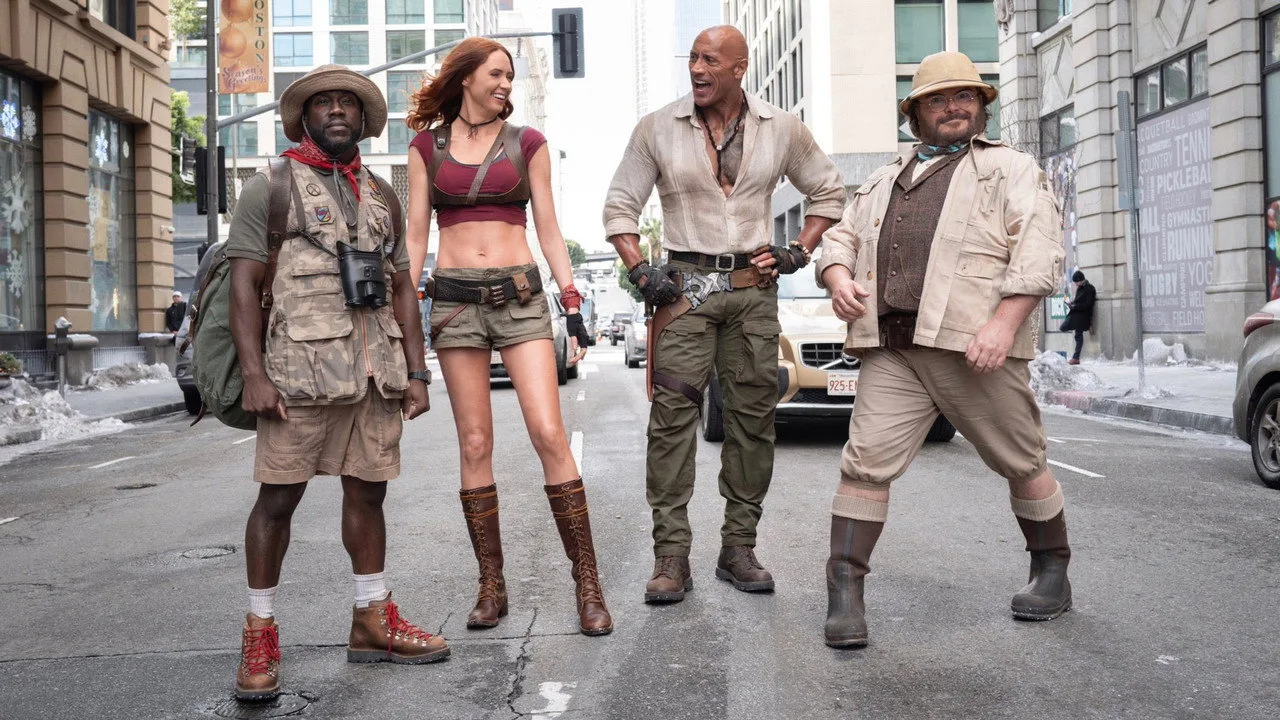
The last film, Jumanji: The Next Level, ended on a tease: creatures from the magical game bleeding into reality. Jumanji: Open World picks up that thread and yanks. The new trailer shows those familiar video game avatars arriving on Earth at Christmas, only this time there are no teens holding controllers, no nervous players burning through extra lives.
Instead, Johnson, Hart, Black and Gillan are effectively NPCs without a mission. With no human minds inhabiting them, the four avatars run on autopilot, seemingly locked in a kind of tutorial loop — “demo mode” — that can’t quite process a world with traffic lights, smartphones and people who don’t realize they’re standing next to living game characters.
It’s a sharp pivot from the jungle-bound action of the last two movies, and closer in spirit to the original 1995 film, where the danger pours out of the board game and into a quiet town. The new movie trades pixelated temples for city streets, but the core idea is the same: once Jumanji gets loose, everything normal starts to look breakable.
The core four are back — and glitching
The trailer doubles down on the series’ biggest asset: the chemistry of its leads. Dwayne Johnson’s hulking adventurer, Kevin Hart’s pint-sized powerhouse, Jack Black’s flustered cartographer and Karen Gillan’s combat-ready hero all return, but with a twist. Without players driving their personalities, they’re acting on canned behaviors and default lines, reacting to the real world like it’s just another procedurally generated level.
Moments in the footage play this for comedy — think avatars repeating stock tutorial phrases at the worst possible time — but there’s a darker, more interesting angle under the jokes. These are characters programmed to survive a lethal game, now dropped into a space where their usual rules don’t apply, and they don’t even fully understand why.
Supporting players from the previous films are back around the edges too. The cast once again includes Rhys Darby as the eternally chipper guide, while Nick Jonas returns to the franchise alongside Brittany O’Grady, hinting that the human side of the story isn’t taking a backseat just because the avatars have found a way out.
Closer to classic Jumanji — with next-gen stakes
Where Welcome to the Jungle and The Next Level reimagined Jumanji as a retro video game you could get sucked into, Jumanji: Open World flips the polarity. The virtual becomes the invader. That premise pulls it closer to the classic formula: strange animals and stranger rules spilling into regular life until the game is beaten.
The difference now is scale. In 1995, the board game terrorized one town. An “open world” game loose on Earth opens the door to global consequences. If the trailer is any indication, the movie wants to explore what happens when game logic collides with real infrastructure, real cities and real people who never agreed to play.
There’s also a built-in commentary on the modern gaming era. Open-world titles are all about freedom, side quests and ignoring the main story for hours at a time. Dropping that mentality into the real world could be a recipe for pure mayhem — or a clever way to poke at how we treat “real life” as just another map to explore.
Christmas release and a brutal box office gauntlet
Sony is slotting Jumanji: Open World into familiar territory: a Christmas Day theatrical release. It’s the same corridor that turned Jumanji: Welcome to the Jungle into a surprise juggernaut, ultimately grossing $962 million worldwide, and that helped The Next Level reach $801.6 million globally.
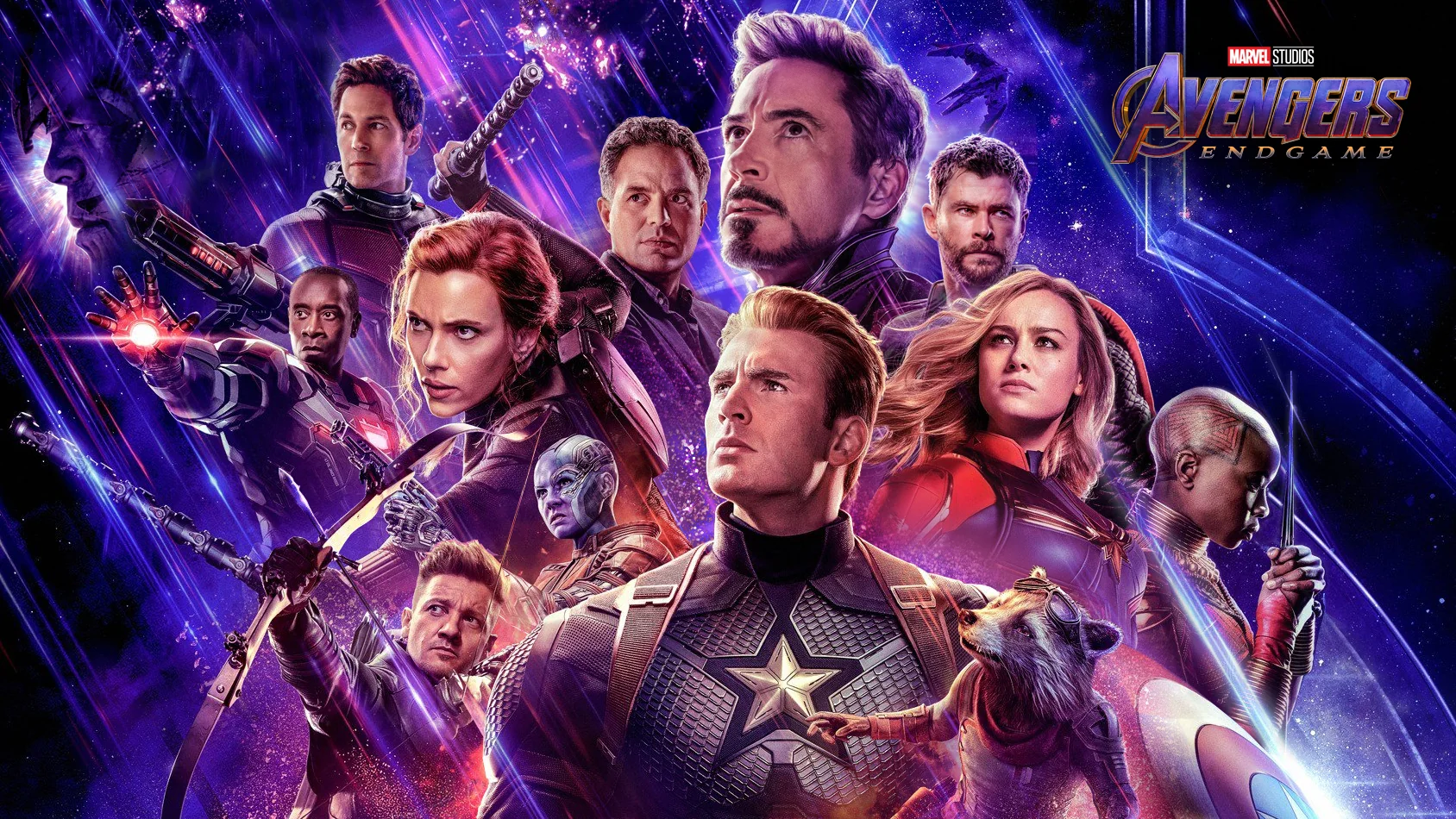
This time, though, the challenge is steeper. The film is walking into a stacked holiday season, opening just one week after two heavy hitters: Marvel Studios’ Avengers: Doomsday and Warner Bros./Legendary’s Dune: Part Three. That means Jumanji: Open World won’t just be competing for families looking for a post-holiday outing — it’ll be fighting for premium screens, attention and repeat viewings in one of the most crowded windows in years.
On the other hand, the series has already proven it can thrive as counter-programming alongside superhero epics and sci-fi sagas. The mix of broad comedy, four-quadrant appeal and nostalgia for both the Robin Williams original and old-school adventure gaming has turned this reboot run into one of Sony’s most reliable live-action bets.
A final movie with something to prove
Calling Jumanji: Open World the third and final movie raises the stakes beyond box office math. The tagline implies this is the big swing — the payoff for two films of setup about a game that keeps evolving and a group of reluctant heroes who can’t quite shake it.
Ending on a story where the avatars themselves cross over makes sense structurally. We started with humans pulled into Jumanji, then watched that world change and expand. Bringing the avatars to Earth closes the loop and offers the cleanest shot at answering the lingering question: what does “winning” actually look like when the game no longer has boundaries?
It also gives the cast room to go out on a high. Johnson, Hart, Black and Gillan have spent two films riffing on the idea of avatars as fun-house reflections of their human players. Letting those avatars exist on their own terms — even if they’re stuck in demo mode — could unlock some of the strangest, most memorable character beats in the trilogy.
Can Jumanji stick the landing?
There’s a lot riding on Jumanji: Open World beyond franchise fatigue and release-date jostling. The modern Jumanji films helped prove there was life in older family properties if you rethought the premise instead of just copying it. They arrived as studio comedies were fading and reminded everyone that audiences will still show up for big, goofy adventures anchored by movie stars who know exactly how to play off each other.
Now, with Hollywood leaning even harder on familiar IP, this third movie arrives as something of a test case. If a final chapter can deliver a fresh angle — taking the avatars out of the console, pushing the chaos into our world and giving the story an actual endpoint — it suggests there’s still room for blockbusters that evolve instead of looping the same level over and over.
The trailer doesn’t reveal much about the human characters, the new rules of the game or how, exactly, you put Jumanji back once it’s broken free. But it does what a first look needs to do: it sells a hook. The avatars are here. They’re confused. They’re glitchy. And the real world has no idea what it’s in for.
What This Means
For now, Jumanji: Open World is framed as a Christmas Day event movie and a proper finale, not just another level in an endless franchise. If it can balance the larger scale with the character-driven comedy that turned the last two films into crowd-pleasers, it could close out this trilogy on something rare for modern blockbusters: a genuine ending.
What’s clear from the trailer is that the series isn’t retreating. It’s pushing its own premise to the logical extreme — from board game to console to an open world that looks a lot like ours. If this really is the last roll of the dice, Jumanji isn’t going quietly back on the shelf.
Image: TMDB