World Athletics has been trying to solve the same problem for two decades: track and field produces spectacular athletes and almost no sustained attention between Olympics. The sport’s answer, unveiled this week in Budapest, was to write much bigger cheques and cut the programme down to what fits in prime time. It worked, mostly. It also made a chunk of the sport furious, and that argument is not going away.
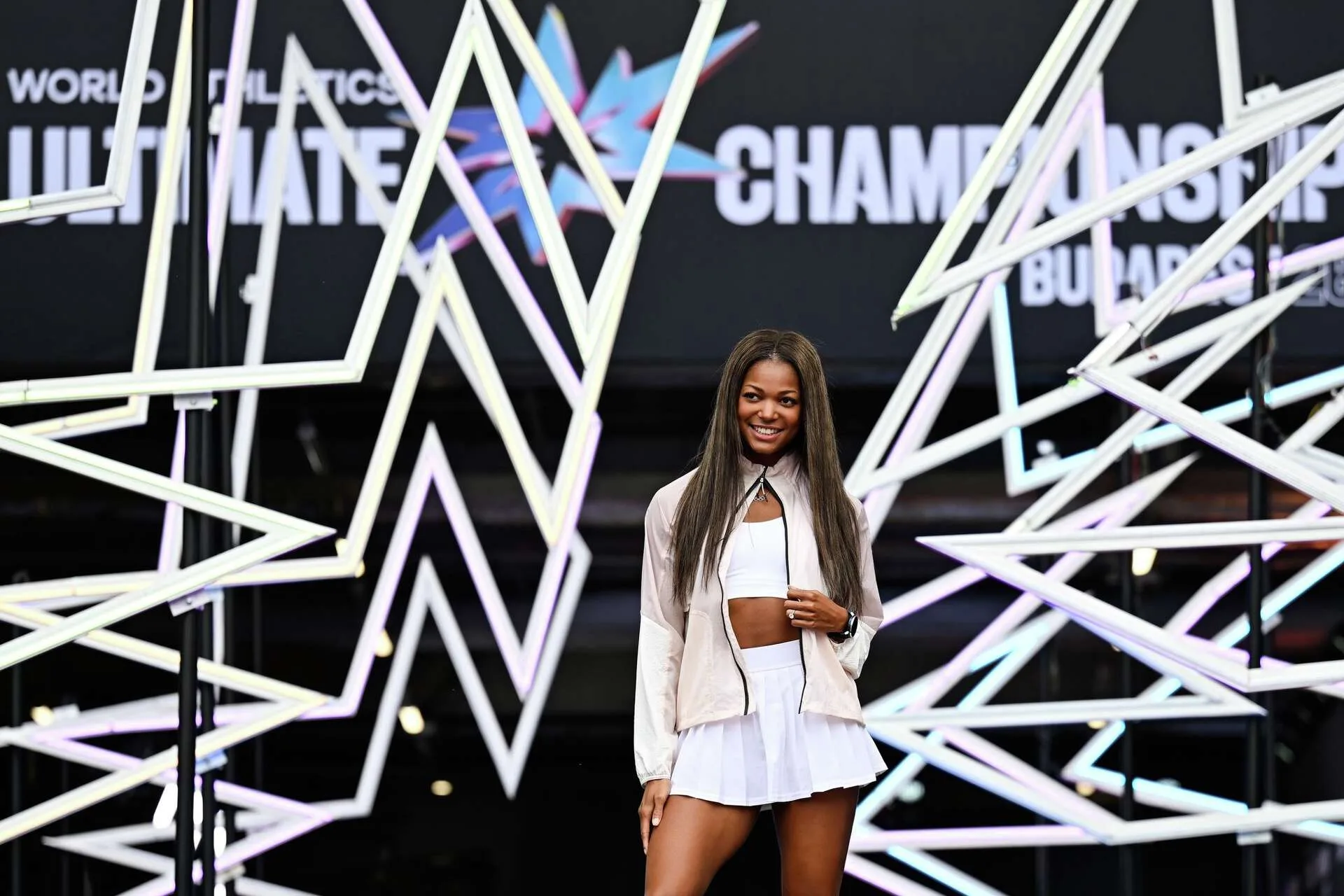
The inaugural World Athletics Ultimate Championship ran September 11 to 13 at the National Athletics Centre, the stadium Budapest built for the 2023 World Championships. Total purse: $10 million. Winner’s share: $150,000 per event.
The Money Is the Point
That $150,000 figure deserves to be sat with, because it reframes what winning is worth in this sport.
| Competition | Winner’s prize |
|---|---|
| Ultimate Championship, Budapest | $150,000 |
| World Championships, Tokyo | $70,000 |
| Olympic Games, Paris | $50,000 |
More than double the Worlds. Triple the Olympics. And the money goes deep rather than stopping at the podium: second takes $75,000, third $40,000, with payouts descending all the way to $2,000 for sixteenth place. Relay teams split $80,000 for a win.
Paying sixteenth place matters more than it sounds. Most track athletes outside the handful of global names live on appearance fees and shoe contracts that evaporate after a bad season. A guaranteed four-figure floor for showing up to a global final is a different economic proposition than the Diamond League circuit offers.
The format
This is an invitational, not an open championship, and the qualifying routes are narrow: Olympic champions, world champions, Diamond League winners, and the top-ranked performers of the 2026 season. Sixteen athletes maximum in track events, eight in field events. Most events skip heats entirely and go straight to a semifinal or final.
The field assembled was legitimately elite — 26 Paris Olympic champions and 26 Tokyo world champions.
Several rules were rewritten for television. There are no medals; winners get bespoke trophies instead. Vertical jumps tied on countback go to a jump-off rather than being settled by the record book. Throwers get four attempts instead of six, which compresses the field events into something a broadcast can actually cut to.
What Actually Happened on the Track
The opening night belonged to the Americans in the hurdles. Masai Russell took the women’s 100m hurdles in 12.22, extending a winning streak that has now reached 13 straight. In the men’s 110m hurdles, Ja’Kobe Tharp beat compatriot Cordell Tinch by one hundredth of a second — 12.94, and the kind of finish that justifies the whole enterprise.
Mondo Duplantis did what Mondo Duplantis does, clearing 6.20m in the pole vault. Jakob Ingebrigtsen won the men’s 5000m in 12:59.24, coming through late to hold off American Cole Hocker. The United States took the mixed 4x100m relay in 39.64.
The single best performance of the meet may have been Busang Collen Kebinatshipi’s. The Botswanan ran 43.39 in the men’s 400m — a national record and a mark that sits fifth on the all-time list — with Rai Benjamin well back in 44.15. In the women’s 400m, Marileidy Paulino produced the meet’s most dramatic finish, running from last to first over the closing 125 metres to win in 49.07.
Elsewhere: Yaroslava Mahuchikh cleared 1.99m in the women’s high jump, Larissa Iapichino won the women’s long jump at 6.90m, Merlin Hummel took the hammer at 81.46m, Haruka Kitaguchi won the women’s javelin with a Japanese national record, and Klaudia Kazimierska edged Georgia Hunter Bell in a tight women’s 1500m, 3:57.55 to 3:57.72. Audrey Werro’s 800m win was one of the meet’s genuine surprises.
The sprint semifinals set up the closing night nicely. Julien Alfred and Melissa Jefferson-Wooden tied at 10.73 in the women’s 100m. Oblique Seville led the men’s qualifiers at 9.90. Alison dos Santos topped the men’s 400m hurdles at 47.25.
The Part World Athletics Would Rather Not Discuss
To make the programme fit, six events were cut: shot put, triple jump, women’s hammer, discus, the steeplechase and the 10,000 metres. Those are not obscure disciplines. They are Olympic events with world champions who were simply not invited to the richest meet their sport has ever staged.
Discus champion Matthew Denny put the objection cleanly: “Innovation should not come at the expense of opportunity.” His point about the money was sharper still — a prize like this “can change a career and a life,” and being excluded from it is not a scheduling inconvenience but a material loss.
He is right, and the counterargument is also real. A meet that runs every event over three evenings is a meet nobody watches end to end, and a sport that cannot hold an audience cannot fund $150,000 first prizes for anyone. Sebastian Coe’s pitch has been that Ultimate Champions get global bragging rights alongside the cheque — a claim that only becomes true if enough people are watching to do the bragging to.
The uncomfortable version of this trade: World Athletics has decided which disciplines are televisually viable, and the ones that did not make the cut now have a structural disadvantage in attracting the next generation of athletes. Kids follow the events they see.
Final Verdict
As a competition, the Ultimate Championship delivered. A hundredth of a second in the 110m hurdles, a national record and world-fifth all-time in the 400m, a come-from-nowhere win in the women’s 400m, and Duplantis reliably doing the impossible — that is a strong three nights by any standard, and the fields were deep enough that the results mean something.
As a fix for athletics’ structural problem, the verdict has to wait. The event is biennial and slotted between World Championships specifically to give Olympic years a proper season finale, so the real test is 2028, when it has to compete for attention against the Games rather than fill a gap left by them.
The thing worth watching is whether the excluded events come back. World Athletics has proved it can move serious money to athletes when it builds a product broadcasters want. If the second edition still has no discus and no steeplechase, then the cuts were not a launch-year compromise — they were the format, and the sport should say so plainly rather than calling it innovation.