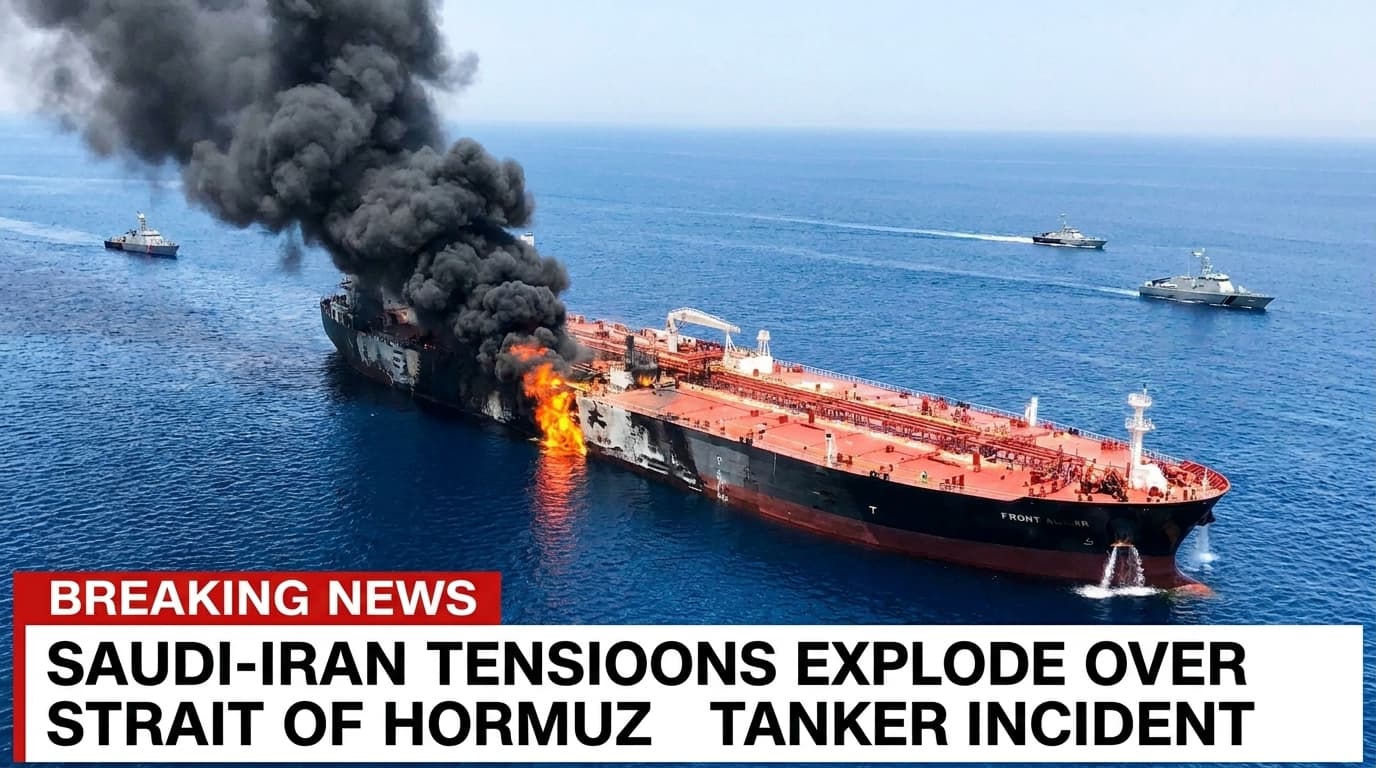
Tensions between Saudi Arabia and Iran have reached a boiling point not seen in years, raising the specter of a direct confrontation that could slam shut the world’s most critical oil artery, the Strait of Hormuz. The immediate flashpoint isn’t a collapsed diplomatic deal or a proxy war in a faraway capital, but rather a string of mysterious, high-stakes incidents involving oil tankers and naval escorts in the congested shipping lanes of the Persian Gulf.
According to a senior U.S. intelligence official and two Western diplomats who spoke to CNBC on condition of anonymity to discuss sensitive assessments, the situation has deteriorated sharply over the past 72 hours. The crisis was triggered by what Riyadh claims was an Iranian attempt to commandeer a Saudi-bound supertanker carrying roughly 2 million barrels of crude. The Saudi government describes the incident as “an act of maritime piracy,” but Tehran has fired back with a completely different narrative, accusing the Saudi navy of ramming one of its own fishing vessels and leaving crew members dead in international waters.
The Sequence of Chaos: A Morning at the Chokepoint
The sequence of chaos began early Monday morning when the Saudi-flagged supertanker, identified as the Horizon Voyager, was transiting the narrow entrance to the Strait just off the Musandam Peninsula. The vessel’s distress call, logged by the U.K. Maritime Trade Operations, reported that multiple fast-attack craft from Iran’s Islamic Revolutionary Guard Corps Navy swarmed the tanker, ordering it to divert into Iranian territorial waters. The Horizon Voyager refused. The captain immediately requested a security escort, prompting the Saudi Royal Naval Forces to dispatch a frigate that was already patrolling the area.
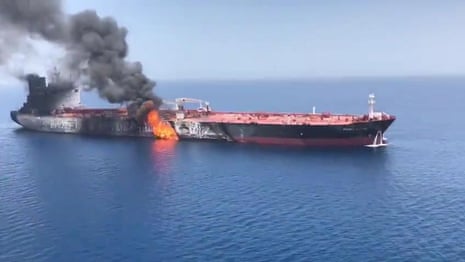
What happened next is fiercely disputed and dangerously opaque. Saudi Arabia’s state media, quoting defense ministry officials, says its warship moved to intercept the Iranian boats and successfully shielded the tanker’s escape. However, Iran’s foreign ministry issued a statement within hours claiming a Saudi vessel “recklessly collided” with an Iranian fishing dhow during the confusion, causing the smaller boat to capsize. Tehran insists three fishermen were killed and two others are missing, framing the incident not as a naval skirmish but as a brutal and unprovoked attack on civilians. Independent verification of casualties remains impossible, but satellite imagery analyzed by a private intelligence firm shows two vessels at a standstill within close proximity at the exact coordinates, with a visible debris field consistent with a hull breach.
The Economic Seismographs Start Shaking
The economic seismographs have already started shaking. The mere whisper of a military miscalculation at Hormuz sent Brent crude futures surging more than 4% in early Asian trading, breaking past $89 a barrel for the first time in months. The strait is not just a geographic chokepoint; it is the global economy’s aorta. Nearly a fifth of the world’s oil supply—roughly 21 million barrels every single day—slips through that narrow, 21-mile-wide channel. Energy analysts are now rapidly revising their risk models, warning that even a brief, localized exchange of fire could push insurance premiums to levels that effectively shut down commercial transit.
Behind the Scenes: Washington Scrambles for a Lifeline
Behind the scenes, Washington is scrambling to prevent a total diplomatic meltdown. U.S. Central Command has confirmed it is flying surveillance drones over the Strait but has not yet directly interposed naval assets between the rival fleets. A State Department spokesperson told CNBC that the U.S. is “in constant communication with partners in the region,” urging both sides to establish a direct deconfliction hotline. However, with the 2023 Beijing-brokered rapprochement now thoroughly shredded, there is vanishingly little trust left to tap into. Riyadh sees an Iran emboldened by its nuclear brinkmanship and the perceived U.S. strategic pivot toward Asia; Iran sees a Saudi leadership it believes is trying to strangle its economy through production flooding and sanctions compliance.
The World Holds Its Breath at the International Maritime Organization
European and Asian diplomats are holding an emergency session at the International Maritime Organization in London to discuss rerouting strategies, but the options are bleak. The overland pipelines that bypass Hormuz have limited spare capacity, and a sustained closure would shred the fragile tether holding global inflation in check. For now, the Strait remains open, but the water is charged with a current of miscalculation. The thin line between a Cold War and a hot one has rarely felt so dangerously thin.