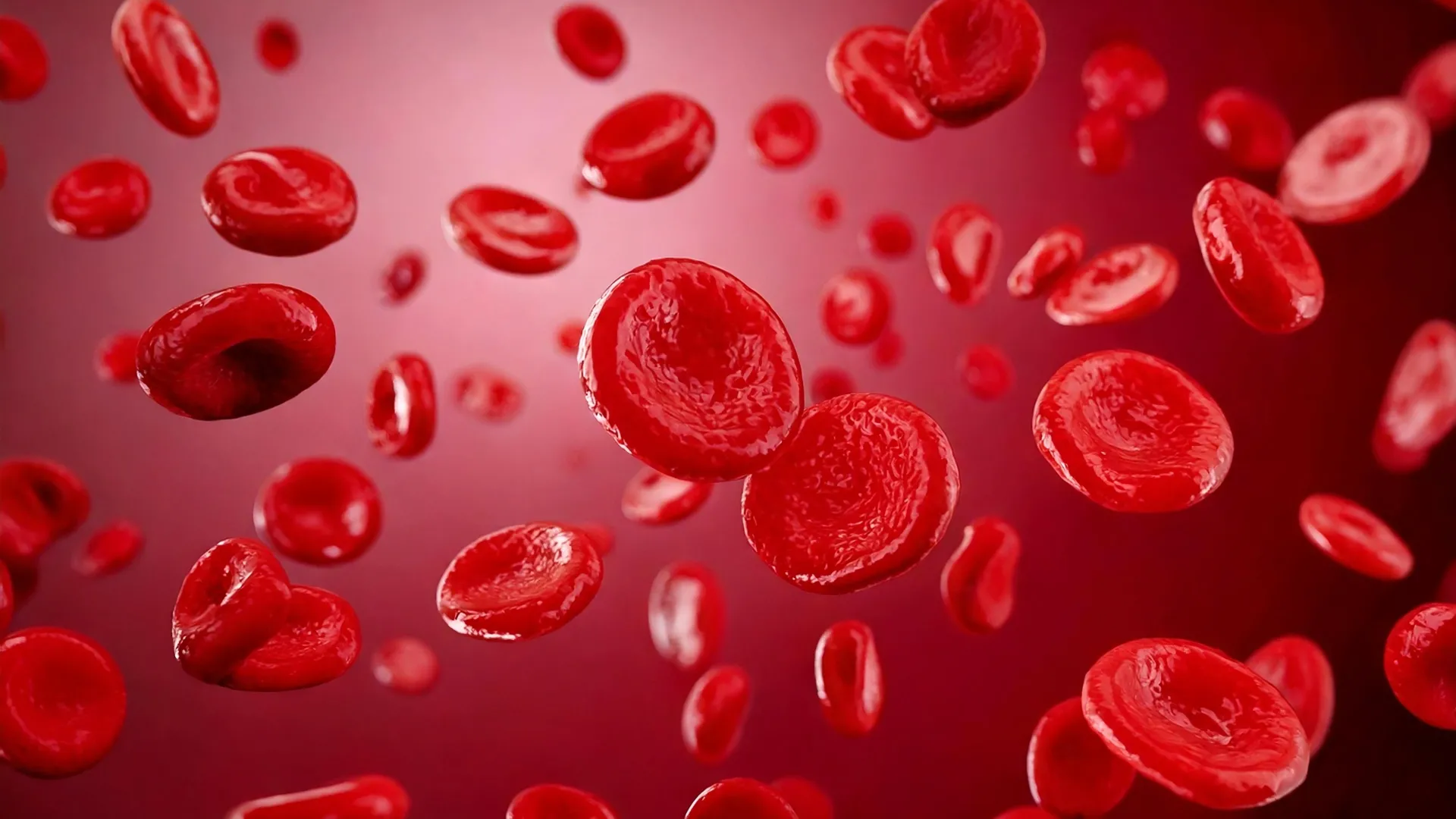
For 50 years, a marker sitting on the surface of almost every human red blood cell had no explanation. Scientists knew it was there. They knew, in rare cases, when a person’s body reacted violently to its absence. What they didn’t know was why — until a team in Bristol traced it back to a single gene and closed the book on one of transfusion medicine’s oldest open questions.
The Mystery That Started in 1972
The antigen at the center of this story is called AnWj, named after the initials of the first two patients found to carry antibodies against it. It shows up on the red blood cells of more than 99.9% of people on Earth — which makes it about as close to universal as a blood marker gets. For the tiny sliver of the population that doesn’t carry it, though, that near-universality is exactly the problem. If an AnWj-negative person develops antibodies against the antigen, transfusions from the overwhelming majority of donors — everyone who is AnWj-positive — become dangerous. Finding compatible blood for those patients has historically ranged from difficult to nearly impossible.
What nobody could answer for five decades was the basic genetic question: what gene actually controls whether a person makes this antigen or not?
The Bristol Team
The answer came from NHS Blood and Transplant’s International Blood Group Reference Laboratory in Bristol, working alongside researchers at the University of Bristol. The core team included senior research scientist Louise Tilley, Professor of Cell Biology Ashley Toye, Nicole Thornton (who heads the IBGRL’s Red Cell Reference work), and senior lecturer Tim Satchwell of UWE Bristol.
How They Cracked It
The team turned to whole exome sequencing — a technique that scans the protein-coding portions of thousands of genes at once rather than guessing at a single candidate. The approach pointed, somewhat unexpectedly, to a gene called MAL. Every AnWj-negative person in the study shared the same pattern: a homozygous deletion, meaning both copies of the gene inherited from each parent were missing the relevant segment.
The follow-up confirmation was elegant in its simplicity. AnWj-positive individuals produced the full-length Mal protein on their red blood cells; AnWj-negative individuals produced none of it at all. To prove the gene was actually responsible — not just correlated — researchers inserted a normal copy of MAL into lab-grown cells that previously lacked the antigen. Those cells promptly began reacting with AnWj antibodies, exactly as predicted.
A New Blood Group System
That result was enough for the International Society of Blood Transfusion to formally designate MAL as the 47th recognized human blood group system, cataloged as ISBT 047. Blood group systems don’t get added often — each one represents a genuinely distinct piece of the puzzle governing how human blood cells are built and recognized by the immune system.
Why This Actually Matters for Patients
This isn’t just a taxonomy update. Before this discovery, identifying someone as AnWj-negative required specialized serological testing after a dangerous reaction had already occurred or was suspected — reactive medicine, not preventive. Now that the genetic basis is known, labs can build a straightforward genotyping test to flag AnWj-negative patients and locate compatible donors in advance, before a transfusion emergency, rather than scrambling for a match mid-crisis.
Two Real Cases That Show the Stakes
- Case one: A 75-year-old man with severe anemia developed anti-AnWj autoantibodies. With no compatible blood available, doctors had to give him unmatched red blood cells. Genetic testing later showed his MAL gene was completely normal — meaning his antibody wasn’t inherited, but acquired through disease.
- Case two: A patient with high-grade B-cell lymphoma developed a complement-binding version of the anti-AnWj antibody and experienced destruction of red blood cells after incompatible transfusions. Physicians turned to sutimlimab, a drug that blocks part of the immune system’s complement pathway, and saw laboratory improvement — though researchers were careful to note the case was too complex to draw firm conclusions from alone.
Together, the two cases illustrate an important nuance the Bristol team’s work helps clarify: some people are AnWj-negative because they inherited the MAL deletion from birth, while others lose AnWj expression later in life because of disease, then develop antibodies against a marker their body used to tolerate just fine. Telling those two situations apart used to be guesswork. Now it’s a genetic test.
What This Means
Blood banking runs on precision most people never think about, and a gap like this one — a marker present in nearly everyone, with no known genetic cause — has quietly complicated transfusion medicine for half a century. Closing it doesn’t change how routine transfusions work for the vast majority of patients, but for the rare AnWj-negative individual who develops antibodies, it turns what used to be an emergency scramble into something labs can plan for ahead of time. Expect genotyping panels to start incorporating MAL screening relatively quickly, given how directly it maps onto an existing, well-documented clinical risk.