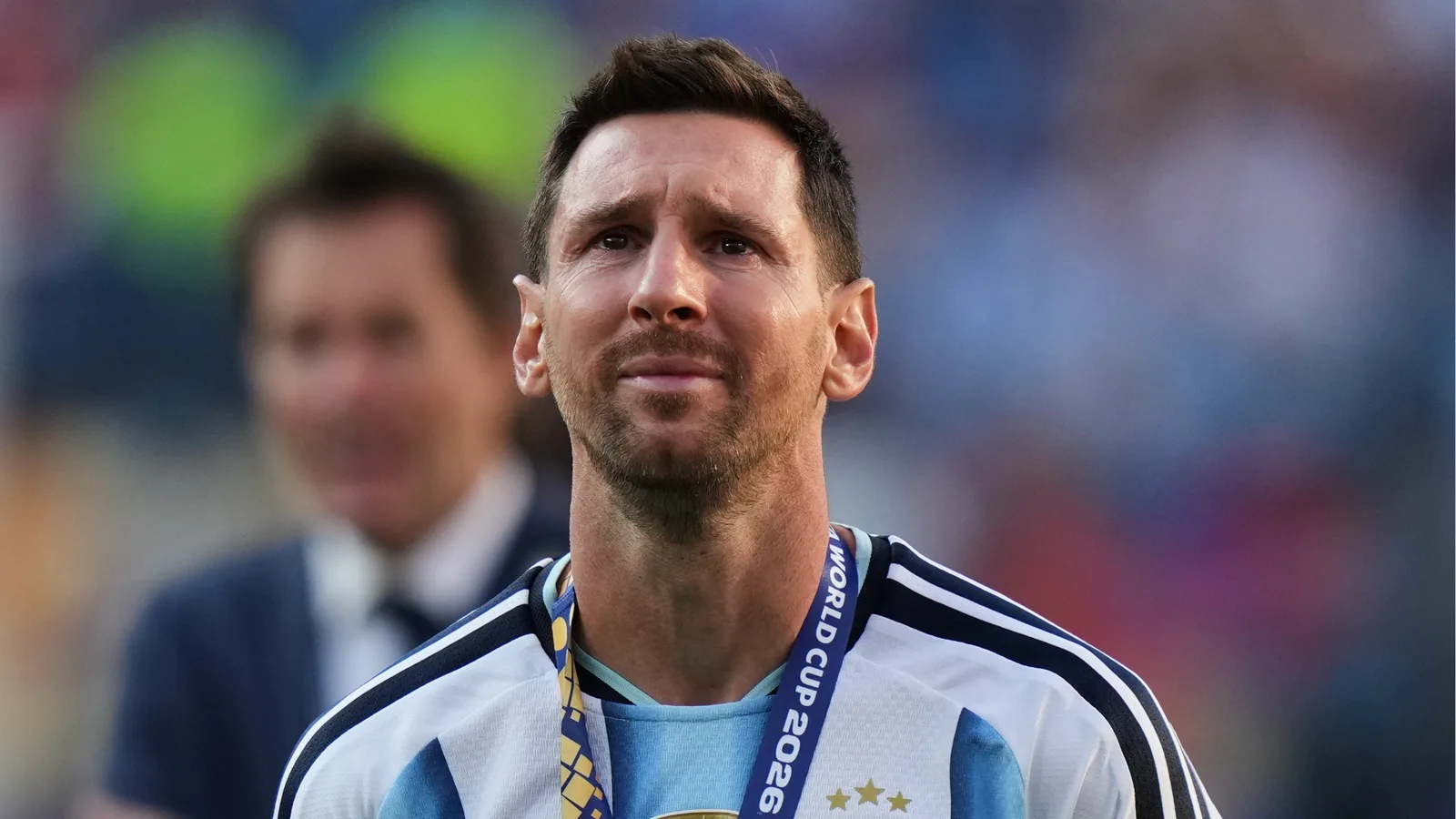
The goodbye came on a Monday, in handwriting, on notebook paper photographed and posted to Instagram. No press conference, no stadium, no farewell lap. Lionel Messi ended his Argentina career the same way he spent most of it away from the pitch: without ceremony. At 39, six World Cups deep, and six weeks removed from a final he could not drag his country through, the most decorated international footballer of his generation stepped away from the national team for the second and, this time, final time.
What made the announcement land differently was the footnote. Messi wrote the letter on July 21, two days after Argentina lost the World Cup final to Spain. He sat on it. Then, on August 8, his father Jorge died in Rosario at 68 after a long illness, and the man who had spent two decades second-guessing his own place in the Argentina shirt stopped second-guessing. He said the loss left him more certain than before.
The letter, and what he actually said
The post ran long by Messi’s standards, which is to say it ran long at all. He described the decision as painful and admitted it still stung, but said the moment had arrived. He insisted he had always given everything to the shirt, not just during the golden run when Argentina won everything in sight, but through the years when the country turned on him.
There was a passage addressed to his father about the final, about wanting to win one more trophy to bring home and simply not having the legs left. Anyone who watched him in East Rutherford on July 19 knows he was not exaggerating. Ferran Torres settled it in extra time, Spain took its second world title, and Messi spent the last half hour walking.
He also made clear he is not retiring from football. He remains at Inter Miami, where he is the two-time reigning MLS MVP and the centerpiece of the league’s defending champion. This is a national-team retirement, not a career one.
The numbers close the argument permanently
Messi leaves as Argentina’s most-capped player and its all-time leading scorer, and it is not close on either count. He is also the highest-scoring man in South American football history.
| Category | Total |
|---|---|
| Argentina appearances | 207 |
| Goals | 125 |
| Assists | 68 |
| World Cups played | 6 |
| World Cup goals | 21 |
| Major senior titles | 4 |
Only one man has scored more in men’s international football: Cristiano Ronaldo, sitting on 146 and, notably, still not retired from Portugal. The rivalry that defined roughly twenty years of arguments in group chats and comment sections now has one participant left standing on the international stage.
The record he held for exactly one month
There was a stretch this summer when Messi owned the World Cup scoring record outright. His goal against Austria in June was his 17th at the tournament, breaking the mark he had shared with Miroslav Klose. He finished the tournament with eight goals, second among all scorers, and carried Argentina past Egypt in the round of 16 and through a semi-final against England.
Then Kylian Mbappé scored his 22nd, and Messi’s record lasted about four weeks. He retires one goal behind on the all-time World Cup list, which is a fittingly cruel piece of symmetry for a career that has never lacked for asterisks argued in bad faith.
This goodbye is not 2016’s goodbye
Anyone with a decade of memory has seen this movie before. In July 2016, Messi missed a penalty in a shootout loss to Chile in the Copa América final, walked off the pitch, and quit the national team on the spot. He was 29 and had lost three straight major finals. Diego Maradona had already been publicly dismissive, arguing that Messi in a Barcelona shirt and Messi in an Argentina shirt were two different players.
A national campaign talked him back within weeks. What followed was the vindication arc that reframed everything: the 2021 Copa América that broke a 28-year trophy drought, the 2022 Finalissima, the 2022 World Cup in Qatar that ended a 36-year wait, and a second Copa América in 2024. He won every senior competition available to him.
The difference now is finality. In 2016, the exit was a reaction, delivered in a tunnel minutes after a miss. This one was written, held back, revisited, and published after a month of grief. Nobody is organizing a campaign to reverse it.
The tributes arrived within minutes
The Argentine Football Association posted its thanks almost immediately, calling him captain and telling him he was loved. AFA president Claudio Tapia described him as “the captain of our dreams” and said the country’s affection for him would outlast all of them. President Javier Milei went with “Thank you very much, impossible man,” which is about as concise a summary as anyone has managed.
Lionel Scaloni, who had already given his verdict during the World Cup — “He is pure history” — has not needed to update it. Teammates flooded the comments. Rodrigo De Paul wrote about Messi’s habit of making every new call-up feel welcome, and every federation staffer feel seen. Lautaro Martínez kept it to three words: “Forever grateful, captain.” Ángel Di María, who retired from international duty after the 2024 Copa América, thanked him for choosing to be Argentine when a man of his stature could have chosen otherwise. Antonela Roccuzzo, his wife, posted about watching him fail and try again for twenty years before the story finally broke in his favor.
Argentina now has a problem it has been postponing
The next FIFA window runs September 21 to October 6, and Argentina is expected to play friendlies. Opponents have not been confirmed. Before the retirement, the plan reported in Argentina was for Messi to stay in the squad through the autumn and receive a proper send-off at a home fixture, most likely at the Monumental in Buenos Aires. That plan is now in Messi’s hands rather than the federation’s, and the AFA has signaled it would still like to stage a tribute if he wants one.
The bigger question is structural. Scaloni said after the final that a tournament like that makes a person rethink things, and that his commitment ran through December. Nicolás Otamendi has already gone. Emiliano Martínez’s international future has been the subject of the same speculation. Argentina is not just replacing a number ten. It is replacing an entire generational core at once, with the 2030 World Cup a long four years out.
Scaloni has said repeatedly that there will be no successor to Messi, and he was not being modest. Lautaro Martínez, Julián Álvarez, Enzo Fernández and Alexis Mac Allister are a genuinely strong spine. None of them is a gravitational field.
What This Means
For Messi, this is the cleanest possible exit from the one thing that ever seriously threatened his legacy. He arrived as a teenager who was accused of not caring enough about the shirt and leaves having won the World Cup, two Copa Américas and a Finalissima as captain, with every meaningful Argentina record in his name. The 2026 final was a loss, but losing a World Cup final at 39 while scoring eight goals along the way is not the ending anyone should apologize for.
For Argentina, the practical impact starts now, and the emotional one will take longer. The squad remains excellent. What disappears is the certainty that one player could rescue any night, which is not a tactical resource but has functioned like one since roughly 2007.
For everyone else, the thing worth registering is smaller and stranger. Messi will still play. He will play in Fort Lauderdale on Saturday nights in a league most of the world half-watches. But the version of him that mattered to a whole country at once, the one that could make Buenos Aires stop moving, retired on a Monday with a pen and a phone camera. That version is gone, and there is no one queuing up to replace it.