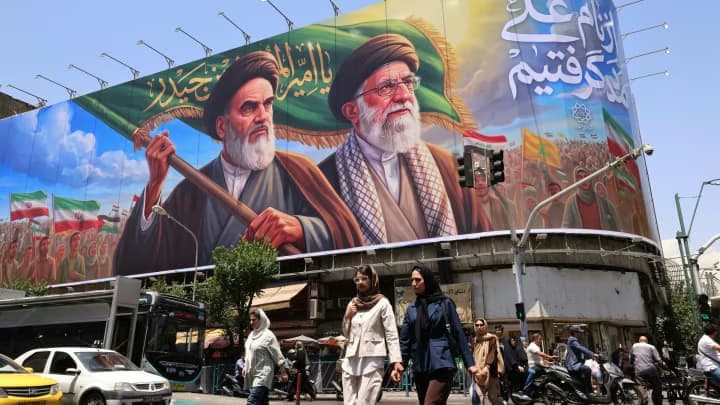
Iran launched a massive, six-day funeral procession on July 4 for Ayatollah Ali Khamenei, more than four months after the Supreme Leader was killed in the opening strikes of the U.S.-Israeli war on February 28. The elaborate ceremony, expected to draw tens of millions of mourners, will move across five cities in two countries before ending in burial.
The Route
The procession begins in Tehran, where Khamenei’s body has lain in state at the Imam Khomeini Grand Mosalla mosque complex. A funeral procession winds through the capital’s streets, covering roughly 10 kilometers from Imam Hossein Square to Azadi Square, backed by one of the largest traffic and security operations in the city’s history.
From there, ceremonies shift to Qom, Iran’s center of Shiite religious scholarship, with events planned around the Shrine of Fatima Masoumeh and Jamkaran Mosque. The cortege then crosses into Iraq for processions in Najaf and Karbala — home to the shrines of Imam Ali and Imam Hussein, among Shia Islam’s holiest sites — coordinated with Iraqi authorities. Khamenei’s body will finally return to Iran for burial in Mashhad, his birthplace, at the Imam Reza Shrine.
Scale and Security
Estimates of expected attendance vary widely, from roughly 15–20 million to as high as 35 million people. Tehran authorities have banned private vehicles near the procession route, opened over 700 parking areas, and installed thousands of overhead water sprinklers to manage crowds in the summer heat. Airspace over Tehran has been fully closed during the events, and officials say tens of millions of pieces of bread are being baked to feed mourners.
Security concerns loom large: Israeli officials have said the new Supreme Leader, Mojtaba Khamenei, is a marked target, and Iran has mobilized heavy security forces amid fears of further attacks on the gathering.
Political Backdrop
The funeral is unfolding as U.S.-Iran talks over a longer-term truce are paused, and it comes only the second time Iran has buried a supreme leader — after Ayatollah Khomeini’s 1989 funeral, which was marred by a deadly stampede. Analysts see the event as an attempt by the regime to project strength after a costly war and a wave of internal protests, even as the new successor, Mojtaba Khamenei, has not appeared publicly since taking over.