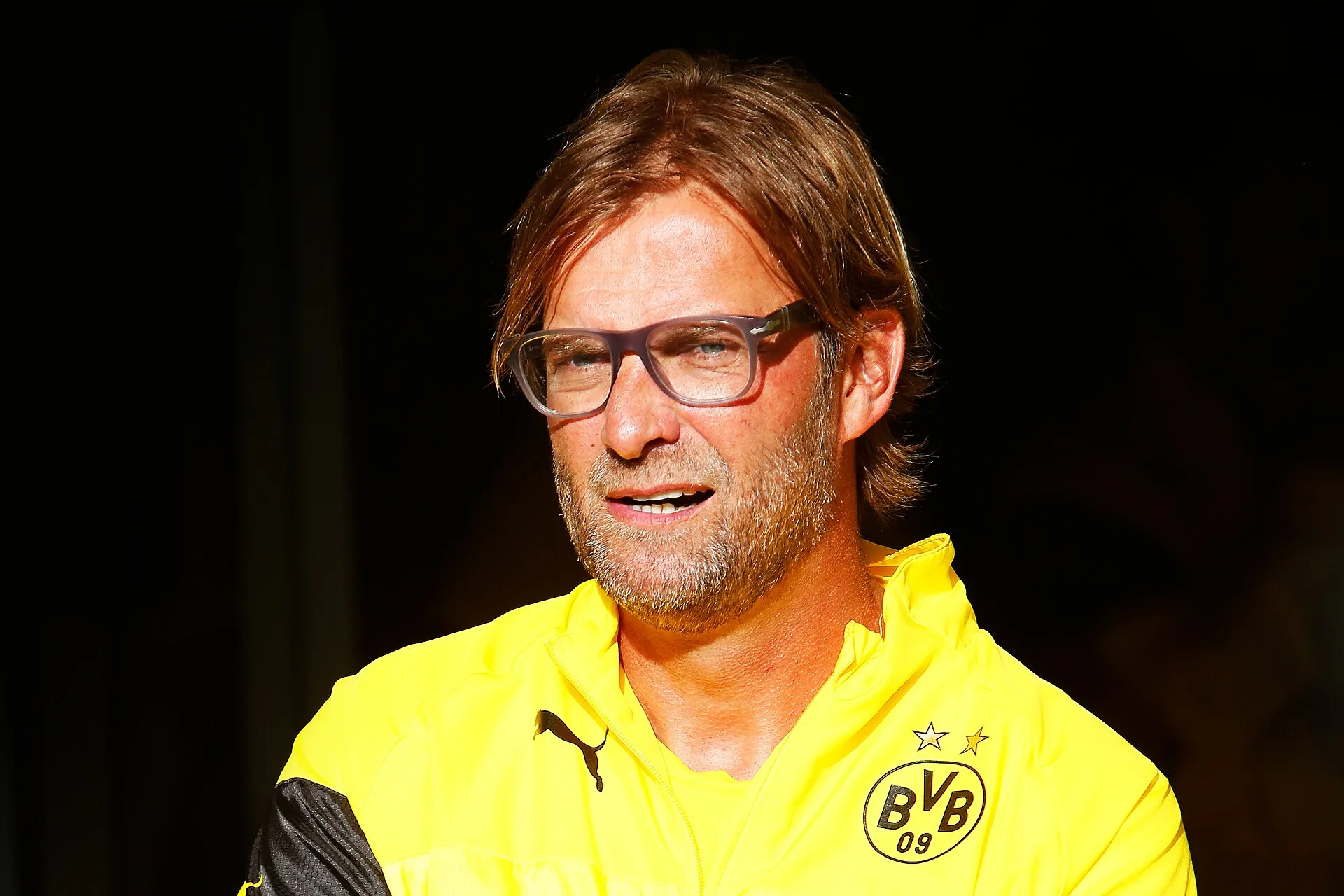
Jurgen Klopp has barely slipped on the Germany tracksuit and he’s already drawn a bold red line. The new Germany head coach says he is prepared to walk away from the job on the spot if he feels the media treat him or his family unfairly — and he used Thomas Tuchel and Julian Nagelsmann as cautionary tales.
For a coach who has built a career on emotion, connection and noise, Klopp’s message to the press around his Germany job could not be clearer: passion is fine, pressure is expected, but personal attacks are off-limits.
Jurgen Klopp’s Germany job starts with a warning
The focus keyword in this story is simple: Jurgen Klopp Germany. After a year out following his Liverpool exit in the summer of 2024, the 59-year-old is back in the dugout with the national team and tasked with lifting a football giant that’s lost its aura.
Germany’s recent record is stark. Since lifting the World Cup in 2014, they’ve only managed one semi-final across six major tournaments. The latest low came with a shock penalty-shootout loss to Paraguay in the last-32 at the most recent World Cup, a defeat that pushed Julian Nagelsmann to resign and opened the door for Klopp.
At his unveiling, though, the new Germany boss spent almost as much time talking about media scrutiny as tactics, drawing a straight line from what he’s seen happen to Nagelsmann and England manager Thomas Tuchel to what he is and isn’t willing to tolerate.
‘If you go after my family, I’m gone’
Klopp didn’t tiptoe round the point. In front of the cameras, he framed the Germany role as something he was taking on for the country and the supporters, not out of personal ego — and then made it crystal clear that there are boundaries.
He said he had seen how Nagelsmann and Tuchel were treated by sections of the media, and that he was stepping into the job with those experiences in mind. The line that will echo across every back page in Europe is his blunt ultimatum: if the coverage crosses into attacks on his family, he will leave immediately, and he won’t demand compensation to do it.
Criticism of his work? He’s fine with that, as long as it’s face to face. But once it turns personal or drifts into the private lives of those around him, Klopp says the Jurgen Klopp Germany era will be over before it begins.
For a national team coach in one of football’s most intense media markets, it’s a rare pre-emptive strike — almost a contract of conduct, delivered publicly.
Klopp, Tuchel, Nagelsmann and the pressure cooker
The subtext here is hard to miss. Nagelsmann’s time in charge was short and fractious, dogged by questions over Germany’s form and identity. Tuchel, meanwhile, has become a lightning rod in his own right as England manager, his every decision, substitution and press conference ripped apart in excruciating detail.
Klopp is effectively telling the German press: you can go after my tactics, you can rip apart my team selections, but the personal line stays drawn. It’s a pointed defense of the role of a national team coach in an era where scrutiny often follows from the training ground to social media feeds and into a manager’s home.
He even acknowledged that in some countries, national team bosses are treated worse than in Germany. That might sound like a nod toward perspective, but it also reinforces his central point — no job is worth sacrificing his or his family’s well-being, and he’s prepared to bounce if that balance tips the wrong way.
High expectations on the pitch
This wasn’t just a press conference about boundaries and media ethics, though. Klopp also laid out early hints of what a Jurgen Klopp Germany side might actually look like when it finally steps onto the pitch in September, when Germany face the Netherlands in the Nations League.
He said the last World Cup had reinforced his belief in playing with a back four and wide players, and confirmed that will be his blueprint with Germany. That will raise immediate interest given his club track record: aggressive pressing, speed out wide and a back line that sits high but is meticulously drilled.
More than tactics, Klopp focused on how the team should feel to watch. He wants fans leaving Germany games saying “Wow,” not just relieved by a result. He talked about making national team matches a shared event again, the kind of fixture people gather to watch together rather than something they check on their phone between other plans.
He also pushed back against the idea that Germany should be cowed by the FIFA world rankings. No, Germany are not currently the number one team on the planet. But in Klopp’s mind, that doesn’t stop them being capable of beating any of the 11 sides currently ranked ahead of them.
Can Klopp really change Germany’s mood?
The bigger question is whether a Jurgen Klopp Germany reset can actually shift the country’s football culture in the way he’s hinting at. He talked about successful football changing a country, and anyone who watched his Borussia Dortmund or Liverpool teams knows what he means. Under Klopp, the stadium isn’t just a venue; it’s a shared emotional state.
He clearly wants to replicate some of that with the national side. That means a few things:
- Making it feel special again to be selected for Germany.
- Building a group that plays with energy and conviction, especially in big moments.
- Creating performances that reconnect a sometimes-jaded fanbase with the team.
There’s talent to work with. Klopp pointed to Germany’s U17s winning both the World Cup and European Championship in 2023 as evidence that the pipeline is healthy. The issue, as he framed it, is not the absence of players but whether the wider system is truly geared toward winning the next major tournament rather than just getting by.
His ambition is explicit: imagine Germany becoming world champions again in four years, and then play in a way that makes that picture feel realistic. That’s a very Klopp way of putting it — visualise the outcome, then construct the football to match it.
A delicate truce with the media
All of this, though, is built on the fragile truce he’s just proposed with the German press. By saying publicly that he’ll walk if his family is dragged into coverage, Klopp has created a kind of accountability on both sides.
For the media, the temptation will be to test that line the first time results go south or a big call backfires. It’s easy to behave in good faith when Germany are winning; much harder when a tournament exit needs a scapegoat and the discourse turns toxic.
For Klopp, the challenge will be living with the noise he has invited for years. At Liverpool and Dortmund he embraced scrutiny, jousting with journalists and using the spotlight to protect his players. International football is a different beast: you’re not a club manager speaking largely to one fanbase, you’re the face of a country’s footballing identity.
That mix — intense expectations, a loud media and a coach who has put down clear emotional boundaries — will define the early phase of this appointment just as much as formations or lineups.
What This Means
Jurgen Klopp hasn’t coached a single game for Germany yet, but the tone is already set. On the pitch, he promises a proactive, high-energy team built on a back four, width and the belief that Germany can again stare down anyone in the world. Off it, he’s issued a warning shot: respect the line between professional critique and personal intrusion, or he’ll walk away without a second thought.
For Germany, that’s both a risk and an opportunity. If the media respect his stance and the team respond to his methods, the Jurgen Klopp Germany era could energise a national side that has felt stuck in a loop of disappointment since 2014. If the relationship sours, this could be one of the shortest — and most dramatic — chapters in the country’s coaching history.
Either way, Klopp has ensured one thing: this tenure will be lived entirely on his terms, or not at all.
Photo: Tim.Reckmann / CC BY-SA 3.0 via Wikimedia Commons | Photo: Pete / CC0 via Wikimedia Commons