Apple’s next-generation entry-level iPhones are getting a memory upgrade — just not enough of one to unlock the software experience Apple itself is building around them.
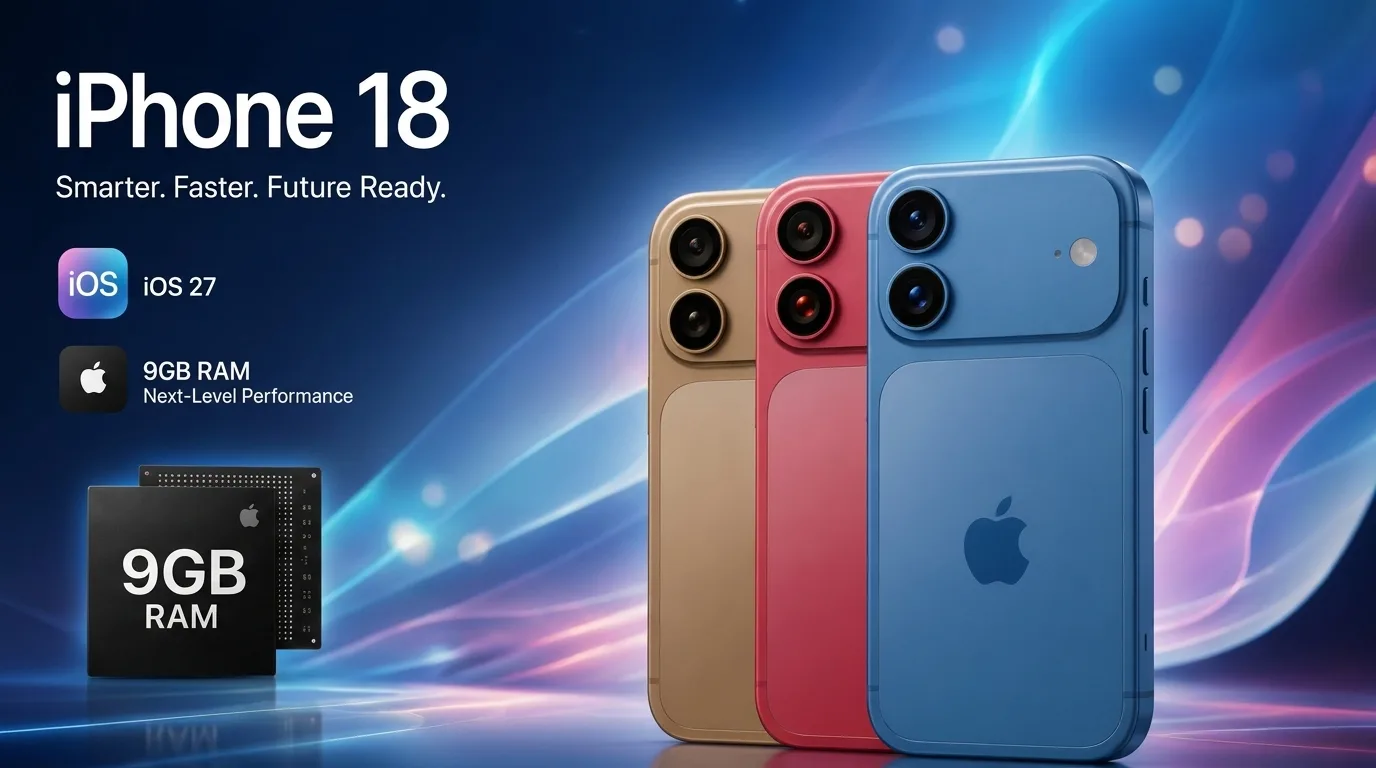
According to supply chain analyst Ming-Chi Kuo, the upcoming iPhone 18 and iPhone 18e will ship with 9GB of RAM, compared to 8GB in the iPhone 17 and iPhone 17e. On paper, that’s a welcome bump for devices that have historically lagged behind their Pro siblings in memory. But it still falls short of the threshold Apple has set for two of the most talked-about Apple Intelligence features debuting in iOS 27.
The Two Features Left Behind
Two new Apple Intelligence features coming with iOS 27 will not be available on the iPhone 18 and iPhone 18e, including the ability to customize the expressiveness and pace of Siri’s voice and a “major boost in accuracy” for speech-to-text dictation. Both were unveiled as centerpiece features of Apple’s revamped Siri experience, and both rely on a specific on-device model that Apple has decided runs reliably only above a certain memory ceiling.
The latest advanced on-device Apple Intelligence model powering those two features requires a minimum of 12GB of RAM — three gigabytes more than what the base iPhone 18 and 18e are expected to carry. That means Apple’s own newest phones, launching less than a year from now, will already be locked out of features Apple is positioning as flagship selling points of iOS 27.
Why 9GB and Not 12GB?

The shortfall traces back to a global memory shortage. Apple’s lower-end 1H27 iPhones, powered by the A20 chip, will move to 9GB DRAM (1.5GB × 6 dies), up from 8GB (2GB × 4 dies) in the current A19 models, to keep the system running smoothly, Kuo explained in a social media post. In other words, the RAM bump wasn’t designed to unlock new AI capabilities — it was meant to keep existing performance stable as software demands grow.
The base iPhone 18 was previously expected to get 12GB of RAM to match the Pro lineup, but that plan appears to have been scaled back. Meanwhile, Apple’s current minimum for those advanced features is 12GB, and nothing in recent reporting suggests that threshold is moving down.
The Pro side of the lineup won’t have this problem. The higher-end iPhone 18 Pro, iPhone 18 Pro Max, and foldable “iPhone Ultra” will each have the same 12GB of RAM as the iPhone 17 Pro models, meaning the full Siri experience — customizable voice expressiveness, faster pacing, and the accuracy-boosted dictation — will be a Pro-tier exclusive, at least for now.
Release Timing
The rollout itself will be staggered. Apple is expected to release the iPhone 18 Pro, iPhone 18 Pro Max, and iPhone Ultra in September this year, while the iPhone 18, iPhone 18e, and a second-generation iPhone Air are reportedly set for release around March 2027. The second-gen iPhone Air is expected to sidestep the issue entirely — it will presumably have 12GB of RAM, too.
The Memory Shortage Behind It All
The timing isn’t a coincidence. RAM and NAND storage chips are currently expensive due to a supply shortage, prompting Apple to raise prices on more than a dozen products in recent weeks. Apple has so far avoided passing those costs directly onto iPhone buyers, but industry watchers aren’t convinced that will last. Analysts have floated the idea that the iPhone 18 and 18e could ultimately cost more than their predecessors, even without an official price hike, simply because component shortages are squeezing margins elsewhere.
What This Means for Buyers
For anyone eyeing a base-model iPhone 18 next year, the takeaway is straightforward: the phone will run iOS 27 just fine, but two of its headline AI features will be functionally invisible. Whether that matters will come down to how much stock buyers put in Siri’s redesigned voice controls and dictation accuracy — features some early testers have already been mixed on during the iOS 27 beta period, with complaints that even the improved Siri still struggles with everyday requests.
It’s also a familiar pattern for Apple watchers. AI capability is increasingly following the same trajectory as camera hardware did years ago — a Pro-exclusive differentiator rather than something uniformly baked across the lineup. For now, anyone who wants the fullest Apple Intelligence experience on a 2027 iPhone will likely need to look at the Pro models or wait to see if Apple can bring those requirements down after iOS 27.
Apple has not publicly commented on RAM allocation plans for unreleased products, and all specifications remain based on supply chain reporting rather than official confirmation.
This is a sensitive topic because pricing and product decisions can affect real purchasing choices — readers should treat unreleased device specs as subject to change until Apple officially confirms them.