Cobalt miners came into July 2026 hoping for a break. Instead, they got stasis on pricing and fresh political and corporate headaches. The cobalt spot price refused to budge, but the risk profile around the metal absolutely did — and that matters for anyone betting on the next leg of the battery metals trade.
With cobalt spot prices flat for the month, the story for cobalt miners in July 2026 wasn’t about a sudden price spike or collapse. It was about what’s happening around the edges: tension in the Democratic Republic of Congo (DRC), tax disputes with giants like Glencore, and an eye-catching profit surge forecast from CMOC Group that hints at how powerful scale and diversification can be in a choppy market.
Cobalt miners news in July 2026: a flat price, noisy backdrop
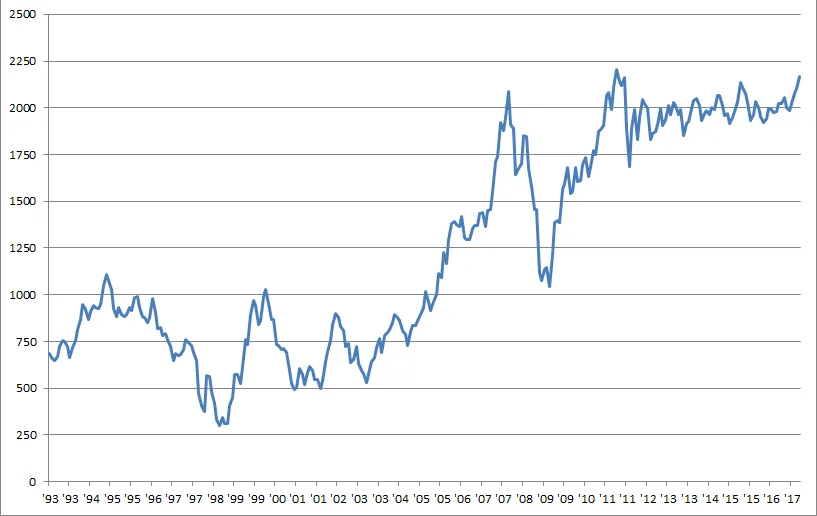
The headline number is simple: as of July 20, the cobalt spot price sat at US$25.53 per pound, exactly where it was a month earlier. For battery producers, that stability is welcome. For cobalt miners and investors trying to time entries, it’s a reminder that the story in 2026 is less about price whiplash and more about who can operate profitably at this plateau.
Flat pricing doesn’t mean quiet markets. In July, the cobalt sector saw:
- Regulatory friction in the DRC, the world’s dominant cobalt supplier.
- A tax-driven confrontation between Congo’s authorities and Glencore.
- CMOC Group flagging a sharp jump in first-half 2026 net profit.
- Warning signs from Sherritt International about its ability to continue as a going concern.
- Early technical progress at Alliance Nickel’s NiWest project that could reshape future capital costs.
Put together, July painted a picture of a cobalt industry where geopolitical leverage, balance sheet resilience, and process innovation matter more than short-term price ticks.
Flat cobalt prices put the focus on margins
At US$25.53/lb, the cobalt price is no longer in the euphoric territory seen when electric vehicle hype was peaking, but it’s also far from a crisis level. For low-cost, large-scale producers like CMOC Group and diversified players such as Vale and Glencore, the environment still supports healthy margins in their better assets. For smaller and higher-cost miners, this sort of rangebound price can be brutal.
When the cobalt spot price stalls, the market tends to separate companies into three buckets:
- Integrated and diversified majors that can ride out volatility thanks to exposure to copper, nickel, and other commodities.
- Focused developers where value is driven by de-risking projects, not current cash flow.
- Stretched producers whose balance sheets and cost bases can’t easily handle long stretches of mediocre pricing.
July’s news flow hit all three categories. CMOC Group is leaning into the first bucket, using scale and diversified operations to turn a flat cobalt market into a big earnings upgrade. Alliance Nickel’s NiWest project work fits into the second, where clever process tweaks can move the needle on future economics. Sherritt’s going concern warning lands squarely in the third — a stark reminder that in a mid-cycle pricing band, financial structure can matter as much as geology.
DRC mining law reform and Congo tensions move back into focus
The DRC’s grip on global cobalt supply is both its superpower and the sector’s central risk. July brought that risk back into sharp relief as the country’s mining law reform raised fresh tensions with foreign investors.
While the details and timing of potential changes remain contested, the direction of travel is clear: the Congolese state wants a bigger slice of the mining pie. That can mean higher taxes, tougher local participation rules, tighter export controls, or all of the above. For cobalt miners, any of those levers can erode returns quickly.
Investors should care less about the specific draft language and more about what this kind of regulatory noise does to the risk-adjusted valuation of DRC-heavy portfolios. If capital starts demanding a higher risk premium on new projects or expansion phases in the country, the knock-on effect is higher required returns — and potentially a slower supply response if demand spikes again later this decade.
In a cobalt market that already depends on a handful of jurisdictions, July’s reform tussle is a reminder that political risk isn’t a footnote. It’s core to the investment thesis.
Glencore’s tax dispute shows how fast country risk can crystallize
Nothing captured the friction between miners and the Congolese state more clearly than the move by Congo’s tax agency to seal the offices of a Glencore mine in a payment dispute. It’s the kind of headline that instantly concentrates the minds of risk managers and portfolio committees.
This isn’t the first time a global commodity major has clashed with local authorities, and it won’t be the last. But seeing tax disagreements escalate into physical actions — like sealing offices — underscores how suddenly operational risk can surface even for blue-chip players.
For shareholders, the key questions are straightforward: Does the dispute threaten production volumes? Could it spill into license or export issues? And does it point to a broader shift in how the DRC intends to enforce fiscal rules on large mining groups?
Right now, there’s more smoke than fire. But July’s events around Glencore serve as a case study in why cobalt miners with heavy single-country exposure can trade at a discount, even when spot prices behave.
CMOC Group’s profit surge is the standout bright spot
Against this backdrop, CMOC Group delivered the most optimistic cobalt miners news for July 2026. The company expects its first-half 2026 net profit to jump between 78.76% and 90.29% year over year — a huge move in any sector, and especially impressive with the cobalt spot price stuck in place.
That kind of earnings growth doesn’t come from price alone; it comes from volume, cost discipline, and portfolio mix. CMOC’s guidance suggests it is unlocking significant operational leverage, likely through ramp-ups and efficiencies across its mining and processing footprint.
For investors, the message is that even in a sideways cobalt market, winners can still sharply outgrow the pack. Companies that can expand production, squeeze costs, or benefit from co-products like copper and nickel can post outsized earnings gains without needing a commodities bull run every quarter.
It also raises the bar for peers. If one major producer can guide to near-doubling profits at current prices, others with similar assets and scale will face questions about why they can’t keep up.
Sherritt’s going concern warning flags the other end of the spectrum
On the opposite side of the ledger, Sherritt International used July to warn investors about its status as a going concern. That language is never comforting. It signals that management and auditors see real doubt about the company’s ability to continue operating without restructuring, fresh capital, asset sales, or some combination of all three.
In a tougher financing environment, a going concern warning can become self-reinforcing: lenders and partners grow more cautious, equity investors demand steep discounts, and strategic options narrow. For the cobalt sector, Sherritt’s warning is another reminder that mid-tier and smaller operators don’t have the same flexibility as the CMOCs and Glencores of the world.
For anyone building exposure to cobalt miners, July’s contrast between CMOC and Sherritt is instructive. Balance sheet strength, debt maturity profiles, and liquidity lines are not just footnotes in mining; they’re often the difference between riding out a flat-price stretch and being forced into distressed moves at the worst possible moment.
Alliance Nickel’s NiWest testwork hints at future capex savings
Not all of July’s cobalt miners news was about current earnings or immediate financial stress. Alliance Nickel reported that vat leach testwork at its NiWest project has commenced, with the potential for a material reduction in capital expenditure if the results hold up.
In a sector where large-scale battery metals projects routinely face multi-billion-dollar price tags, even modest percentage reductions in capex can transform project economics. Process routes that are simpler, cheaper, or less energy-intensive can move a marginal project into investable territory — especially at a cobalt spot price that refuses to bail out high-cost plans.
Investors following early-stage cobalt and nickel developers should pay close attention to this kind of technical progress. While NiWest is still at the testwork stage, July’s update shows that innovation in metallurgy and processing is one of the most underappreciated levers for value creation in the next wave of supply.
How investors should read July’s cobalt miners news
Step back from the individual headlines and a few themes stand out from July 2026:
- Price stability hides real dispersion in company outcomes. The cobalt spot price may be flat, but producer earnings and balance sheets are moving very differently.
- Country risk is front and center again. Congo’s mining law reform and tax disputes are not abstract; they are shaping how global capital views cobalt-heavy portfolios.
- Operational excellence pays, even in a mid-cycle price band. CMOC’s anticipated profit surge shows that scale and efficiency can trump commodity inertia.
- Financial resilience is non-negotiable for smaller players. Sherritt’s going concern warning is a cautionary tale for investors chasing leverage to cobalt without a margin of safety.
- Process innovation can reset project economics. Early signs from NiWest’s vat leach testwork underline how technology and engineering can rival price as a value driver.
For portfolio builders, that means cobalt exposure in 2026 should be less about a blanket bet on higher prices and more about stock picking across the cobalt mining space. The best opportunities are likely to sit with operators that combine robust balance sheets, diversified assets, and credible growth or cost-reduction plans.
What This Means
July 2026 won’t go down as a month of dramatic cobalt price action, but it may prove important in setting the tone for the next phase of the cobalt miners trade. A flat cobalt spot price at US$25.53/lb forces the market to focus on fundamentals that often get drowned out in boom years: political risk management, tax and regulatory friction, funding access, and quiet but powerful process improvements.
For long-term investors, the takeaway is straightforward. If you believe in sustained demand for cobalt in batteries and industrial applications, July’s cobalt miners news argues for a discriminating approach. Favor miners that can thrive at today’s prices, survive tougher regulatory scrutiny, and still invest in the next generation of assets. In a sector where the headline price didn’t move an inch all month, the underlying stories couldn’t be more different — and that’s where the real opportunity lies.