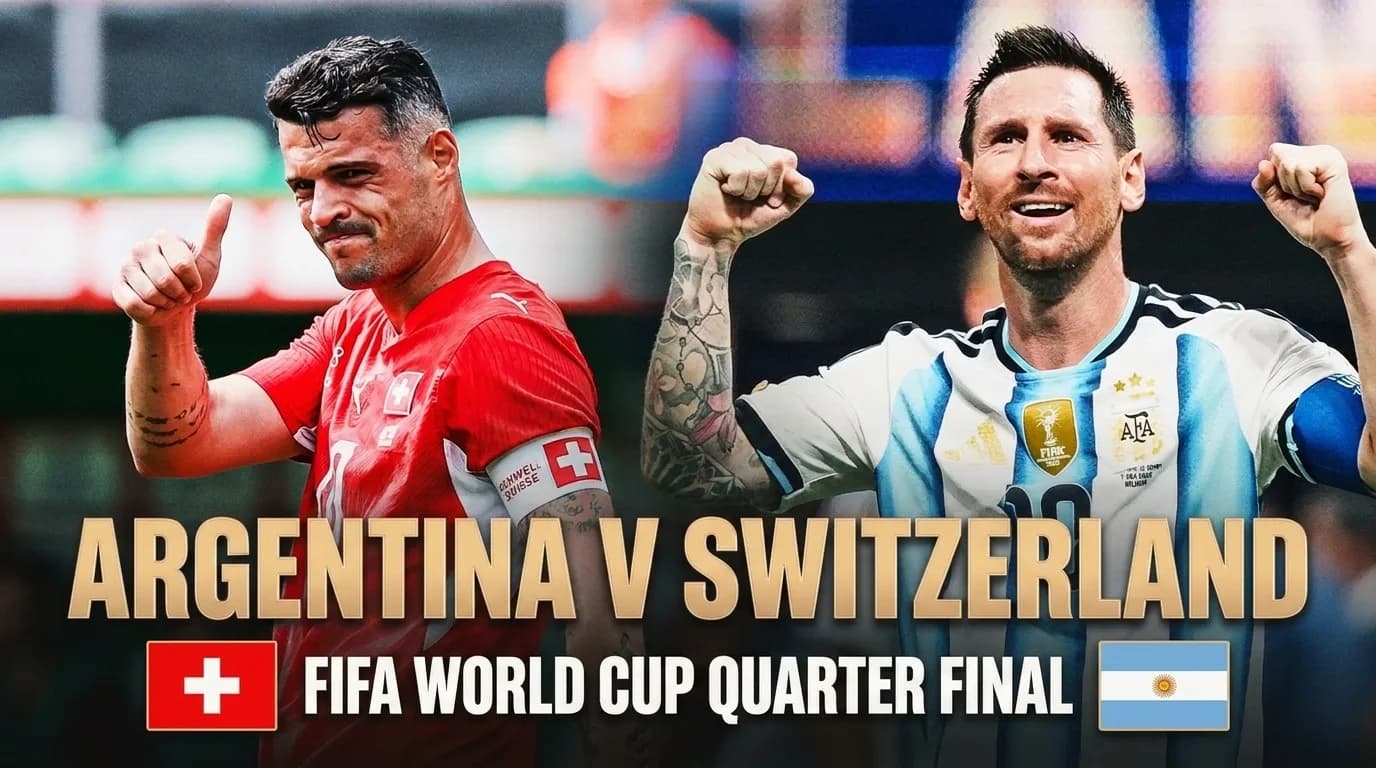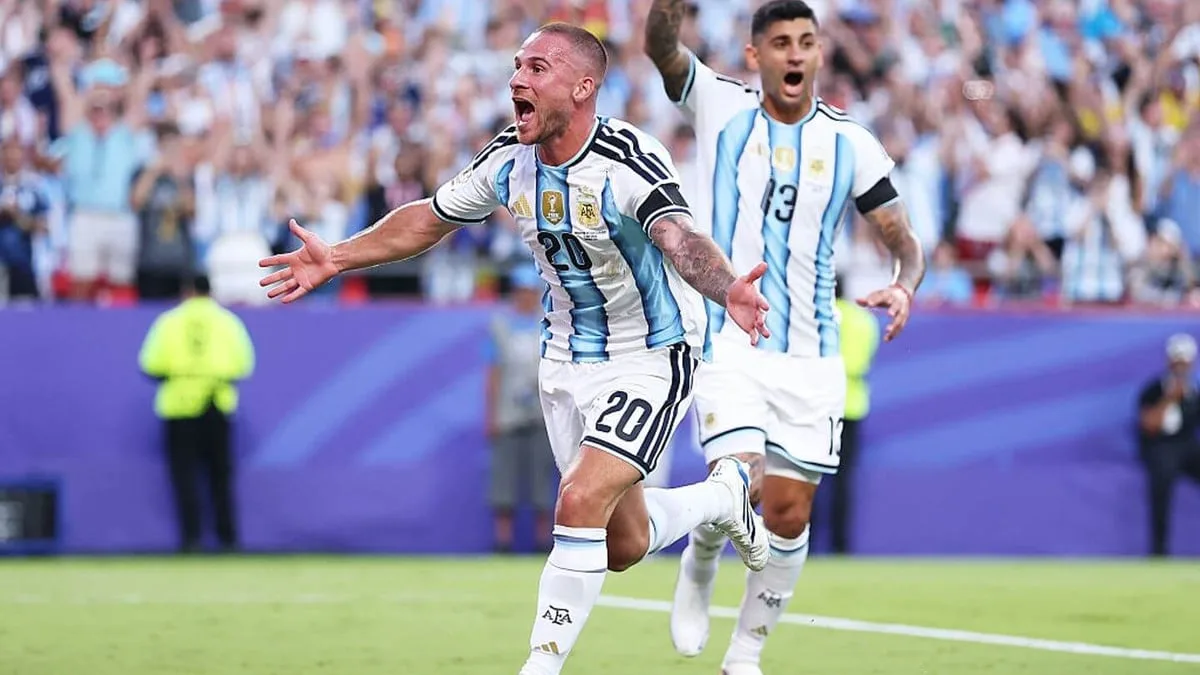
Kansas City got the quarterfinal it deserved, and then it got 20 more minutes. Argentina beat Switzerland 3-1 after extra time on Saturday night to reach the FIFA World Cup 2026 semifinals, but the scoreline is a liar. For 112 minutes the reigning champions were held, harried and very nearly humiliated by a Swiss side that had already outlived its expected shelf life. Then Julián Álvarez picked the ball up on the edge of the box and bent the tournament back into shape.
It is the third straight knockout match in which Argentina have looked mortal and survived anyway. It is also now the third straight knockout match to end with someone in an Albiceleste shirt producing something no other team in this tournament can. Next stop: Atlanta, Wednesday, England.
Mac Allister Strikes Early, and Argentina Think It’s Easy
Argentina got exactly the start they wanted. In the 10th minute, Lionel Messi swung in a corner from the right, and Alexis Mac Allister climbed above the Swiss back line to glance a header into the far corner. Messi had earned the set piece himself moments earlier with a shimmy in a phone booth of space. It was 1-0 before Switzerland had touched the ball with any conviction.
For the next fifty minutes, that felt like enough. Lionel Scaloni’s side controlled the tempo without ever quite putting the game beyond reach. Switzerland circulated possession patiently, but Granit Xhaka’s passing rarely found a runner in behind — and the reason was obvious from the team sheet. Johan Manzambi, the 20-year-old who had become the breakout story of Switzerland’s campaign, was still sidelined with the knee injury that kept him out of the round-of-16 shootout win over Colombia. Murat Yakin’s plan to attack Argentina’s chronically exposed flanks lost its sharpest instrument before kickoff.
Ndoye Levels It, and the Swiss Smell Blood
Then, just past the hour, the game turned. Emiliano Martínez had already been forced into two smart saves when Ricardo Rodríguez slid a pass through the Argentine back line for Dan Ndoye in the 67th minute. From an unforgiving angle, Ndoye rolled the ball under Martínez’s outstretched leg and into the net. Arrowhead — a stadium that had been a wall of blue and white — went briefly, deliciously quiet.
Switzerland had never trailed at any point in this World Cup before Mac Allister’s header. Now they were level, in a quarterfinal, against the champions. For roughly five minutes, the biggest result in Swiss football history was genuinely on.
The Embolo Red Card That Changed Everything
It lasted five minutes. In the 72nd, Breel Embolo — who had spent the entire evening in a running physical argument with Cristian Romero and Lisandro Martínez — went down under minimal contact. VAR reviewed it. The referee booked him for simulation. It was his second yellow. Switzerland were down to ten.
The decision will be litigated for weeks, and not in a vacuum. This is now the second consecutive Argentina knockout match to hinge on an officiating call, after Egypt’s staff openly questioned the refereeing in a last-16 tie that Argentina rescued from 2-0 down inside the final eleven minutes. Fair or not, a narrative is calcifying around this title defence.
What is not debatable is the football consequence. Switzerland lost their only outlet, retreated into a low block, and dared Argentina to break them down. For nearly 40 minutes, including the entire first half of extra time, it worked. Mac Allister headed wide in the 89th. Messi curled one just past the post in stoppage time. Gregor Kobel and the Swiss rearguard swallowed everything.
Álvarez Ends It From 25 Yards
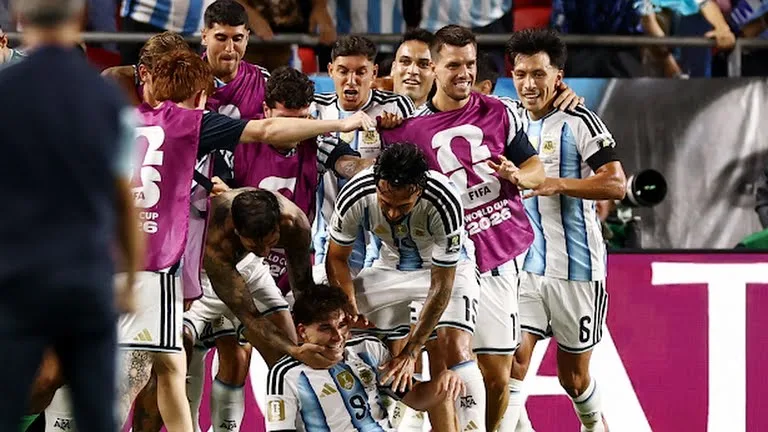
Julián Álvarez had been quietly poor all tournament — one of the great subplots of Argentina’s campaign was how little the Manchester City forward had contributed while Messi carried the load. In the 112th minute, he settled it in one motion.
Drifting in from the left, Álvarez took a touch outside the box and whipped a shot toward the far post with the outside of his boot. Kobel — one of the tournament’s goalkeepers — didn’t move. It landed in the top corner. It is, right now, the frontrunner for goal of the World Cup.
Switzerland threw everything forward. That left space, and in the first minute of stoppage time at the end of extra time, Argentina punished it. Álvarez robbed Xhaka in his own half, Thiago Almada drove into the box and had his shot blocked by the onrushing Kobel, and the rebound dropped kindly for Lautaro Martínez — on since the 85th minute — to finish into an empty net. 3-1. Game over.
The Numbers Behind the Grind
| Metric | Argentina | Switzerland |
|---|---|---|
| Final score | 3 | 1 |
| Expected goals (xG) | 2.00 | 0.53 |
| xG in extra time | — | 0.03 |
| Goalscorers | Mac Allister 10′, Álvarez 112′, L. Martínez 120’+1 | Ndoye 67′ |
| Red cards | 0 | 1 (Embolo, 72′) |
| Minutes played a man up | 48+ | — |
A few contextual markers worth holding onto:
- Messi’s nine-match World Cup scoring streak ended here. He still leads the Golden Boot race with eight goals, and his career total of 21 World Cup goals remains the all-time record.
- Argentina are now on a 12-match World Cup unbeaten run, and have reached the semifinals for the third time in four tournaments.
- Switzerland’s campaign — their first quarterfinal since 1954 — ends without a semifinal, a stage they have still never reached. They have now failed to beat Argentina in eight meetings, three of them at World Cups.
- For the first time since FIFA’s rankings were introduced in 1992, the top four ranked nations have all reached the semifinals.
Part Two: Argentina vs England, Atlanta, Wednesday
And so we get the fixture the tournament has been quietly building toward since the bracket was drawn.
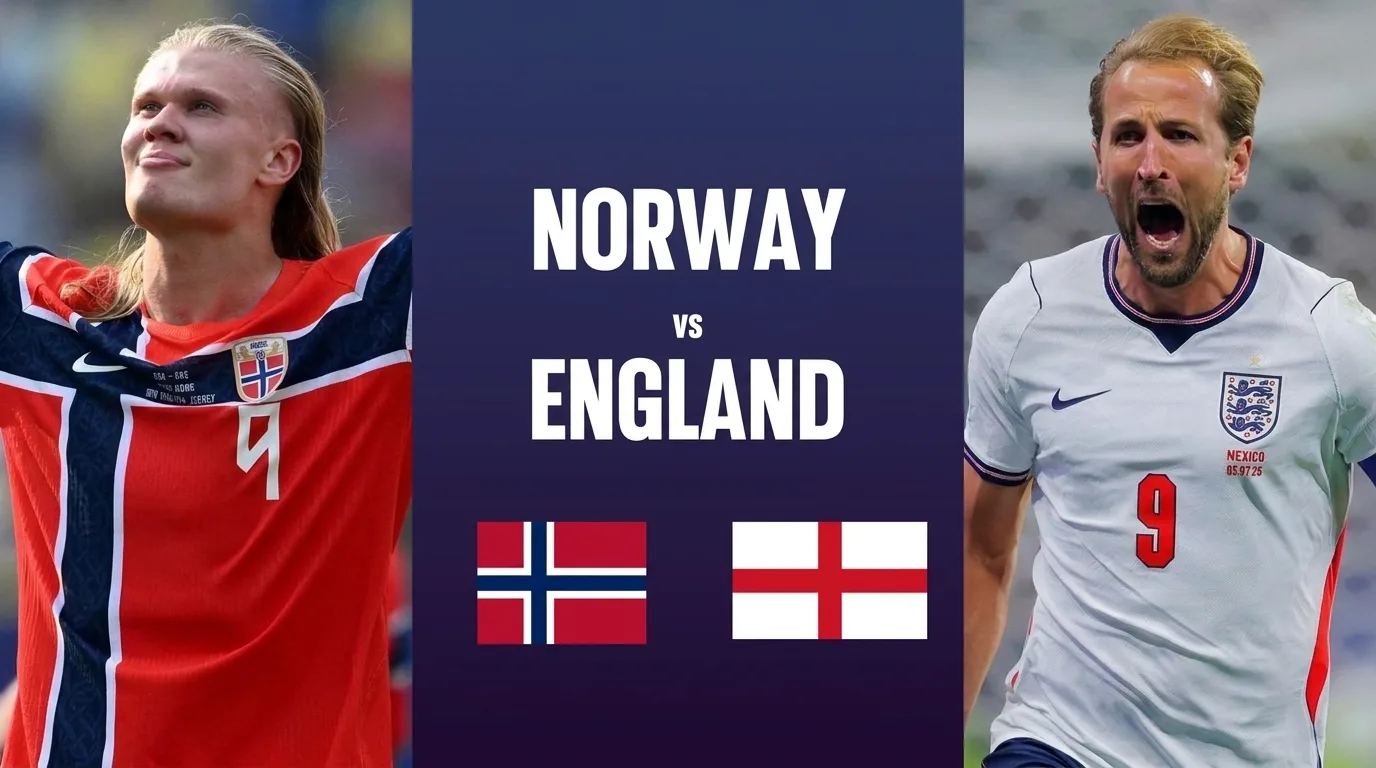
England reached the semifinals earlier that day, beating Norway 2-1 in extra time in Miami. Andreas Schjelderup put Norway ahead in the 36th; Jude Bellingham equalised in first-half stoppage time and then won it three minutes into extra time, pouncing on a rebound after Ørjan Nyland spilled a long-range effort. Bellingham is now the first player to score twice in consecutive World Cup knockout matches at the same tournament since Diego Maradona in 1986 — a comparison that lands with a particular thud given who England are about to face.
Argentina vs England — 2026 World Cup Semifinal
- Date: Wednesday, July 15, 2026
- Kickoff: 3:00 p.m. ET (8:00 p.m. BST)
- Venue: Atlanta Stadium (Mercedes-Benz Stadium), Atlanta
- Prize: A place in the July 19 final at MetLife Stadium, New Jersey
- Other semifinal: France vs Spain, Tuesday, July 14, Arlington, Texas
- Opening odds: Argentina +175 in 90 minutes, England +180, level after 90 at +205
The History Is Almost Too Much
These two have met five times at World Cups, with England holding the edge, and they haven’t met at the tournament since 2002. In between sit 1986 and the Hand of God, and 1998 and David Beckham’s red card in Saint-Étienne. There is no such thing as a low-stakes Argentina–England knockout tie. This one comes with Messi’s final World Cup match — semifinal or final, he will not play another after next week — layered on top.
How the Tactical Fight Shapes Up
Argentina’s flaw is unchanged and unhidden: a flat midfield that compresses the centre and leaves acres out wide, with fullbacks pushing high. Cape Verde exploited it. Egypt exploited it. Switzerland would have exploited it with Manzambi fit. England, with Anthony Gordon, Noni Madueke and Bukayo Saka available, have exactly the personnel to attack that seam — and in Bellingham they have a midfielder arriving in the box with lethal timing, plus Harry Kane on six goals.
Argentina’s counter-argument is simpler and harder to refute: Messi at 39, plus a bench deep enough that Lautaro Martínez and Almada combined to seal a quarterfinal in the 121st minute. Thomas Tuchel’s back line, meanwhile, has started a different four in six consecutive matches. Against Messi, that is not a comfortable place to be.
Final Verdict
Argentina are two wins from becoming the first team since Brazil in 1962 to retain the World Cup, and they have earned exactly none of those wins comfortably. The 3-1 flatters them. The xG gap — 2.00 to 0.53 — flatters them further. What they actually have is a team that is winning ugly, riding decisions that keep breaking their way, and being repeatedly rescued by individual genius: Romero against Cape Verde, Messi against Egypt, Álvarez against Switzerland.
That is not a criticism so much as a description of what champions look like when the margins tighten. But it is a warning. England are not Cape Verde or Egypt. They are battle-hardened, mentally rebuilt under Tuchel, and they have a Bellingham who is currently doing a passable impression of the man Argentina still name their myths after. Wednesday in Atlanta will not be decided by xG or by rankings. It will be decided by whoever produces the next 112th-minute moment.
Switzerland go home having authored the best World Cup campaign in seven decades and having come genuinely, agonisingly close to authoring the greatest upset of this tournament. They deserved better than a simulation call. They will not, however, get a second chance — and neither, in all likelihood, will Lionel Messi.