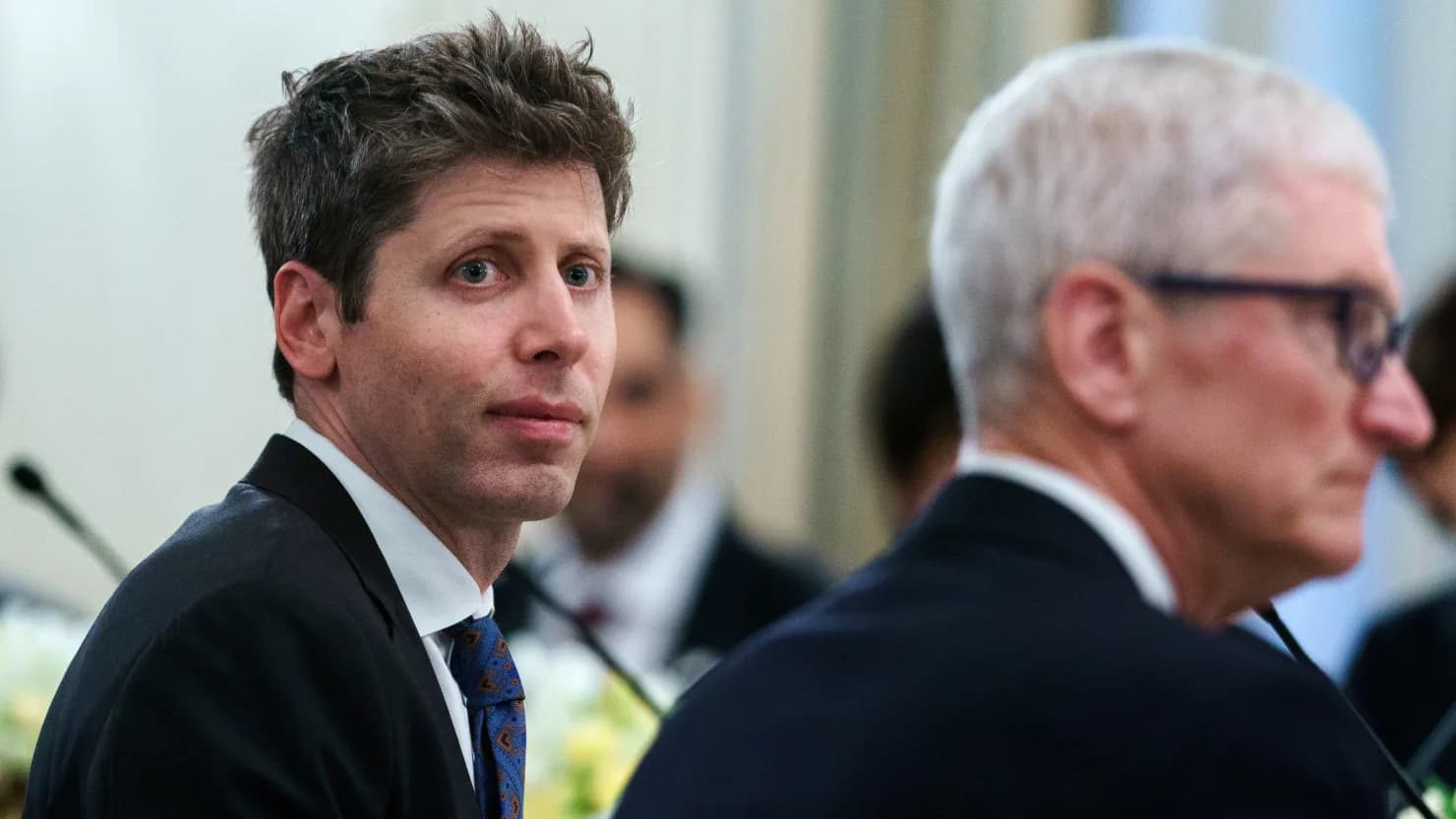
The most consequential partnership in consumer AI just turned into a courtroom brawl. On Friday, Apple filed a lawsuit against OpenAI in the U.S. District Court for the Northern District of California, accusing the ChatGPT maker of running a coordinated campaign to steal its most closely guarded hardware secrets. The 41-page complaint reads less like a routine intellectual-property dispute and more like a public indictment, with Apple claiming the alleged theft ran through OpenAI “at every level, from members of its Technical Staff to its Chief Hardware Officer.”
It’s a stunning reversal for two companies that stood on stage together in 2024 to announce that ChatGPT would live inside Siri and Apple Intelligence. Two years later, Apple is describing OpenAI’s fledgling hardware ambitions as “rotten to its core.”
What Apple Is Actually Claiming
At the heart of the complaint are allegations that OpenAI didn’t just poach Apple talent — it allegedly weaponized the hiring process to extract Apple’s crown jewels. Apple says more than 400 of its former employees now work at OpenAI, and it argues that the AI lab structured interviews specifically to extract confidential information from candidates who were still on Apple’s payroll.
The suit names four defendants: OpenAI, its hardware subsidiary io Products, and two former Apple employees — Tang Tan and Chang Liu.
The Case Against Tang Tan
Tan is the highest-profile name in the filing. He spent roughly 24 years at Apple, rising to Vice President of Product Design for the iPhone and Apple Watch before leaving in 2024 to co-found io, the hardware startup OpenAI later absorbed. He now serves as OpenAI’s Chief Hardware Officer.
Apple alleges that Tan used his insider knowledge to systematically extract information from Apple candidates during the recruiting process. The specific accusations include:
- Using Apple’s confidential internal project codenames during interviews to elicit more detail from candidates.
- Directing candidates to physically bring “actual parts” — batteries, logic boards, and system-in-package chips — into interviews for “show and tell” sessions.
- Requesting CAD files, design artifacts, and prototypes, as well as details on subsystem selection, simulation tools, and vendor relationships.
- Circulating an Apple offboarding document to coach new hires on how to slip past Apple’s exit-security checks.
- Emailing himself information about key Apple suppliers before departing, and briefing OpenAI on sensitive supplier meetings.
According to the filing, at least one candidate was so surprised by the request to bring in Apple hardware that he remarked he hadn’t realized those parts could even leave the office.
The Case Against Chang Liu
Liu, a senior systems electrical engineer who spent eight years at Apple, left for OpenAI in January 2026. Apple claims he never returned a work-issued laptop and later exploited a bug that allowed him to access Apple’s cloud file storage after he’d already left.
From there, Apple alleges, Liu downloaded dozens of confidential hardware files — technical specifications, engineering presentations, and proprietary data on unreleased products. He’s also accused of accessing a former colleague’s work computer and advising other Apple employees on exactly what to study before their own OpenAI interviews.
The Partner Angle and a Metal-Finishing Secret
Beyond the two named individuals, Apple’s complaint reaches into the AI company’s supply chain. The filing claims OpenAI approached one of Apple’s trusted manufacturing partners and had it demonstrate a proprietary metal-finishing technique — allegedly by misleading the partner into believing OpenAI had Apple’s blessing to use it.
Apple frames all of this as merely what it can see from the outside. It repeatedly calls the described conduct “the tip of the iceberg,” arguing it lacks visibility into what’s happening behind closed doors at OpenAI. The company says it first raised concerns privately in February and asked OpenAI to investigate, but never received a response.
Who Is — and Isn’t — Named
One name conspicuously missing from the complaint is Jony Ive. Apple’s legendary former design chief leads OpenAI’s device efforts and co-founded io alongside Tan, Evans Hankey, and Scott Cannon. Yet none of the three are personally named as defendants, and the filing does not accuse Ive of any wrongdoing. Instead, io Products is named as an entity, described as part of a coordinated pattern of institutional misconduct.
Here’s a quick breakdown of the key parties:
| Party | Role | Status in Lawsuit |
|---|---|---|
| OpenAI | AI company, former Apple partner | Defendant |
| io Products | Hardware unit acquired by OpenAI (~$6.5B) | Defendant |
| Tang Tan | OpenAI Chief Hardware Officer, ex-Apple VP | Named defendant |
| Chang Liu | OpenAI technical staff, ex-Apple engineer | Named defendant |
| Jony Ive | Leads OpenAI device design, io co-founder | Named entity only, not accused |
OpenAI Fires Back
OpenAI’s response has been brief and defiant. Director of strategic communications Drew Pusateri posted a short public statement, echoed to multiple outlets, saying the company has “no interest in other companies’ trade secrets” and remains focused on building technology that empowers people. As of the filing, OpenAI had not addressed the specific allegations in detail.
Why This Fight Is Bigger Than a Laptop
The lawsuit lands at an extraordinarily sensitive moment. OpenAI is widely reported to be preparing for a historic IPO, and a sweeping trade-secret case could complicate that process. It also arrives just months after OpenAI won a high-profile trial against Elon Musk, when a California jury ruled he had waited too long to sue.
There’s real strategic tension underneath the legal language. OpenAI is racing to launch its first consumer hardware — variously rumored to be a screenless, surroundings-aware companion device, a HomePod-style smart speaker, or eventually an AI-first smartphone. Any such product would put OpenAI in direct competition with the iPhone, Apple’s core business.
The relationship had already been fraying. Earlier this year, reports surfaced that OpenAI was itself weighing legal action against Apple, alleging the iPhone maker hadn’t sufficiently integrated or promoted ChatGPT under their partnership. Notably, Apple’s revamped Siri, due this fall, is reportedly built on Google’s Gemini models rather than OpenAI’s technology.
Apple was careful on one point: in a footnote, it clarified that its existing ChatGPT-integration agreement “is not at issue” in this suit and has no connection to the theft allegations. In other words, ChatGPT isn’t being ripped out of your iPhone tomorrow.
What Apple Wants
Apple isn’t just seeking a payout. The company is asking the court to:
- Bar OpenAI from using or disclosing its trade secrets.
- Order the return of any confidential Apple materials.
- Require OpenAI to preserve all evidence related to the case.
- Award damages and injunctive relief.
The discovery process alone could prove valuable to Apple, giving it a rare window into OpenAI’s secretive hardware operation.
Final Verdict
This is one of the most explosive corporate feuds the AI era has produced so far, and it’s important to read it as the opening move rather than the final word. Apple has come out swinging with vivid, quotable language and detailed allegations, but these are claims that still have to survive the legal process. OpenAI’s denial is firm, and cases of this scale typically drag on for years or quietly settle.
What makes it fascinating is the sheer scale of the stakes: a $4.6 trillion incumbent defending the iPhone’s design DNA against the most talked-about startup on earth, one that has hired away hundreds of Apple veterans and is now building a device meant to challenge Apple on its home turf. For readers, nothing changes today — ChatGPT still works on your iPhone, and OpenAI’s device hasn’t launched. But the outcome could shape who controls the next great consumer hardware platform. Keep an eye on three things: whether a court restricts anything inside OpenAI’s device before launch, whether Apple quietly distances Siri from ChatGPT, and what OpenAI’s formal legal response actually argues once it moves past a one-line denial.