Artificial intelligence in food and nutrition is moving fast enough that it’s no longer just about counting calories on your phone. The new ambition is much bigger: AI-driven food and nutrition systems that connect what happens in the field, in the factory, in the supermarket, and inside your body into one continuous feedback loop of data. From smart food production to personalized nutrition, the food system itself is starting to look algorithmic.
From Precision Farming to Algorithmic Agriculture
The push toward AI-driven food and nutrition systems starts long before food hits a plate. In primary production, AI is already being used to sharpen precision agriculture and squeeze more value out of limited land, water, and fertilizer.
Machine learning models can predict crop yields, helping farmers decide what to plant and when. Computer vision systems mounted on drones or tractors scan fields for early signs of plant disease or water stress. Predictive analytics then recommend targeted irrigation or fertilizer use instead of blanket treatments, cutting waste and reducing environmental impact.
This isn’t just about efficiency; it’s about scale. With the global population expected to approach 10 billion by 2050, demand for cereals is projected to reach around 3 billion tons, requiring roughly an extra billion tons of annual production compared with today. Meat production is forecast to climb toward 470 million tons, with the biggest increases in developing countries. Without much smarter resource allocation, that math simply does not work.
AI gives producers a way to respond with more granular control: optimizing inputs, flagging threats earlier, and tying decisions to real-time environmental and market data instead of gut instinct and historical averages.
AI in the Food Chain: Factories, Fleets, and Freshness
Once crops leave the field, AI follows them. Food processing and distribution are becoming rich targets for automation, predictive modeling, and robotics.
In factories, AI systems classify raw materials, monitor quality in real time, and automate sorting and processing. Computer vision cameras can spot defects, contaminants, or mislabeling faster and more consistently than human inspectors. Predictive models estimate shelf life based on storage conditions and product characteristics, improving how inventory is rotated and where it’s shipped.
On the logistics side, AI helps forecast demand, optimize routing, and reduce energy consumption in refrigerated storage and transport. By predicting when and where certain products will be needed, companies can adjust production and distribution to cut food waste while keeping shelves stocked.
Traceability is another quiet but crucial shift. End-to-end AI systems can track food from farm to consumer, stitching together data from sensors, barcodes, and logistics platforms. That data can then surface in consumer-facing apps or retailer dashboards, allowing faster recalls, better transparency, and more robust food safety monitoring.
Computational Nutrition: When Diet Advice Starts Acting Like a Model
At the consumer interface, food gets personal. The same AI techniques transforming farms and factories are now being applied to what and how people eat, giving rise to what researchers are calling computational nutrition.
Instead of relying on broad dietary guidelines and generic health tips, computational nutrition uses statistical modeling, systems simulation, machine learning, and deep learning to understand how specific foods interact with individual bodies. The aim is to predict diet–health interactions, not just describe them.
That means incorporating data far beyond a food label. Modern AI-driven nutrition systems pull from:
- Body composition and anthropometric data, such as BMI and body fat percentage
- Clinical biomarkers and metabolic measures
- Omics profiles, including genetics and other biological markers
- Diet histories and cultural eating patterns
- Behavioral feedback, like adherence, cravings, and meal timing
One intelligent diet platform cited in current research used factors such as BMI, body fat percentage, and even 3D body modeling to generate individualized meal plans, achieving a recommendation error rate under 3%. That kind of precision is far beyond traditional calorie calculators or generic lifestyle apps.
Personalized nutrition interventions are already showing measurable impact. Studies tracking thousands of adults over several months have found that people receiving tailored dietary advice — especially when it reflects their own data and motivations — tend to improve diet quality more than those given standard guidance. Older adults, women, people starting from poorer baseline diets, and those more confident about changing their habits all saw particularly strong gains.
How AI Turns Food Photos Into Nutrition Data
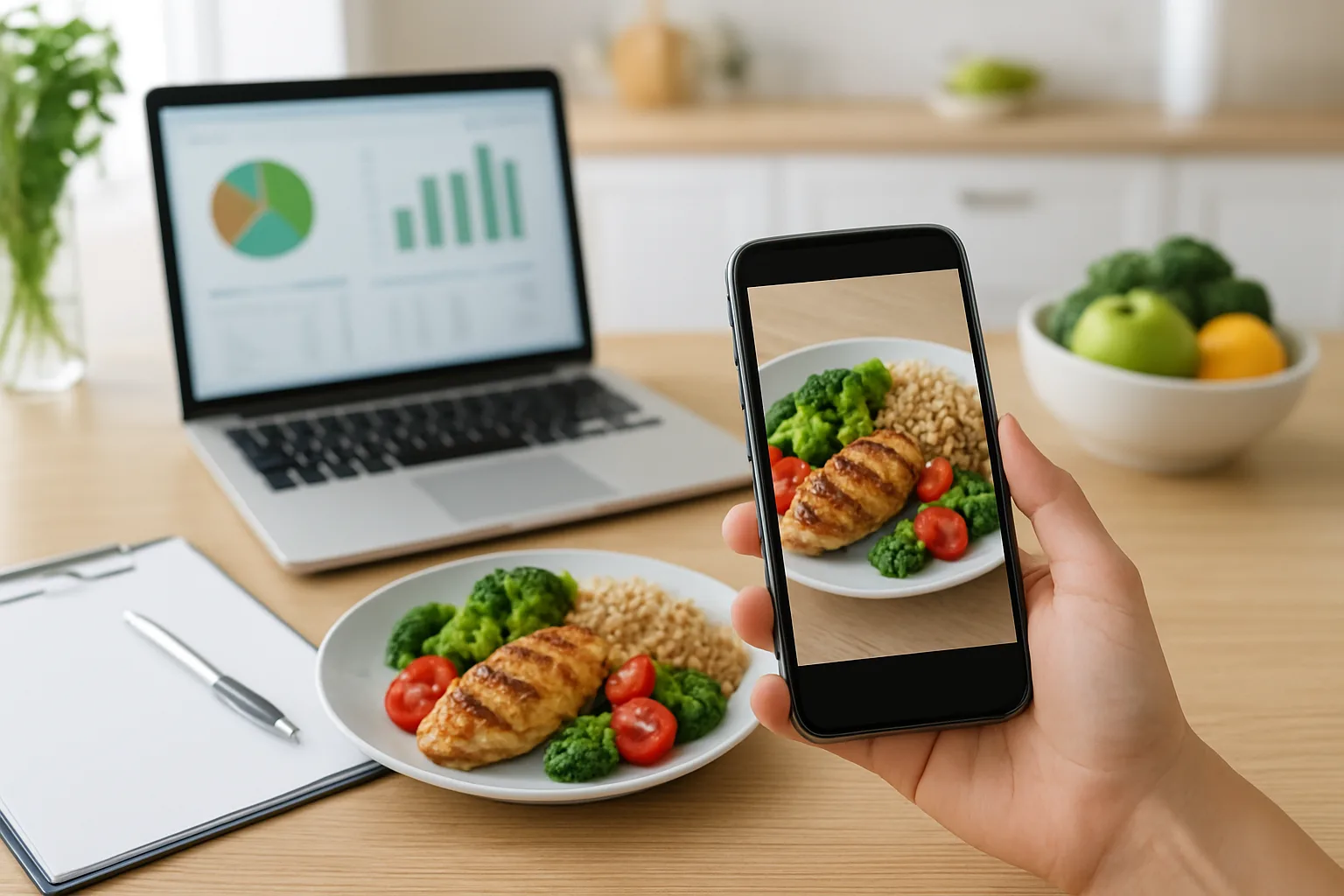
One of the most visible frontiers for AI-driven food and nutrition systems is hiding in plain sight: the camera. Emerging hybrid AI approaches are using computer vision and advanced architectures like convolutional neural networks and transformers to recognize foods and estimate intake from images.
Instead of manually logging every ingredient and portion size, a user can snap a picture of a meal. The AI model identifies the foods on the plate, estimates quantities, and pulls nutritional information from integrated food composition databases. Some systems then combine this with biomarker or behavioral data to refine ongoing recommendations.
These image-based systems are still early, but they show real promise in reducing one of the biggest obstacles to accurate nutrition research and diet tracking: people’s poor recall and low tolerance for tedious logging. By turning an image into structured data, AI effectively converts everyday meals into continuous input for diet–health models.
The Promise and Limits of Truly Personalized Nutrition
The long-term vision for AI-driven food and nutrition systems is ambitious: a closed loop where agricultural production, food manufacturing, retail supply chains, and individual nutrition all feed into one another.
In that world, precision agriculture data might shape what crops are grown to meet not just global demand, but also emerging health needs in specific regions. Food manufacturers might tune product formulations based on population health trends. Personalized nutrition platforms would factor in not only someone’s body and biomarkers, but also what’s actually available and affordable in local markets.
But for now, that vision is still very much under construction. Current AI nutrition platforms are powerful but limited by their inputs and assumptions. Many datasets are heterogeneous, incomplete, or skewed toward specific populations. Real-world validation is thin compared with the complexity of human diets and lifestyles. And there’s a basic challenge of trust: people are being asked to let opaque models influence deeply personal choices about what they eat.
Data, Bias, and the Risk of Widening Food Inequality
For all the upside, the emerging AI-driven food and nutrition ecosystem faces serious structural problems.
First, the data problem: food and nutrition datasets are messy. They come from different countries, cultures, and collection methods. Dietary surveys are often self-reported and incomplete. Biomarker and omics data are expensive to gather and skew toward people who can access advanced healthcare or participate in clinical studies.
Models trained on these datasets risk baking in bias — overfitting to wealthier, urban, or majority populations while underperforming for small-scale producers and vulnerable communities. If AI-powered recommendations and tools work best for the people already best served by the food system, they could deepen existing inequities.
Second, there’s limited transparency. Many AI systems in food production and nutrition are black boxes, making it hard for farmers, regulators, clinicians, and consumers to understand why a recommendation was made or how a prediction was generated. That complicates trust and raises questions about accountability when something goes wrong, from a misclassified crop disease to a harmful diet suggestion.
Third, access is far from equal. Large agribusinesses and major food companies can afford advanced AI platforms; small-scale producers often cannot. On the consumer side, the people who might benefit most from personalized nutrition — those with diet-related diseases or poor baseline diets — may be the least likely to have the devices, connectivity, or healthcare support needed to use sophisticated AI tools.
Who Gets to Program the Future of Food?
Because AI-driven food and nutrition systems touch so many sectors, they also attract overlapping regulatory and ethical concerns. Food safety rules, medical device regulations, data protection laws, and AI-specific frameworks all collide in this space.
Researchers argue that fixing this won’t happen inside any single discipline. Food scientists, nutritionists, data scientists, clinicians, policymakers, and industry players will have to work together to set standards for data quality, privacy, model validation, and fairness. Without that, the most advanced systems may never move past pilot projects and controlled studies.
There’s also a broader cultural question: how much do we actually want AI to mediate everyday eating? Personalized meal plans based on biomarkers and genetics could improve health outcomes, but they also risk reducing food to an optimization problem. Any system serious about long-term adoption will need to respect cultural traditions, social rituals, and the psychological aspects of eating, not just metabolic efficiency.
What This Means
AI-driven food and nutrition systems sit at a crossroads between necessity and ambition. On one side, there’s the hard reality of feeding nearly 10 billion people with limited resources, while diet-related diseases continue to kill millions and strain healthcare systems. On the other, there’s a fast-growing toolkit of machine learning, computer vision, predictive analytics, robotics, and large language models that can make the entire food system more measurable, responsive, and individualized.
The next few years will determine whether this technology becomes a quiet backbone of smarter, fairer food systems — or a niche layer of optimization enjoyed mostly by the already healthy and well-fed. Getting to the better outcome will demand more than clever models. It will require transparent systems, rigorous real-world testing, inclusive datasets, and policies that make sure small farmers and vulnerable populations aren’t left behind.
Food is becoming data. The real question is who controls that data, who benefits from it, and whether the algorithms shaping our farms and our forks are aligned with public health, environmental limits, and basic fairness. That’s the future AI is now writing into the food system — byte by byte, bite by bite.
Photo: theglobalpanorama / BY-SA via Openverse