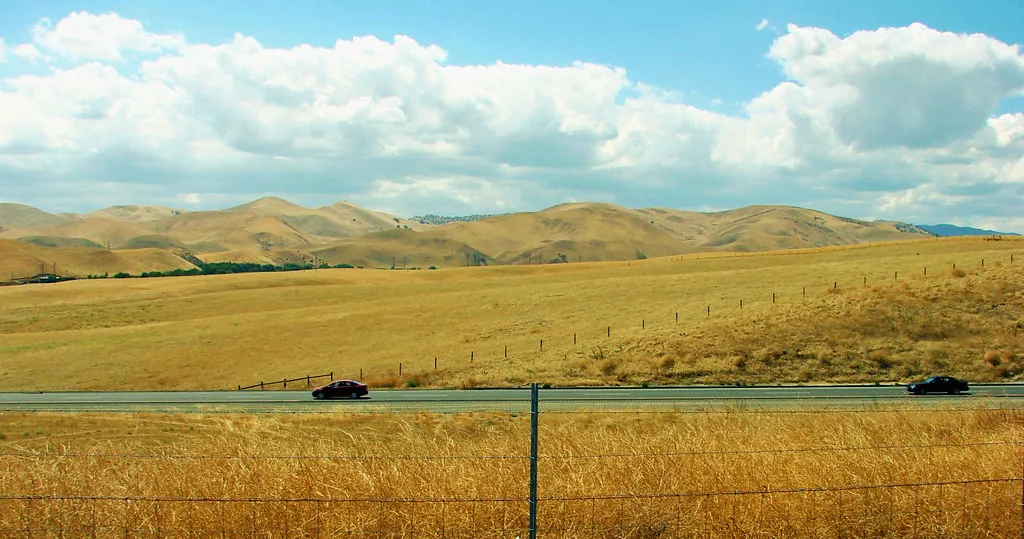
The fight over artificial intelligence usually lives online, but in California’s San Joaquin Valley it’s colliding with something much more basic: water. As proposals for new AI data centers land in one of the country’s most stressed farm regions, the question isn’t just what AI means for jobs or ethics. It’s whether AI data centers will drink what’s left of the valley’s groundwater.
The AI boom meets a dry basin
The focus keyword for this story is simple and blunt: AI data centers. On paper, they look like clean, modern infrastructure—warehouses of servers that power everything from chatbots to real-time analytics. In practice, they’re industrial facilities with serious appetites for electricity and, often, for water to keep all that hardware cool.
That tension is now front and center in Tulare and Kings counties, where two “mini” AI data centers proposed on local fairgrounds have touched off a backlash. Residents have packed public meetings, lining up to ask whether the valley’s already depleted aquifers can handle another high-demand user.
These facilities are far from approved. But the pushback arrives in a place already living under tight water scrutiny, where farmers have been forced to meter and pay for groundwater and where any new well can feel like a threat.
How thirsty are AI data centers, really?
One of the biggest challenges for valley water managers is that nobody has a clear, consistent answer to how much water AI data centers use. Operators treat water and energy consumption as competitive data, offering only vague assurances about “efficiency” while local agencies try to plan for the next drought.
What we do know is that usage can vary wildly based on design. A widely cited study estimates a typical 1 megawatt data center might use around 18.6 acre-feet of water per year—roughly enough for several dozen households. Scale that up to the 100-megawatt or 275-megawatt AI facilities now being proposed around California, and you’re talking about hundreds or thousands of acre-feet of water annually if they rely on conventional evaporative cooling.
That’s exactly why local officials say they can’t afford to guess. Water managers in the region are blunt: if growers have to meter groundwater and pay by the acre-foot, AI data centers should be metered and accounted for just as rigorously. The era of mystery usage numbers is over.
Local governments hit the brakes
The fairground proposals have become a catalyst for something bigger than two shipping-container-sized buildings. Tulare County supervisors are preparing to vote on an emergency 45-day moratorium on new data centers in unincorporated areas, with a hearing set for August 18. The idea is to pause construction long enough to write land-use rules tailored to AI-scale infrastructure—rules that factor in both energy and water demands.
Inside the city limits, Visalia council members are weighing their own moratorium discussion. And they’re not alone. The city of Patterson in Stanislaus County recently issued its own 45-day moratorium on data center proposals. In Imperial County, supervisors first approved a 950,000-square-foot AI data center, then reversed course amid public outcry and imposed a pause there, too.
Moratoriums don’t kill AI projects outright. They buy time. But the fact that multiple California communities are reaching for the same emergency brake says a lot about how unprepared local zoning and water laws are for this wave of AI infrastructure.
San Joaquin Valley becomes a test bed
Even as some projects are stalled, others are marching forward, turning the broader San Joaquin and surrounding counties into a kind of test bed for what AI infrastructure looks like in a water-limited West.
At Naval Air Station Lemoore, a 100-megawatt, AI-optimized data center is planned under a federal partnership. Developer Ameresco has pitched it as a hub for language model training, real-time analytics, and other AI-heavy workloads serving the base.
Further south, California Resources Corporation is working with Beacon Data Center on a proposed 600,000-square-foot facility in the Elk Hills oilfield near Taft. It would tap 275 megawatts of on-site electricity and rely on what the company calls “water efficient cooling,” though it hasn’t disclosed exactly how much water that still requires.
In eastern Kern County, near the desert community of Inyokern, another proposed AI data center would operate at 99 megawatts. Its backers, R&L Capital, have gone further than most, telling state regulators the project would cap its water use at up to 50 acre-feet per year to cool its data halls.
Layer on top of that a broader scramble: California’s High Speed Rail Authority is openly considering leasing portions of its right-of-way through the valley to data center operators as a new revenue stream, though those ideas are still just that—ideas.
All of this is happening in a state that already hosts 296 AI data centers, with more than 4,000 scattered across the country. The valley is not the first place to ask whether AI training and inferencing should be built atop stressed aquifers. But it may be one of the regions where that question becomes impossible to dodge.
Mini nodes, mega questions
One wrinkle in Tulare and Kings counties is that the controversial fairground projects are not sprawling hyperscale campuses. Global Stack USA, the company behind them, says these are “edge node” AI data centers—units about the size of a shipping container designed to live closer to end users and critical infrastructure.
Global Stack says its edge nodes use closed-loop cooling and “do not require a connection to a municipal or community water supply for routine operations.” That’s a big claim in a valley hypersensitive to every new pipe and pump. Closed-loop systems can dramatically cut the amount of fresh water needed, primarily reusing a fixed volume instead of constantly evaporating and replacing it.
The company also frames the projects as resilience investments for fairgrounds that already act as emergency hubs during wildfires, floods, and other disasters. The pitch is that on-site AI data centers could provide hardened computing and connectivity when the grid is under stress.
But even “water neutral” branding only goes so far when residents have been told for years that there’s not enough groundwater to go around. People want more than assurances; they want hard numbers, public environmental review, and some guarantee that if AI data centers are coming, they won’t be exempt from the kind of regulation farmers and small towns live with every day.
Push for transparency, not just technology
That tension is turning into legislation. A previous bill that would have forced AI data centers to disclose their exact water use was vetoed by the governor last year. Two new bills—AB 2469 and AB 2619—aim to revive the basic idea: that if you’re running a high-consumption facility in a drought-prone state, you don’t get to hide your usage behind NDAs and marketing copy.
Water managers in the valley are adamant. They argue that they need firm pumping numbers, whether data center operators offer them willingly or whether agencies have to “force” access to the data. Without that, there’s no way to plan for sustainable groundwater use under statewide mandates.
Transparency alone won’t solve the problem, but it’s the baseline. Only once water and power demands are fully visible can cities seriously compare alternatives: Do they push for air-cooled or closed-loop designs? Cap total withdrawals per project? Tie approvals to local recharge or conservation investments?
Right now, that debate is happening project by project, often only after a community hears about a new AI campus and scrambles to catch up. The valley’s moratoriums and public meetings suggest that approach is breaking down.
Why AI’s footprint suddenly feels real
For years, AI has been treated like a weightless product of the cloud—just another tab in the browser. The fight over AI data centers in the San Joaquin Valley makes it physical. It puts servers in specific neighborhoods, next to fairgrounds and farms, drawing from the same aquifers that grow the country’s food.
There’s a broader irony here. AI boosters love to tout the technology’s potential to optimize irrigation, predict droughts, and squeeze more crop per drop. But for communities in the valley, those benefits are hard to square with the idea of building massive, resource-hungry AI data centers that sit on top of the very water the region is trying to save.
The question is not whether there will be AI data centers. New projects are already underway in Lemoore, Elk Hills, and Inyokern. The real question is whether they’ll be built under old assumptions—that water and power are someone else’s problem—or under new rules that treat them like the industrial facilities they are.
What This Means
The San Joaquin Valley’s fight over AI data centers and water isn’t a niche local story; it’s a preview. As AI workloads scale, the physics don’t go away: chips throw off heat, cooling takes resources, and someone has to keep track of every gallon.
If the valley succeeds in forcing radical transparency and tighter limits on AI data centers, it could set a template for how water-scarce regions everywhere negotiate with the tech industry. If it doesn’t—if disclosure bills stall and moratoriums quietly expire—there’s a good chance those decisions will still show up years from now in the only metrics that matter here: falling groundwater levels and deeper wells.
AI promised to make everything smarter. In the San Joaquin Valley, communities are asking for something more basic: that the rush to build AI data centers doesn’t leave them holding an empty glass.
Photo: inkknife_2000 (11.5 million views) / BY-SA via Openverse | Photo: Gene Daniels / Public domain via Wikimedia Commons